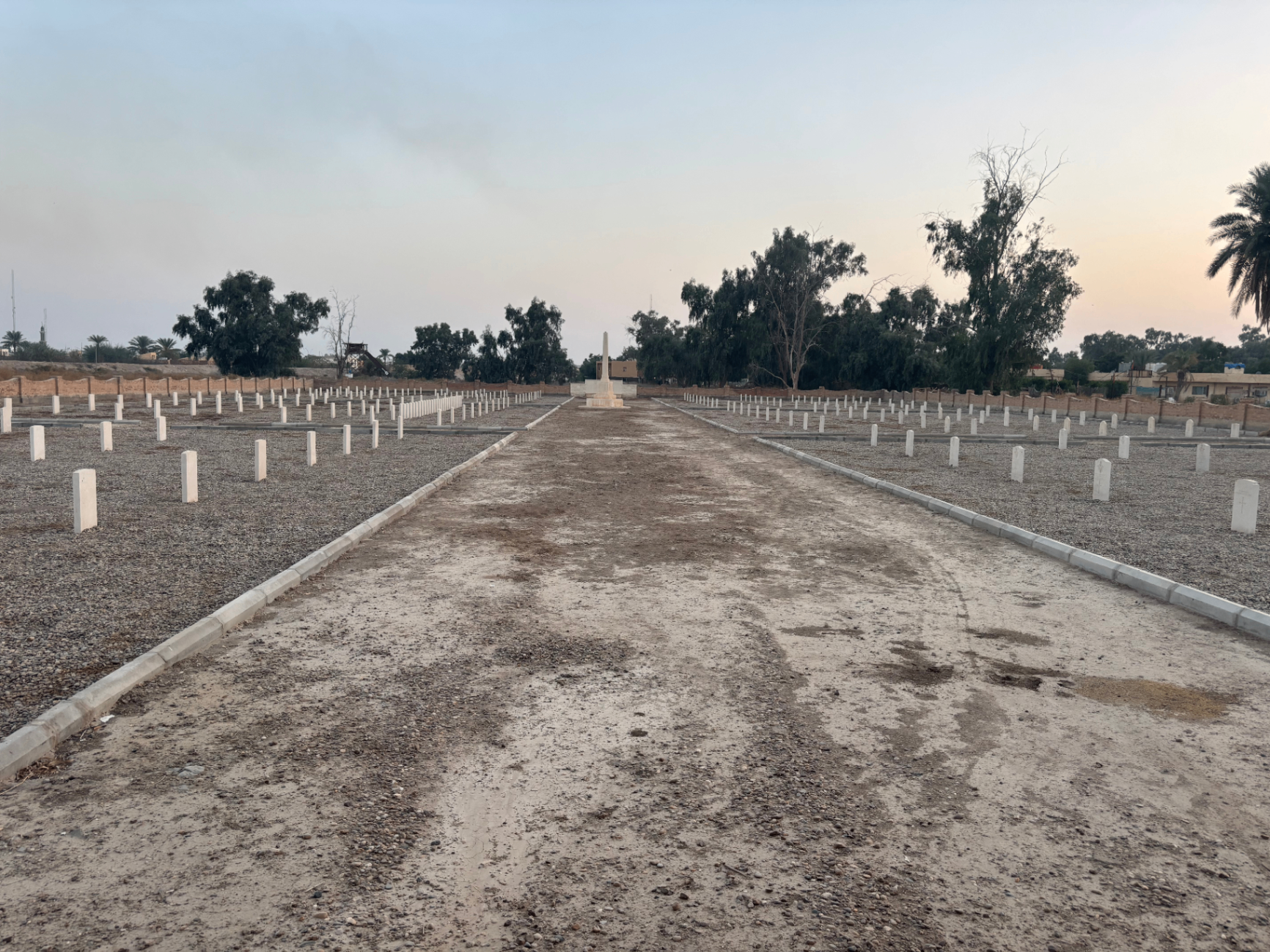
Habbaniya War Cemetery & Memorial
RAF Habbaniya, on the Euphrates west of Baghdad, was the largest British air base in Iraq. The cemetery reflects the violent events of the Anglo-Iraqi War in May 1941, when the base came under siege, and its later role as a key RAF and PAIFORCE station during WWII. The adjoining memorial commemorates those who have no known grave.
Quick Information
At the former RAF Habbaniya air base, approximately 85 km west of Baghdad, near Fallujah and Ramadi
Commemorated
290 commemorated
WWI: 0 • WWII: 173
Of the 290 burials, 173 were WW2 deaths, with the remaining 117 deaths taking place between the wars or post WW2. Memorial commemorates RAF, Indian Air Force, and Army personnel lost in air operations or desert accidents with no known grave.
Status
Last Updated
25 October 2025
RAF Habbaniya was the largest British air base in Iraq, strategically positioned on the Euphrates approximately 85 km west of Baghdad. The cemetery tells the dramatic story of the May 1941 siege during the Anglo-Iraqi War, when Iraqi forces surrounded the base demanding surrender. In a remarkable defense, RAF cadets and instructors flew training aircraft as bombers while ground personnel fought as infantry, breaking the siege with support from Indian Army relief forces. The base later became a crucial staging post for the airbridge into Persia and onward to the Soviet Union via the Persian Corridor.
Current Condition
The cemetery was completely renovated in 2019.
Visual Documentation
Admin upload portal for panoramas, videos and photos.
Video Photography
Video Documentation Coming Soon
Comprehensive video documentation of the memorial is being prepared and will be added shortly.
360° Panoramic Views
360° Panoramas Coming Soon
We’re preparing immersive 360° views. Once your panoramic files are ready, we’ll publish them here.
Cemetery Plan
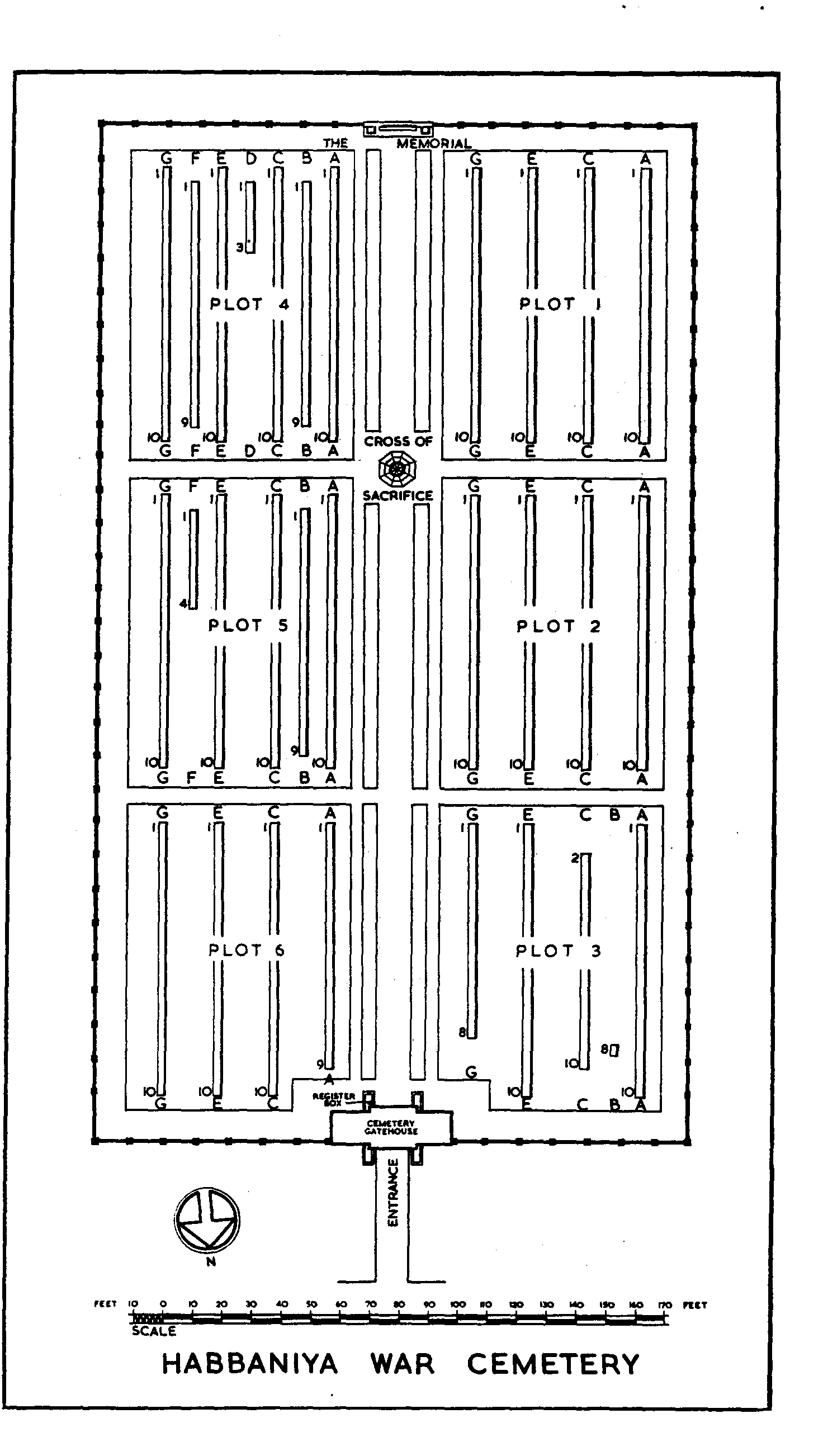
Historical cemetery plan showing the detailed layout of Habbaniya War Cemetery near the former RAF base, including the memorial structure and plot organization.
Related Articles & Content
Habbaniya Cemetery Restoration - Complete Headstone Documentation
VisitThis site contains photographs of all 290 gravestones at Habbaniya War Cemetery taken by the Australian Embassy in Baghdad in 2023, along with a complete list of those buried there. An invaluable resource for researching individual burials and understanding the scope of the 2019 cemetery renovation.
Source: Steve Buster Johnson
Fighting World War II in the Middle East: The Battle of Habbaniya
VisitThis article provides an overview of the Battle of Habbaniya and the wider context of Iraq's role in World War II. It explores how a pro-Axis coup in 1941 threatened British control of vital oil routes and bases, prompting a swift military response from British forces stationed across the Middle East. Through the fighting at Habbaniya, Fallujah, and ultimately Baghdad, the article illustrates how the conflict in Iraq became a pivotal episode in securing Allied dominance in the region.
Source: Warfare History Network
Planning a visit: quick answers
- Can you visit Commonwealth war cemeteries in Iraq?
- Yes. Basra War Cemetery, the Basra Memorial to the Missing, Amara War Cemetery and Baghdad North Gate War Cemetery can all be visited, but access varies by site and usually needs advance arrangement, a local guide and, in some cases, permission from the authorities.
- Do I need a visa or permits to visit?
- Most visitors now travel on a visa on arrival or an e-visa, and some sites sit inside restricted or military-controlled areas where a separate permit or escort is required.
- Are the cemeteries maintained?
- Condition varies considerably. Some sites are cared for by local gardeners, while others remain damaged or overgrown, as documented in our field reporting.