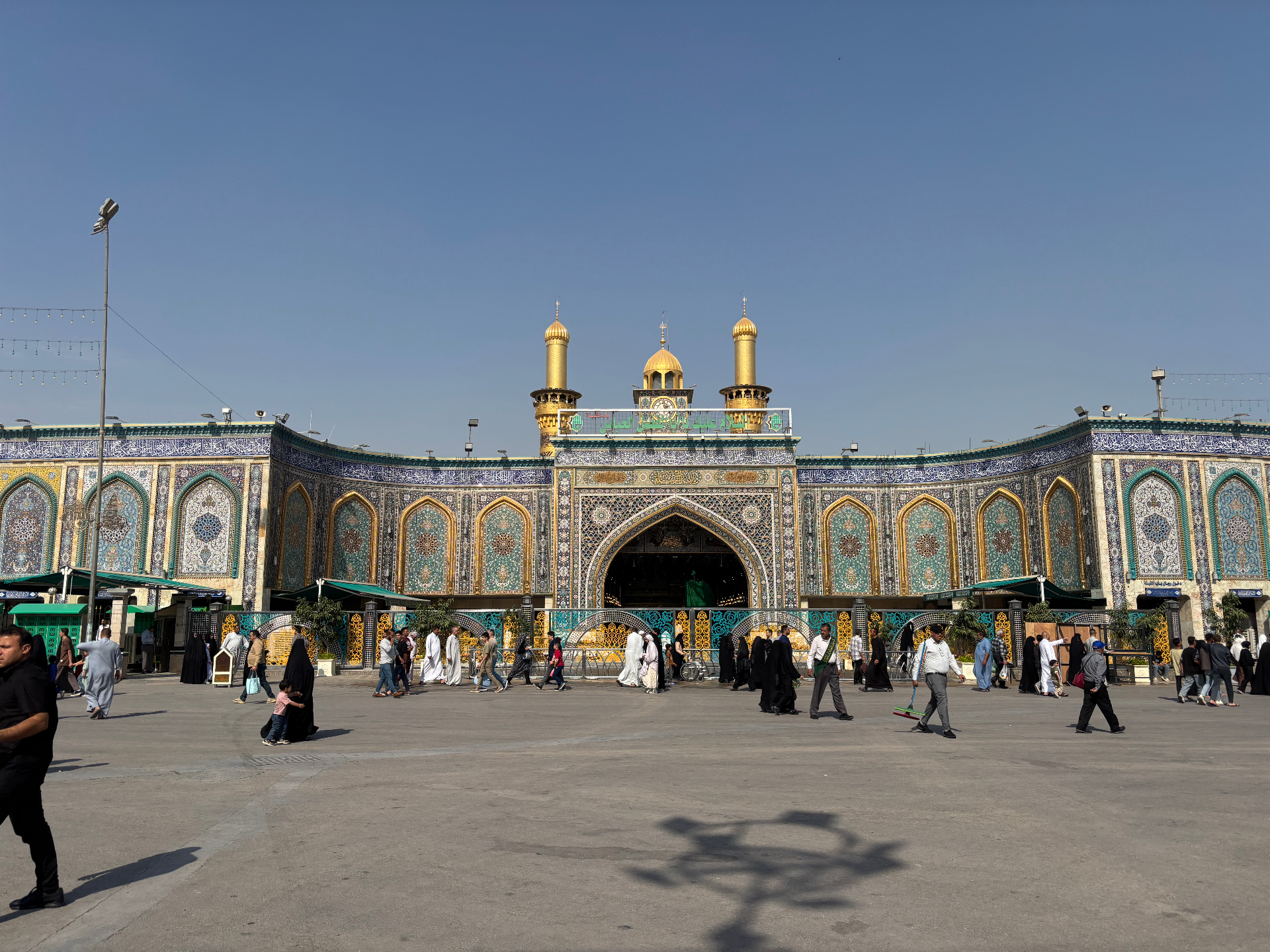
Karbala Isolated Grave
This isolated grave in the holy city of Karbala commemorates Major Sayyid Askari of the Indian Army Medical Corps, who died on 21 October 1943, aged 40. His solitary burial represents the wide geographic spread of WWII medical support operations across Iraq during the Persian Corridor era.
Quick Information
Location
Karbala, central Iraq
Commemorated
1 commemorated
WWI: 0 • WWII: 1
Single isolated grave - Major Sayyid Askari, IAMC, died 21 October 1943, aged 40
Status
Last Updated
25 October 2025
Major Sayyid Askari (son of Syed Hasan Askari, husband to Begum Ale Sughra Askari of Karachi) served with the Indian Army Medical Corps during WWII.
A major in the Indian Army Medical Corps, Askari qualified as a doctor in Liverpool and Edinburgh and became a Fellow of the Royal College of Surgeons (FRCS), holder of diplomas in both tropical medicine and hygiene.
He was a Muslim by faith, son of Syed Hasan Askari, of Jaghan, Janpur, India and husband to Begum Ale Sughra Askari, of Karachi, Pakistan. Askari was killed whilst on unstated business across the Iranian border at Kermanshah, Western Iran on 21st October 1943.
What this 40-year-old, highly qualified surgeon in the Indian Army Medical Corps was doing at the time is not recorded, but he may have been a participant in the murky Anglo-Soviet invasion of Iran. ([source](https://www.linkedin.com/pulse/lonely-vigil-major-sayyid-askari-vyvyan-kinross-rasde/))
Current Condition
Field visit conducted on Oct 24 2025 found no evidence of the Major's grave. Saddam Hussein cleared the graves around the shrine in 1968 and then almost destroyed the shrine itself in 1990 in retaliation against the Shia revolt. The shrine was rebuilt after 2003. Inquiries were made with the historian of the Shrine and he agreed to search the library for evidence of the burial.
Visual Documentation
Admin upload portal for panoramas, videos and photos.
Video Photography
Video Documentation Coming Soon
Comprehensive video documentation of the memorial is being prepared and will be added shortly.
360° Panoramic Views
360° Panoramas Coming Soon
We’re preparing immersive 360° views. Once your panoramic files are ready, we’ll publish them here.
Related Articles & Content
The Lonely Vigil of Major Sayyid Askari
VisitA detailed account of Major Sayyid Askari's life and service with the Indian Army Medical Corps during WWII. The article explores the circumstances of his isolated burial in Karbala in October 1943 and the ongoing mystery surrounding the exact cause of his death and the reasons his body could not be transported to a larger Commonwealth cemetery.
Source: LinkedIn
Planning a visit: quick answers
- Can you visit Commonwealth war cemeteries in Iraq?
- Yes. Basra War Cemetery, the Basra Memorial to the Missing, Amara War Cemetery and Baghdad North Gate War Cemetery can all be visited, but access varies by site and usually needs advance arrangement, a local guide and, in some cases, permission from the authorities.
- Do I need a visa or permits to visit?
- Most visitors now travel on a visa on arrival or an e-visa, and some sites sit inside restricted or military-controlled areas where a separate permit or escort is required.
- Are the cemeteries maintained?
- Condition varies considerably. Some sites are cared for by local gardeners, while others remain damaged or overgrown, as documented in our field reporting.