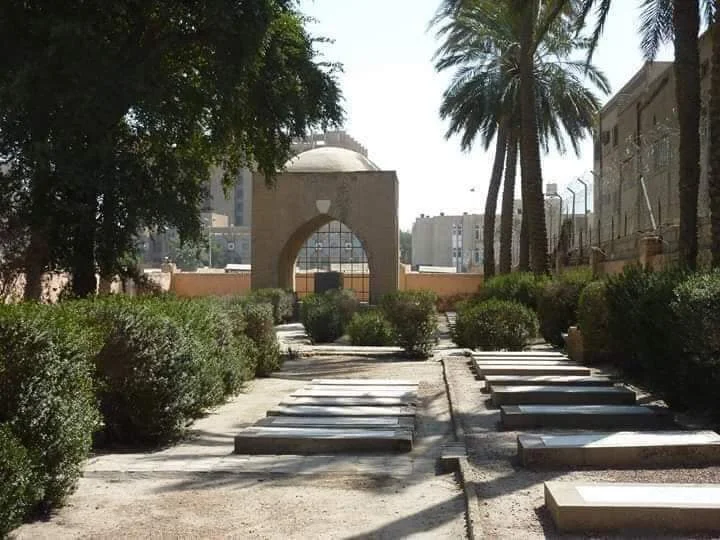
German Soldiers Cemetery
Take a Video Tour
A short video walkthrough of the German Soldiers Cemetery in Baghdad.
A small cemetery commemorating German military personnel who served in Mesopotamia, primarily as advisors to Ottoman forces during WWI.
Quick Information
Al-Rusafa (Waziriyah/Sheikh Omar vicinity), east bank of the Tigris, Baghdad
Commemorated
55 commemorated
WWI: 45 • WWII: 10
German military advisors and personnel in Ottoman service. Volksbund Deutsche Kriegsgräberfürsorge (German War Graves Commission) central facility in Iraq
Status
Last Updated
25 October 2025
The German War Graves Commission (Volksbund Deutsche Kriegsgräberfürsorge) lists this military cemetery in Baghdad as a "central facility in Iraq." It holds 45 German war dead from WWI and 10 from WWII. The cemetery was restored in 1973 and again in 1989 with funds from the Volksbund. Some of the German war dead were transferred from a civilian cemetery in Basra to Baghdad in 1953 as part of a post-war consolidation process.
Current Condition
The cemetery was restored in 1973 and again in 1989 with funds from the Volksbund Deutsche Kriegsgräberfürsorge. Current status is unclear. The site features a walled enclosure with rows of flat stone slabs, an arched portal, and a small domed structure.
Visual Documentation
Admin upload portal for panoramas, videos and photos.
Video Photography
Video Documentation Coming Soon
Comprehensive video documentation of the memorial is being prepared and will be added shortly.
360° Panoramic Views
360° Panoramas Coming Soon
We’re preparing immersive 360° views. Once your panoramic files are ready, we’ll publish them here.
Watch the films from this site
Each film recorded at this location has its own page with the full footage, background notes and links to the surrounding cemeteries.

Planning a visit: quick answers
- Can you visit Commonwealth war cemeteries in Iraq?
- Yes. Basra War Cemetery, the Basra Memorial to the Missing, Amara War Cemetery and Baghdad North Gate War Cemetery can all be visited, but access varies by site and usually needs advance arrangement, a local guide and, in some cases, permission from the authorities.
- Do I need a visa or permits to visit?
- Most visitors now travel on a visa on arrival or an e-visa, and some sites sit inside restricted or military-controlled areas where a separate permit or escort is required.
- Are the cemeteries maintained?
- Condition varies considerably. Some sites are cared for by local gardeners, while others remain damaged or overgrown, as documented in our field reporting.