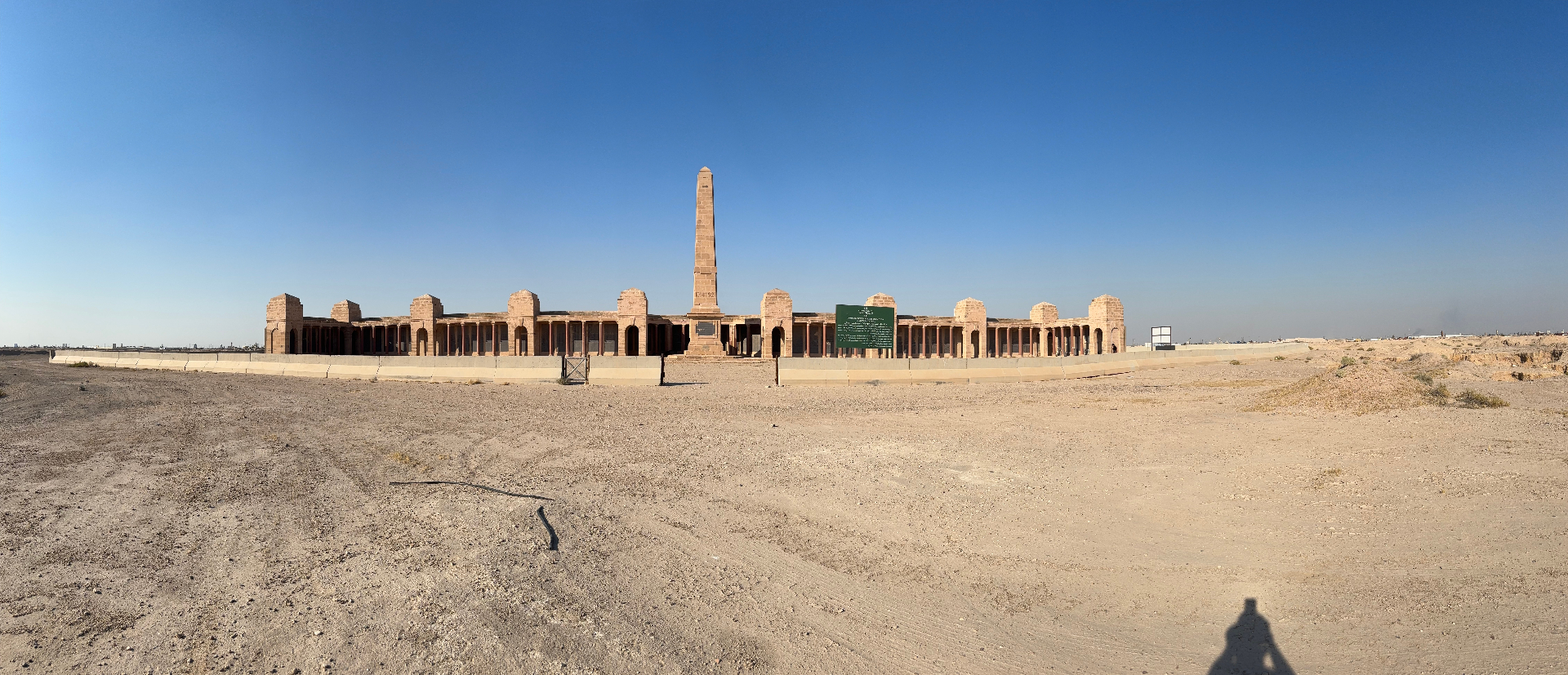
Basra Memorial to the Missing
The Basra Memorial stands as a monument to the tens of thousands of men of the Mesopotamian campaign whose bodies were never found or identified. It spans the period from 1914 through 31 August 1921, thus including the later Arab Revolt (1919-21) casualties.
Take a Virtual Reality Tour
Best viewed in the YouTube app on a mobile device with a VR headset (e.g. Google Cardboard). Drag to look around in your browser.
The Basra Memorial commemorates over 40,000 Commonwealth servicemen who died in the Mesopotamia campaign and have no known grave, the largest such memorial outside Europe.
Quick Information
Shaiba Road, near Basra (moved from original Maqil location in 1997)
Commemorated
40,682 commemorated
WWI: 40,682 • WWII: 0
Names commemorated: over 40,000. Of these, Indian other ranks appear as numeric totals by regiment (estimated ~33,000+), whilst soldiers of all ranks of European decent and Indian Officers only are named individually
Status
Last Updated
25 November 2025
Key Takeaways
- • Access to the site is restricted by local security forces protecting the roadside pipelines
- • Continuing decline of panels and building fabric through lack of maintenance or repair
- • 6 of 39 panels have delaminated from the walls, more are in process of coming off
- • Ceiling plaster is in poor condition
- • 360 video in 8K was taken of the site and made available to the public - the only publicly available video of the site
The Basra Memorial to the missing is the third largest Commonwealth Memorial in the world and the largest outside Europe. Only the Menin Gate (54,896) and Thiepval (72,337) are larger. It is also the most diverse, given that over 80% of the casualties from Mesopotamia were Indian Army.
The memorial was designed by Edward Prioleau Warren. It was unveiled by Gilbert Clayton on 27 March 1929. Originally located eight kilometers north of Basra, near the Shatt al-Arab River, it was carefully moved stone by stone about 30km southwest in 1997 on the orders of Saddam Hussein.
Of the 40,682 only 7,385 British personnel (including white colonial troops from New Zealand and Australia) and Indian Officers are mentioned by name with 33,256 Indian NCO and other ranks only listed by unit and total casualties.
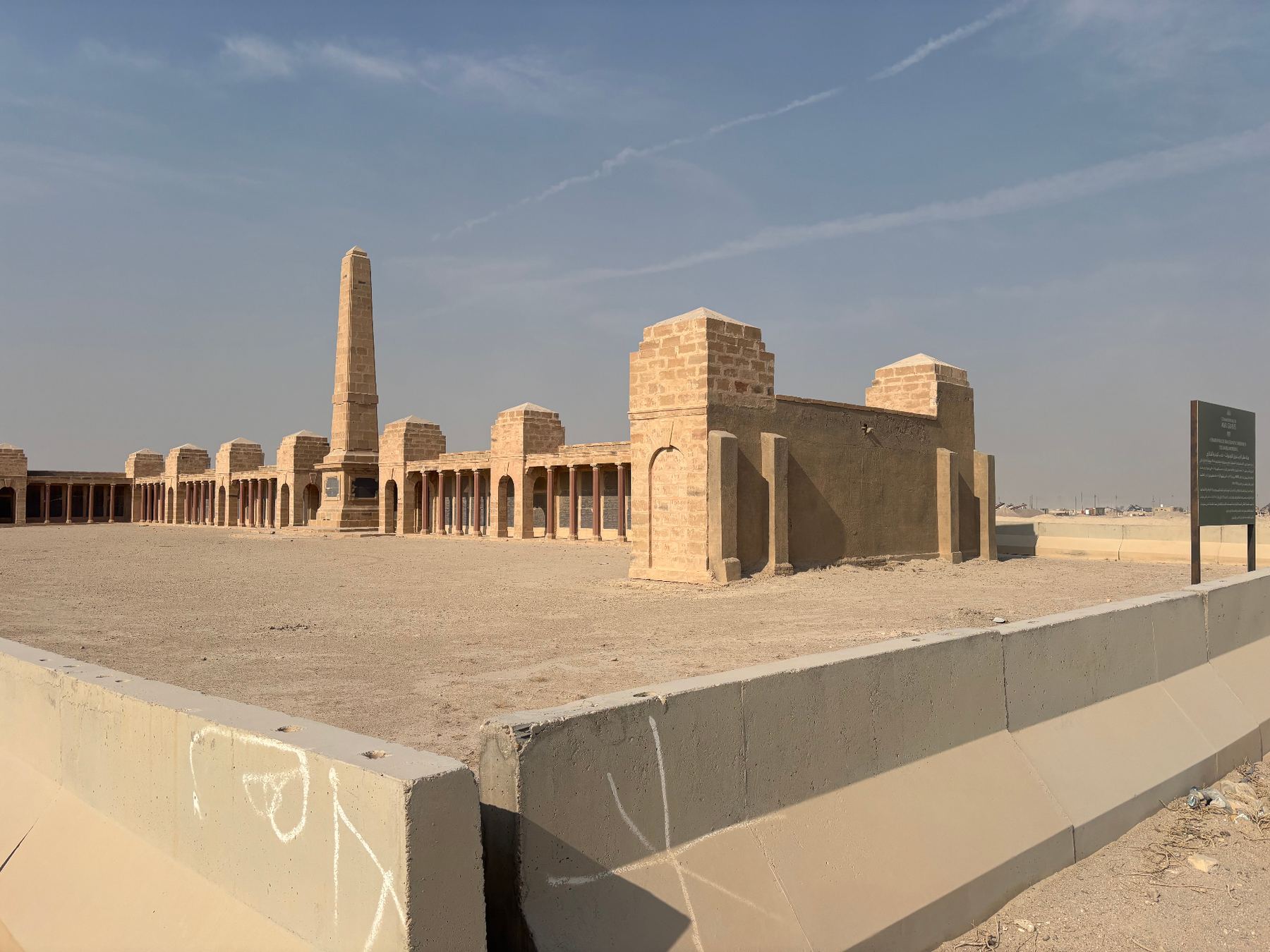
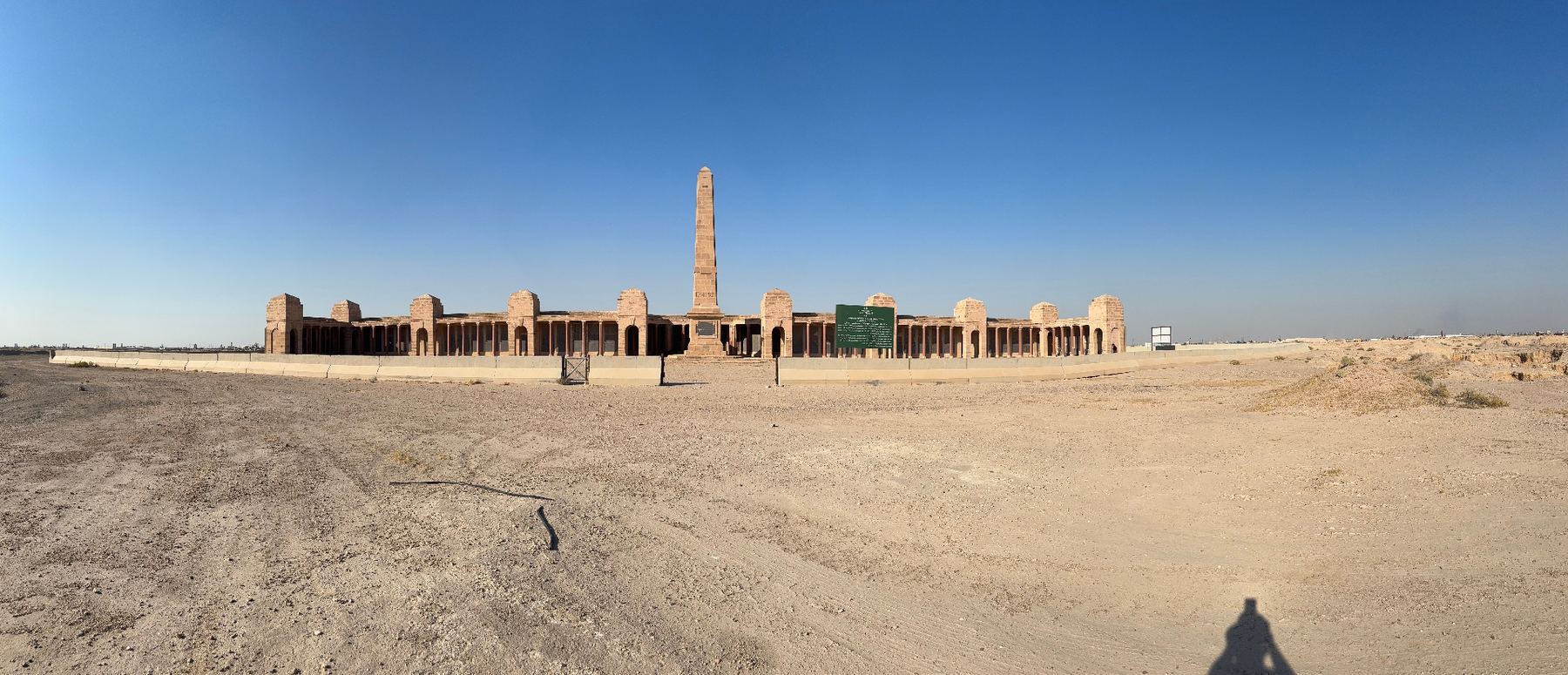
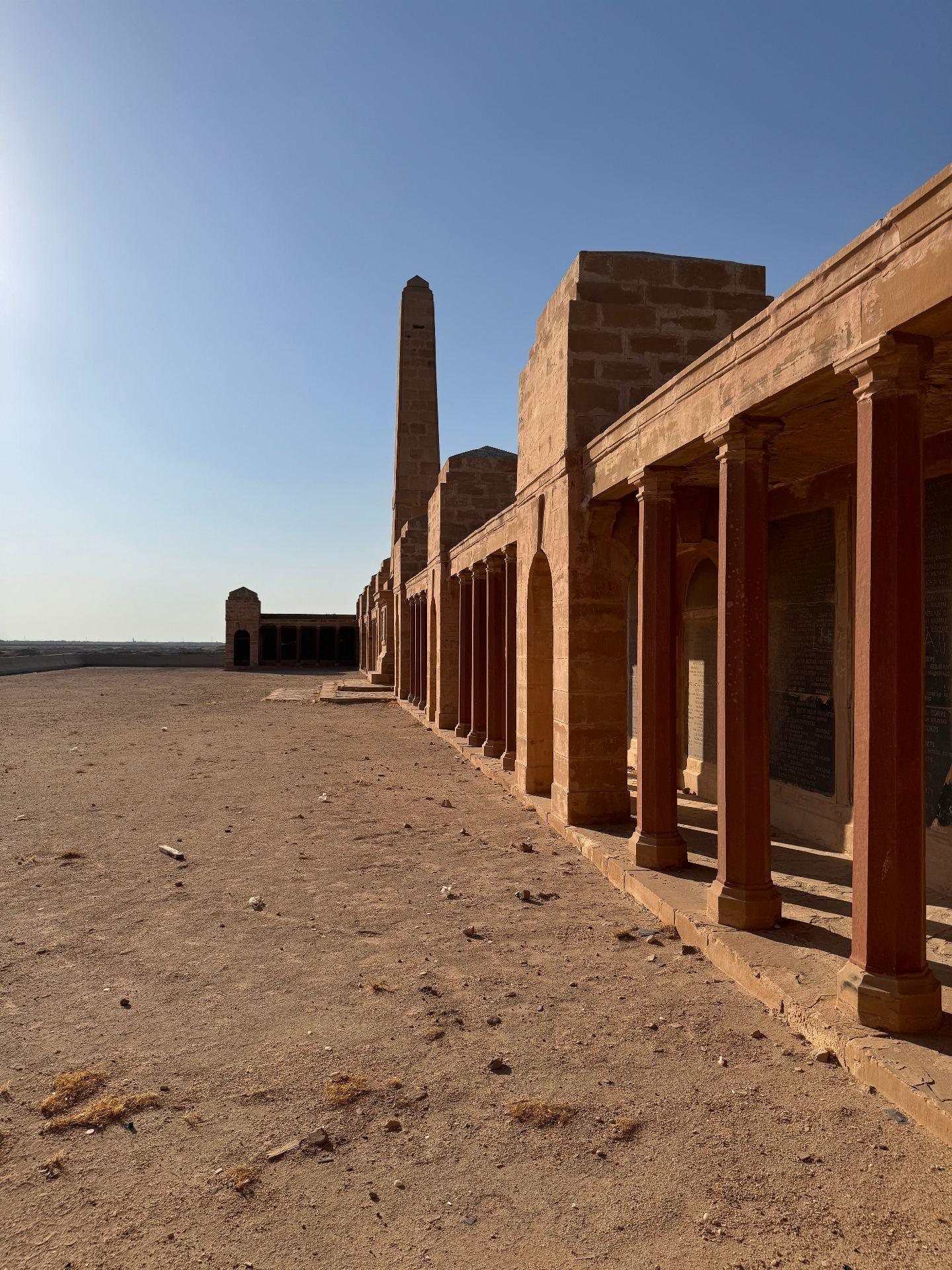
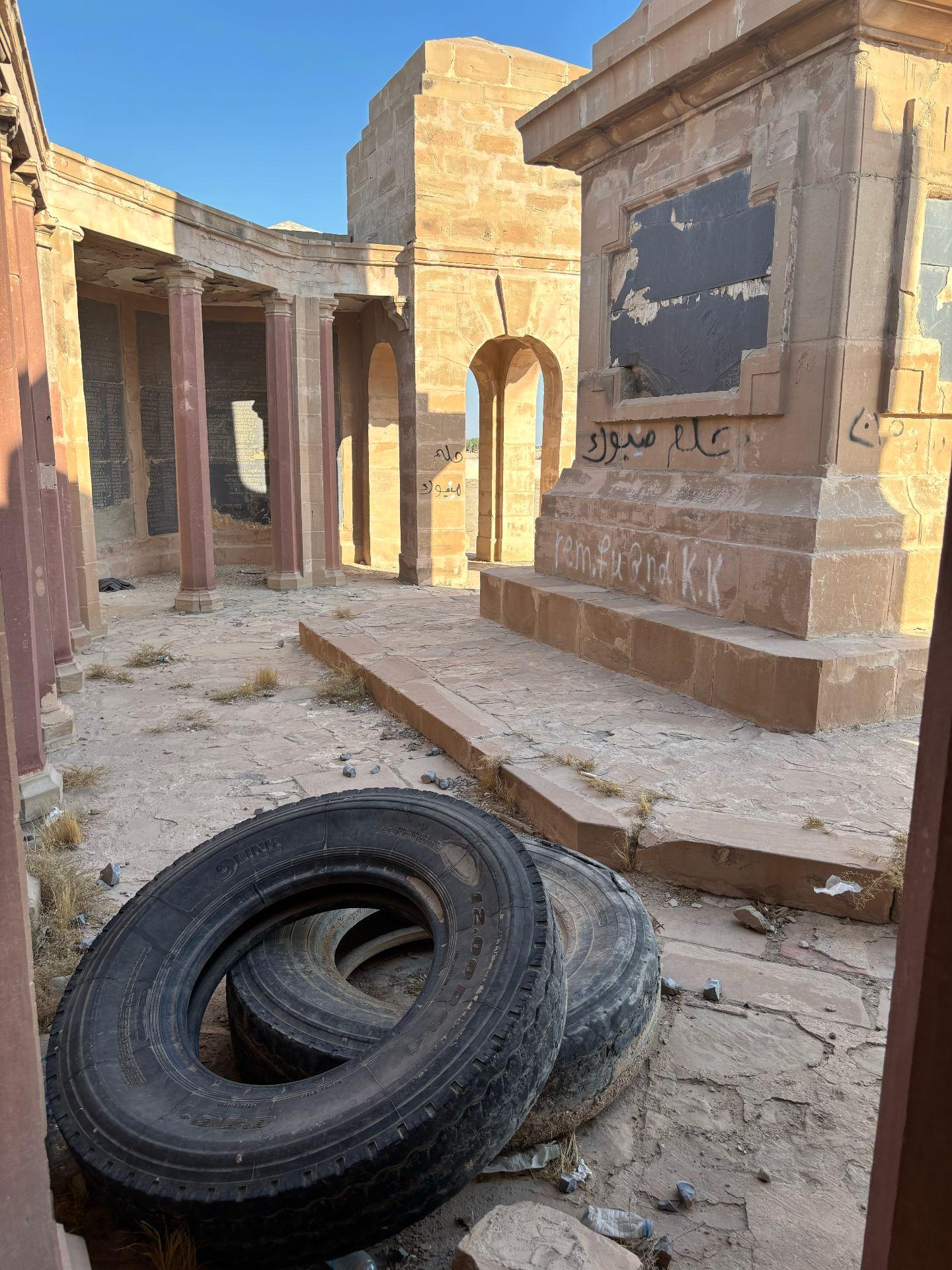
Other than having a concrete boundary installed in 2018, the memorial has had no maintenance since it was moved to the site in 1987. From afar, it looks intact and in good condition but the combined effects of time and the harsh climate are eroding the fabric of the building each year. The majority of the 69 panels are intact and in place, with only those in the 59-69 range having suffered the most delamination from the wall, with the fragments lying on the floor.
Five VCs are commemorated at the Memorial, including two from the attempted relief of Kut, Lt.-Commander Cowley and Lt Firman killed in the same action, attempting to deliver supplies by boat to the garrison only a few days before the surrender. An article entitled 'The Pirate of Basra' gives more information.
Sergeant David Finlay, died 21 January 1916. VC won 9 May 1915 at Rue du Bois Aubers Ridge France. Panel 25.
Private James Henry Fynn, died 30 March 1917. VC won 9 April 1916 at Sanna-I-Yat Mesopotamia. He survived the action and was awarded his medal by no less than General Maude at Amara but was later killed in action. Panel 17.
Lt Colonel Charles Henry Cowley, died 25 April 1916, age 44. VC won 24-25 April 1916 at River Tigris Magasis near Kut-el-Amara Mesopotamia. Panel 1.
Lt. Humphrey Osbaldston Brooke Firman, died 25 April 1916. VC won 24-25 April 1916 at River Tigris Magasis near Kut-el-Amara Mesopotamia. Panel 1.
Captain George Stuart Henderson VC, DSO & Bar, MC, died 24 July 1920 killed in action during the 1920 revolt at Hillah where the Manchester Column were attacked resulting in the capture of over 70 British soldiers who were imprisoned for several months before being released. Panel 31.
The Basra Memorial also commemorates two airmen of the Australian Half Flight, the nascent Australian Air force that was deployed early in the Mesopotamia campaign. On 30 July 1915, while returning from a mission near Nasiriyah, Lieutenant Merz and his observer, Flight Sergeant William Burns, were forced to land after engine failure in hostile territory south of the Euphrates. They attempted to make their way back to British lines but were attacked and killed by local tribesmen near the village of As-Saniya. They were the first Australian and New Zealand airmen to die on operations. Merz is on panel 43 but, sadly, the panel on which Burns was is one of the missing ones.
Also on panel 43 is Australian nurse Sister Florence Narrelle Jessie Hobbes, the only woman commemorated on the memorial, who died at sea.
Memorial Panels of Basra Memorial to the Missing
View photographs of every individual memorial panel, with a full-size lightbox and arrow-key navigation between adjacent panels.
Current Condition
November 2025 Assessment: A 35 minute drive from Basra in an area used by oil and quarry companies. A protective concrete barrier was established in 2011. The building is in remarkable condition given it's had no maintenance in over 30 years in a very harsh climate.
Only about 6 of the 39 panels have delaminated from the walls completely or in part but more are clearly in process of coming off. The plaster on the ceilings is in a poor condition.
Access Restrictions: Local military and police are now not allowing cars to stop on the road on which Basra Memorial is located due to there being water and oil pipelines nearby. This has resulted in visitors to the site (including the report author) being detained and threatened by local security forces. Liaison with the local authorities and security services is required to ensure access to the memorial for visitors.
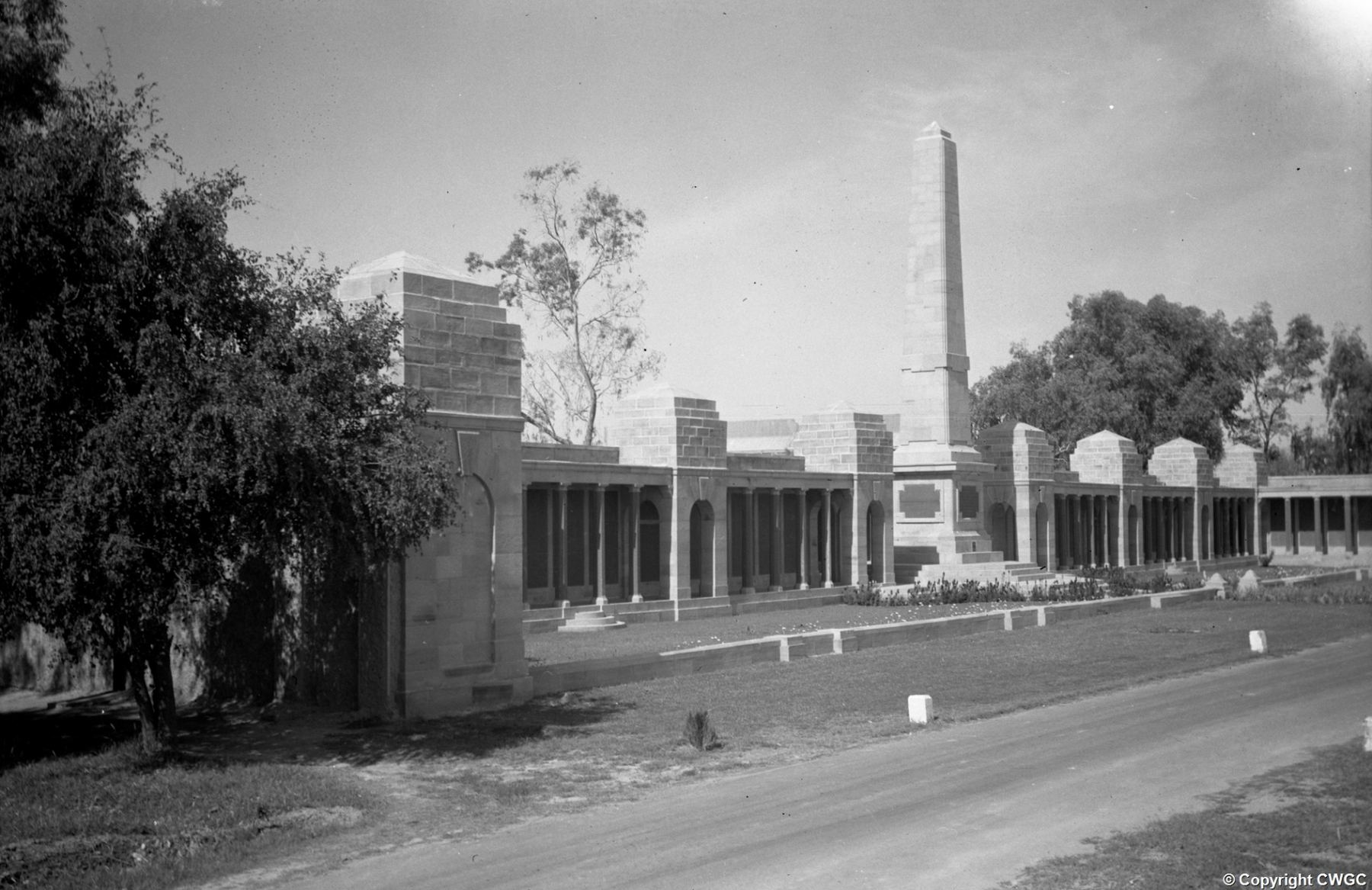
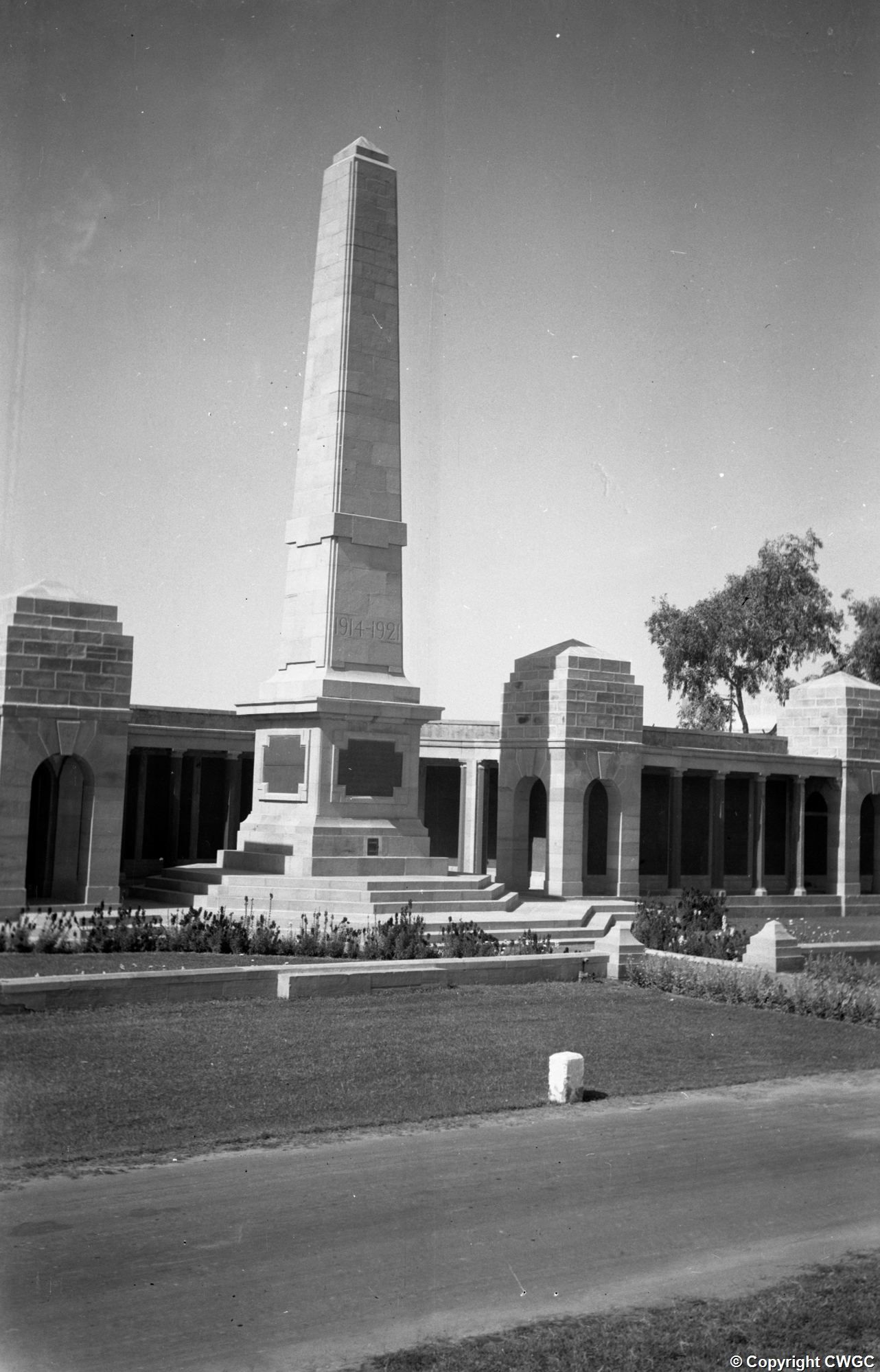
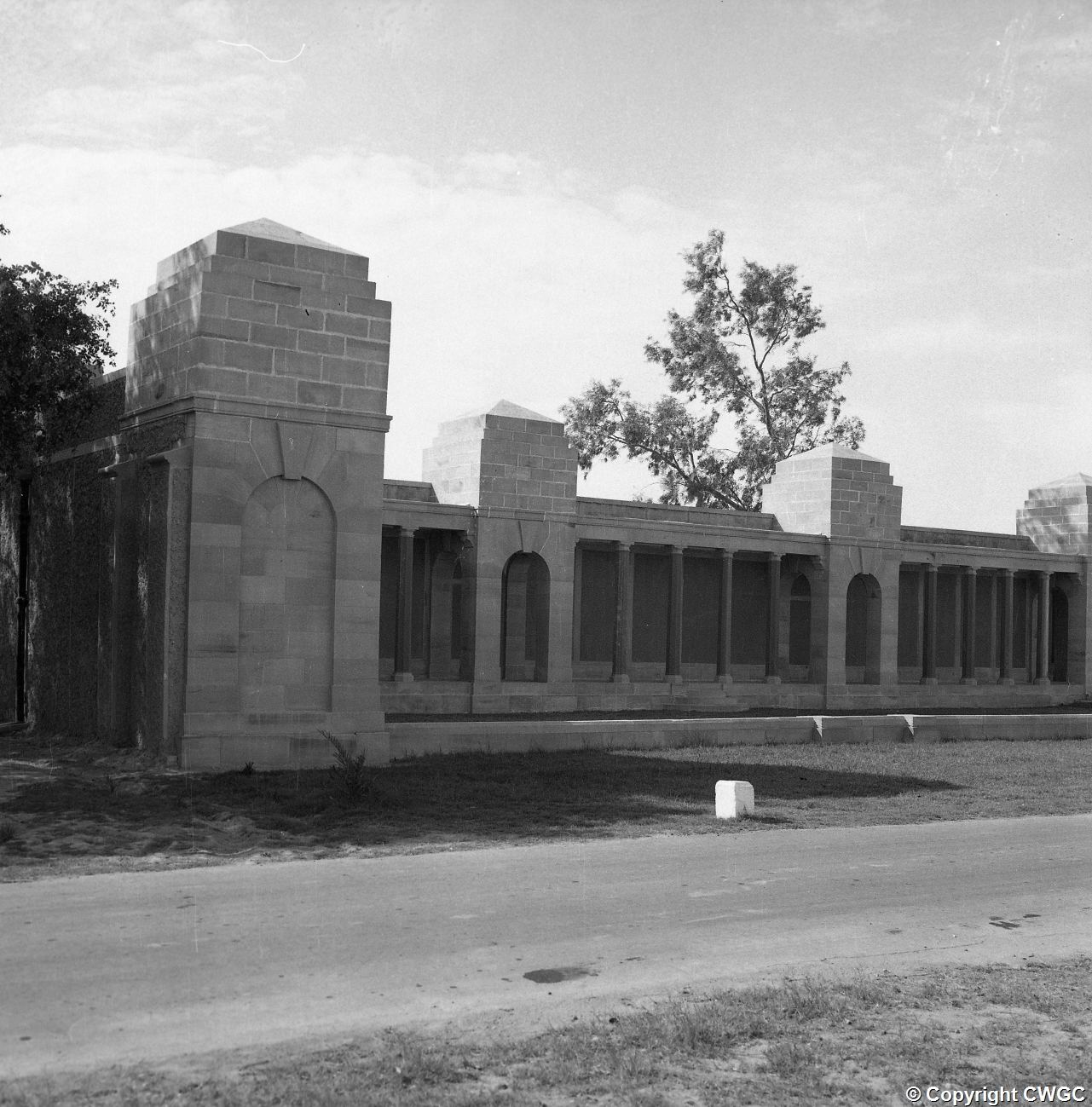
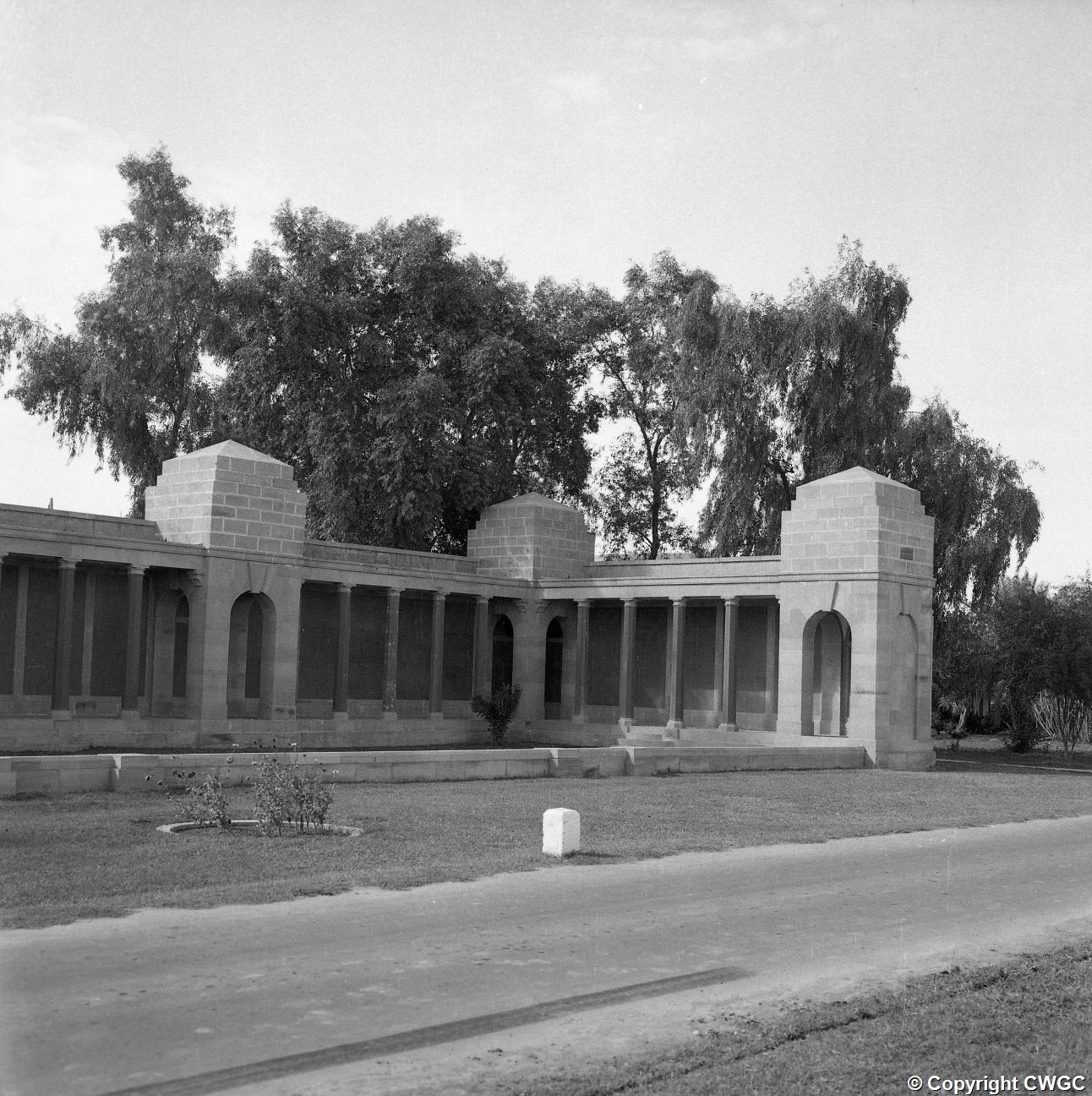
Basra Memorial, historical photographs
Historical photographs of the Basra Memorial, showing the central obelisk, colonnades and screen wall as built. Images © CWGC.
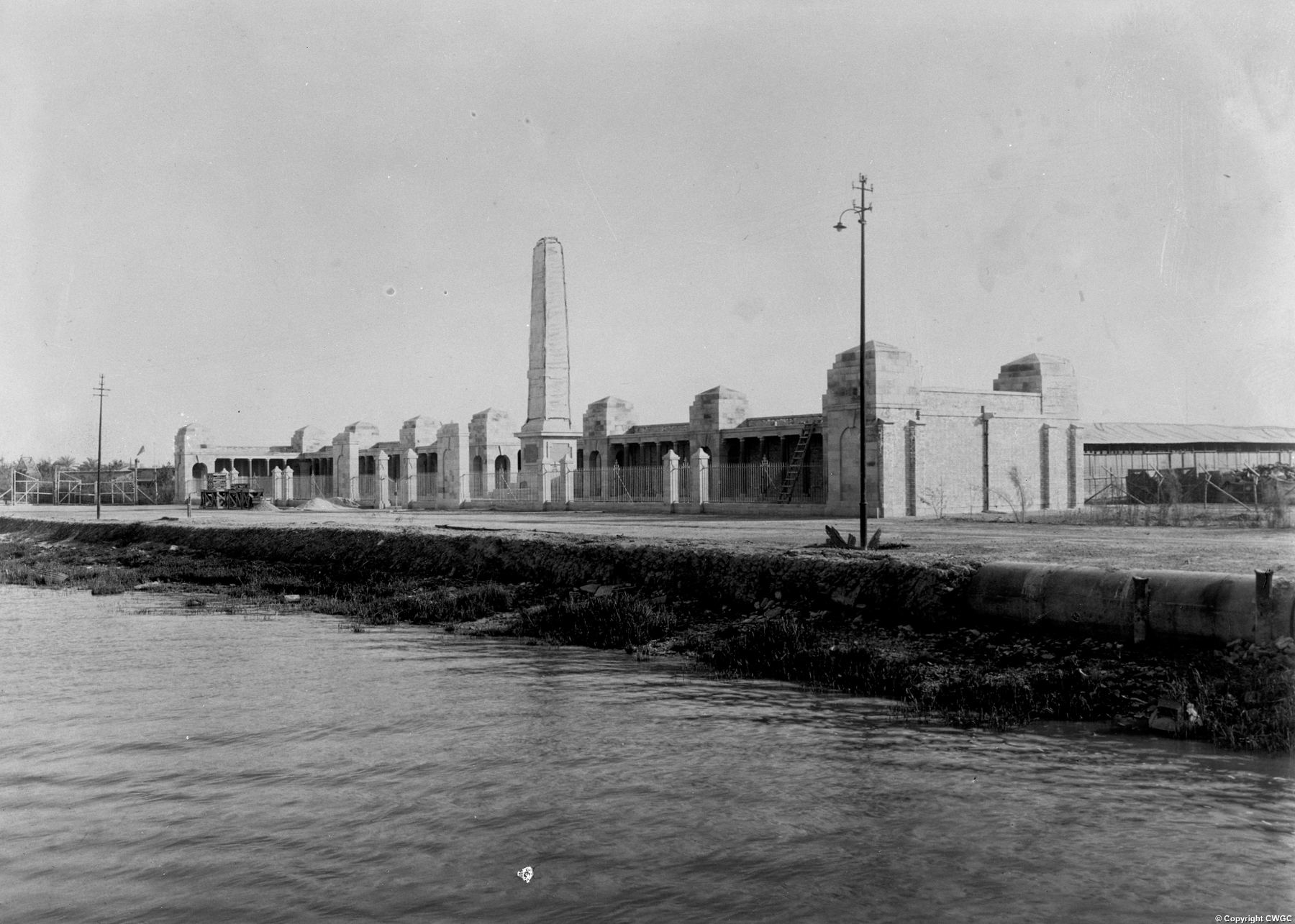
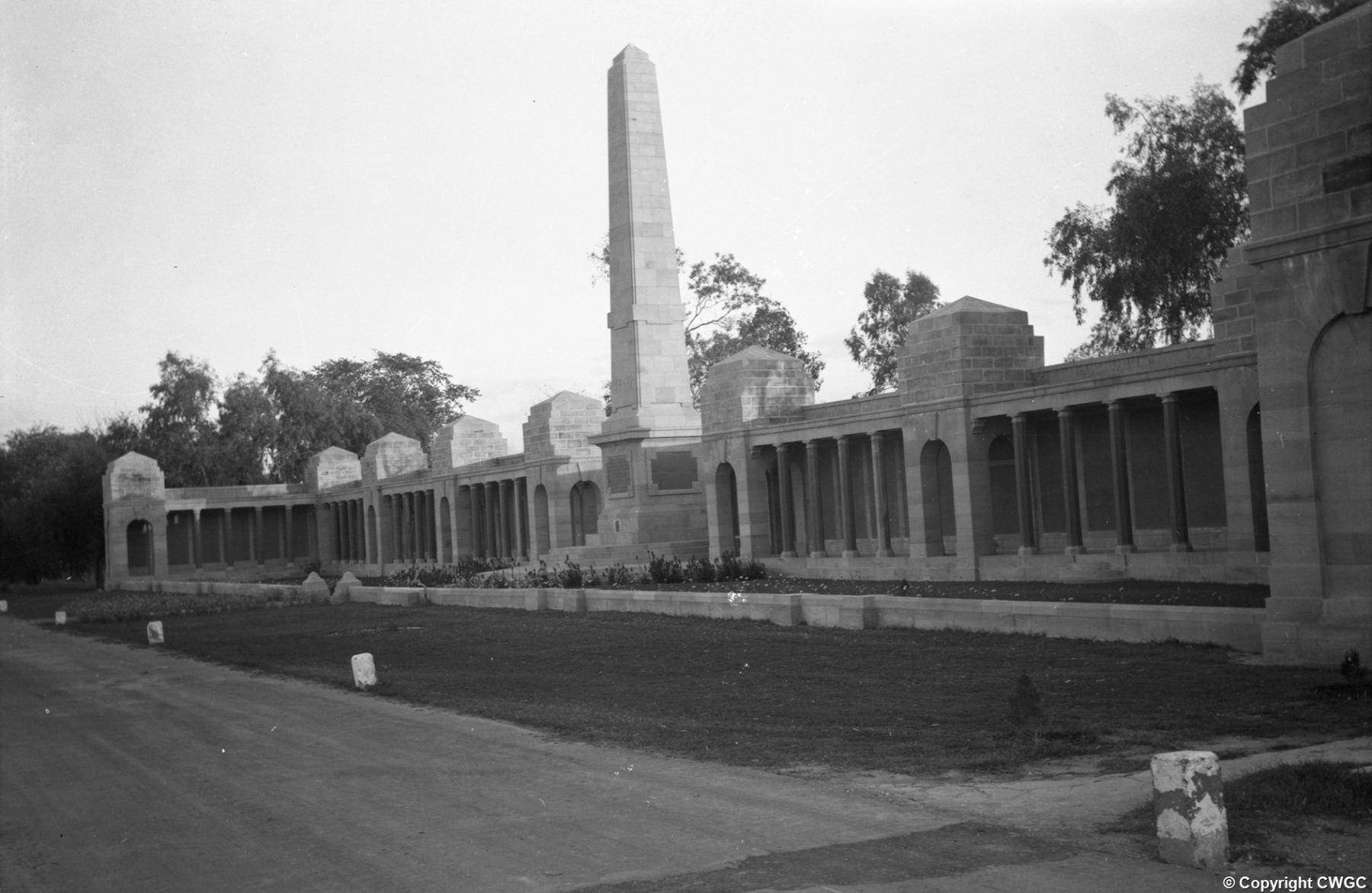
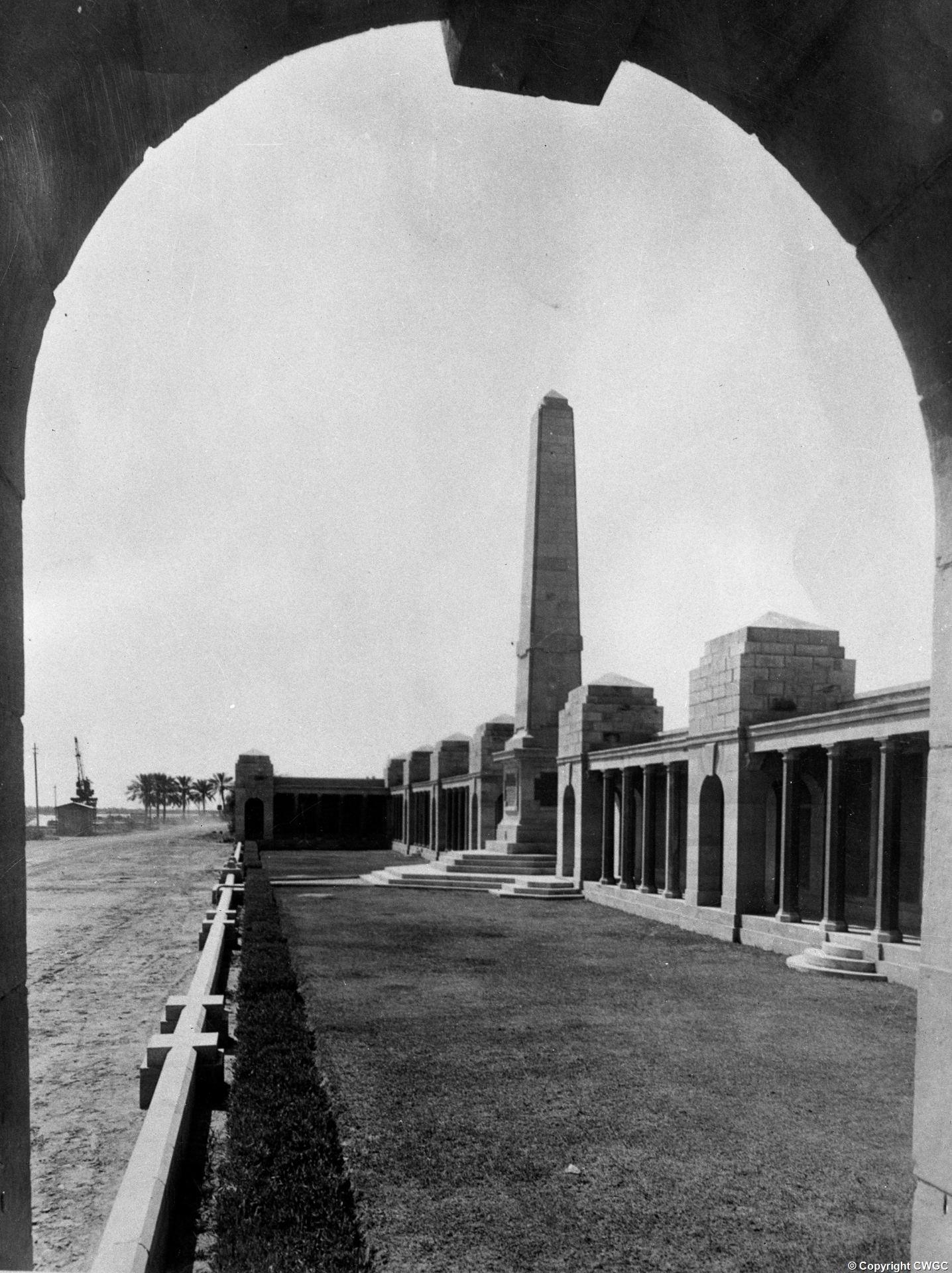
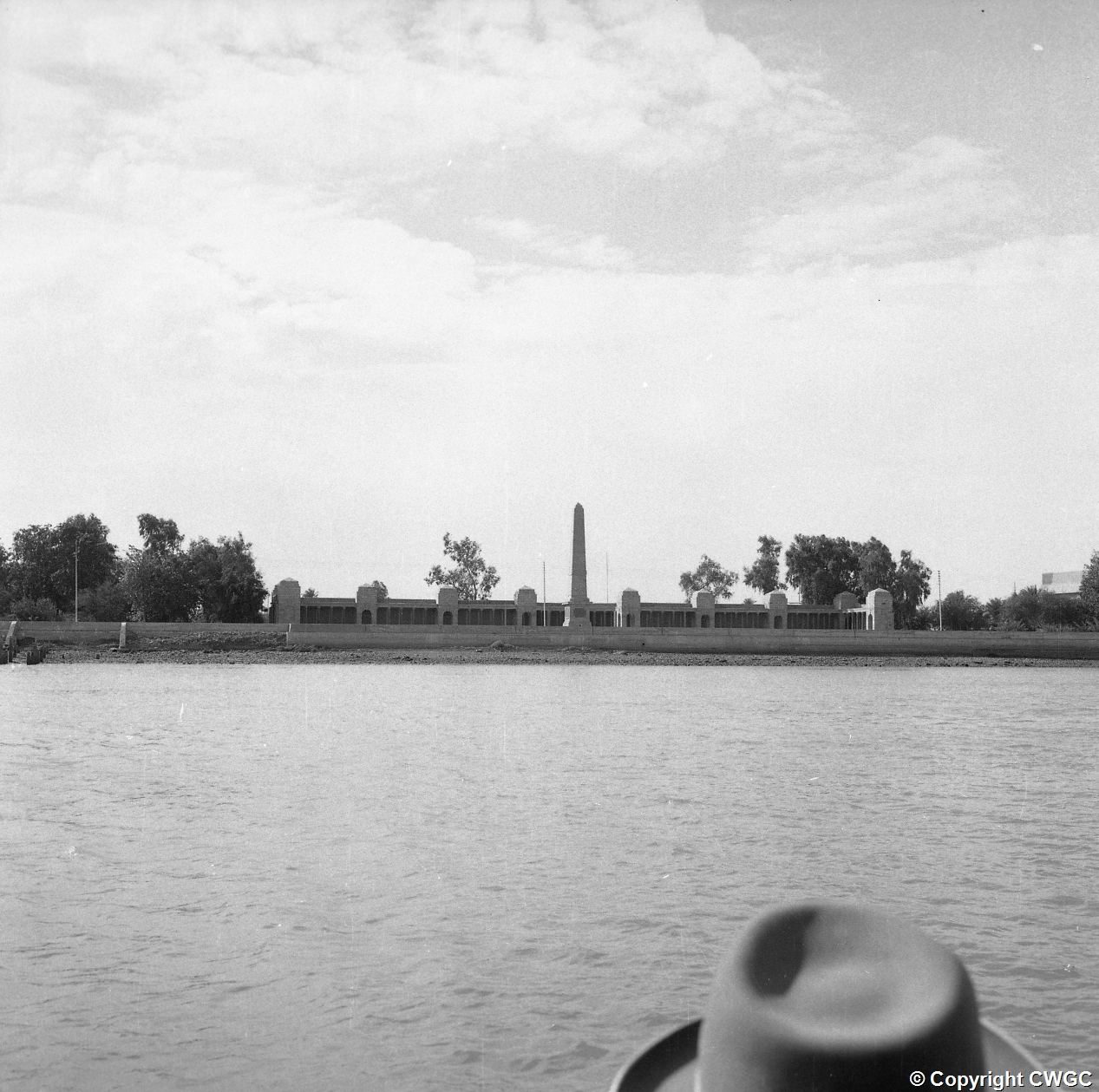
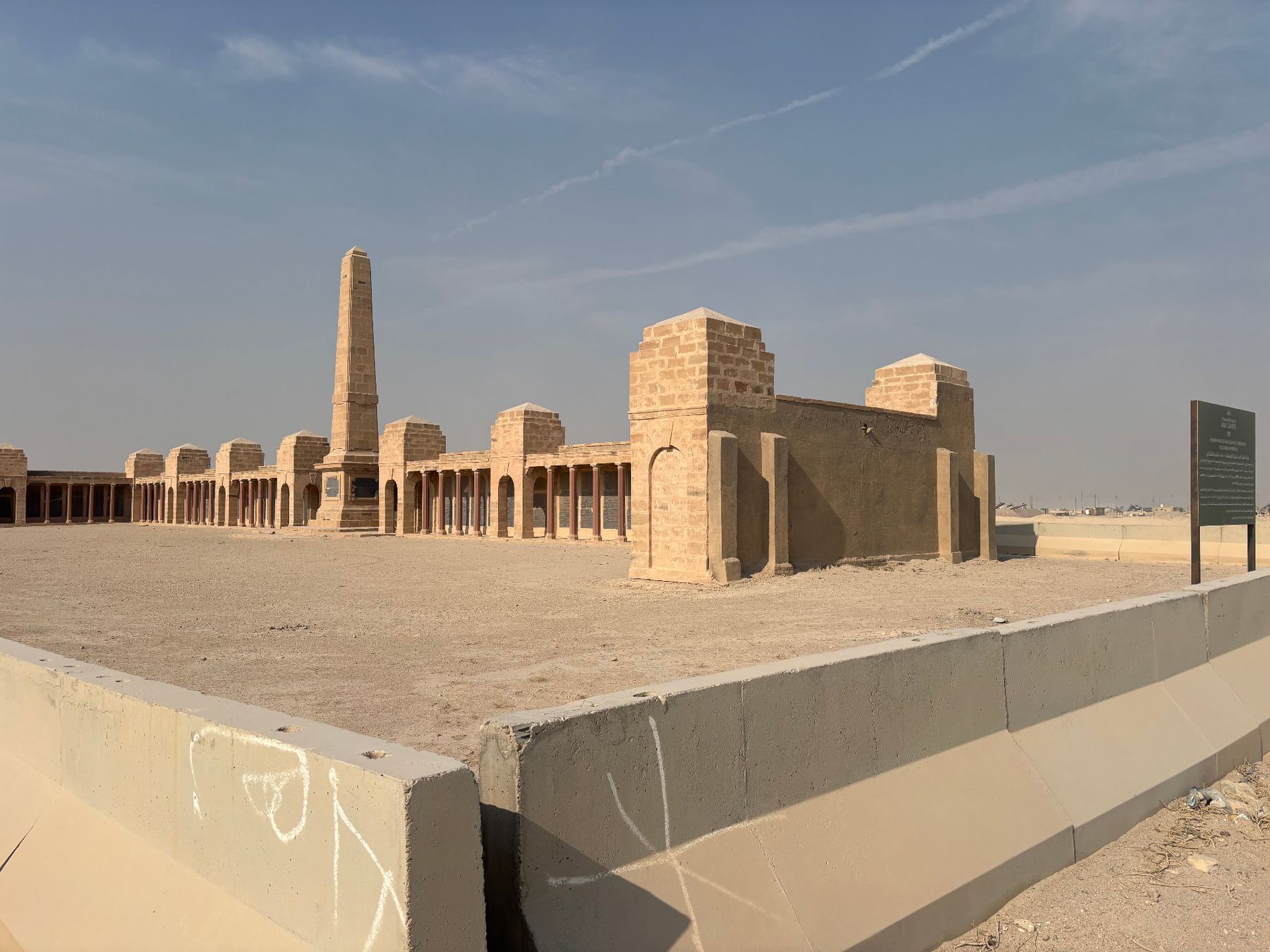
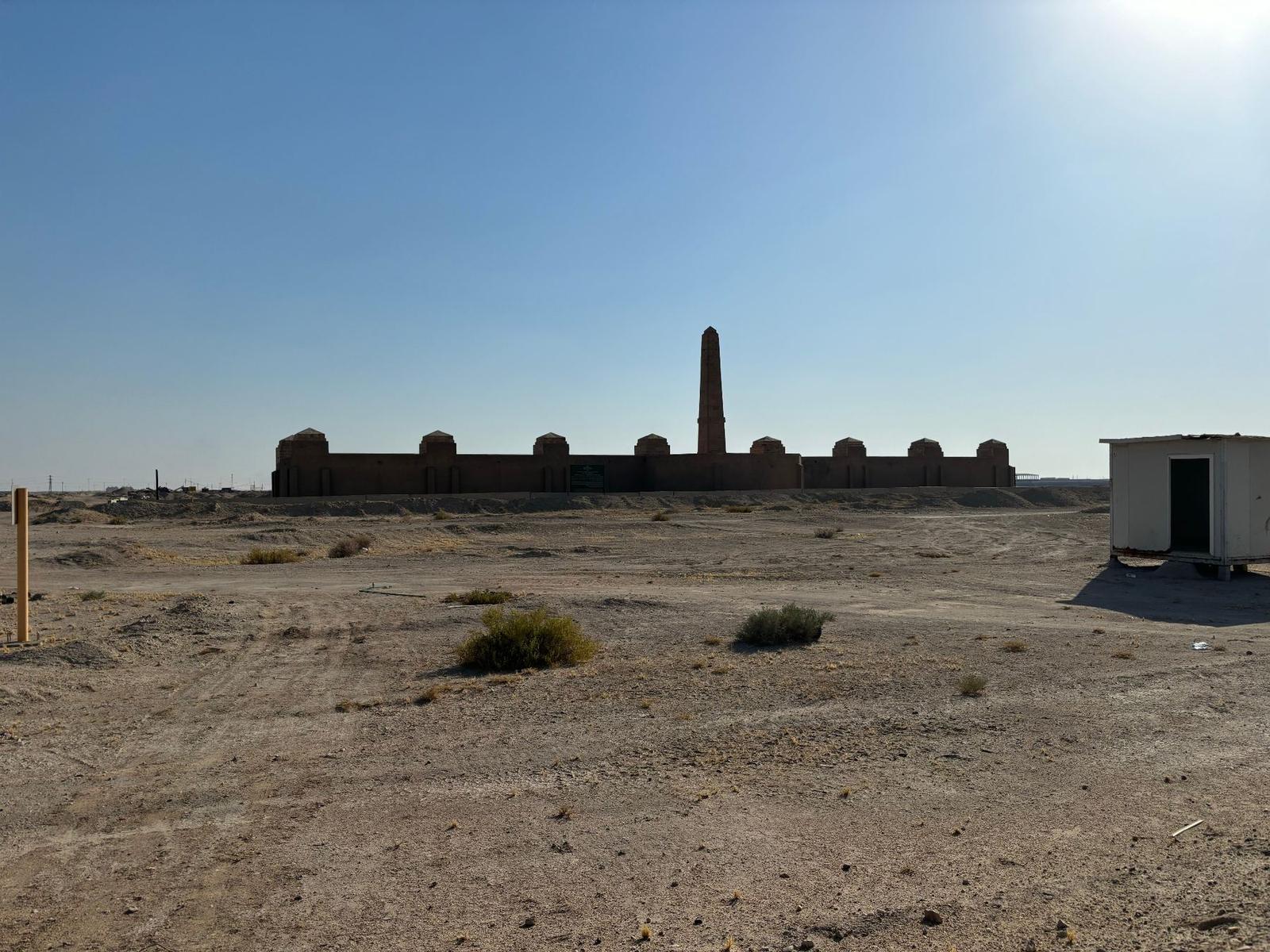
Basra Memorial today
Photographs of the Basra Memorial as it stands today at its relocated site.
Notable Casualties
Lieutenant Commander Charles Henry Cowley
Lieutenant Commander, Royal Naval Volunteer Reserve
Took part in night river supply mission aboard SS Julnar, attempting to re-supply besieged Kut forces; came under heavy fire and was captured or killed
Victoria Cross recipient. Died attempting the daring Julnar mission to break through to Kut.
Lieutenant Commander Cowley was awarded the Victoria Cross for his heroic attempt to break through Turkish lines aboard SS Julnar to resupply the besieged garrison at Kut-al-Amara. On the night of 24-25 April 1916, Cowley and Lieutenant Firman commanded the Julnar in a desperate mission up the Tigris River. Despite facing intense fire from both banks, steel hawsers stretched across the river, and overwhelming odds, they pressed forward with extraordinary courage. The vessel was eventually disabled and captured. Cowley died either in the attack or shortly after in captivity. His body was never recovered.
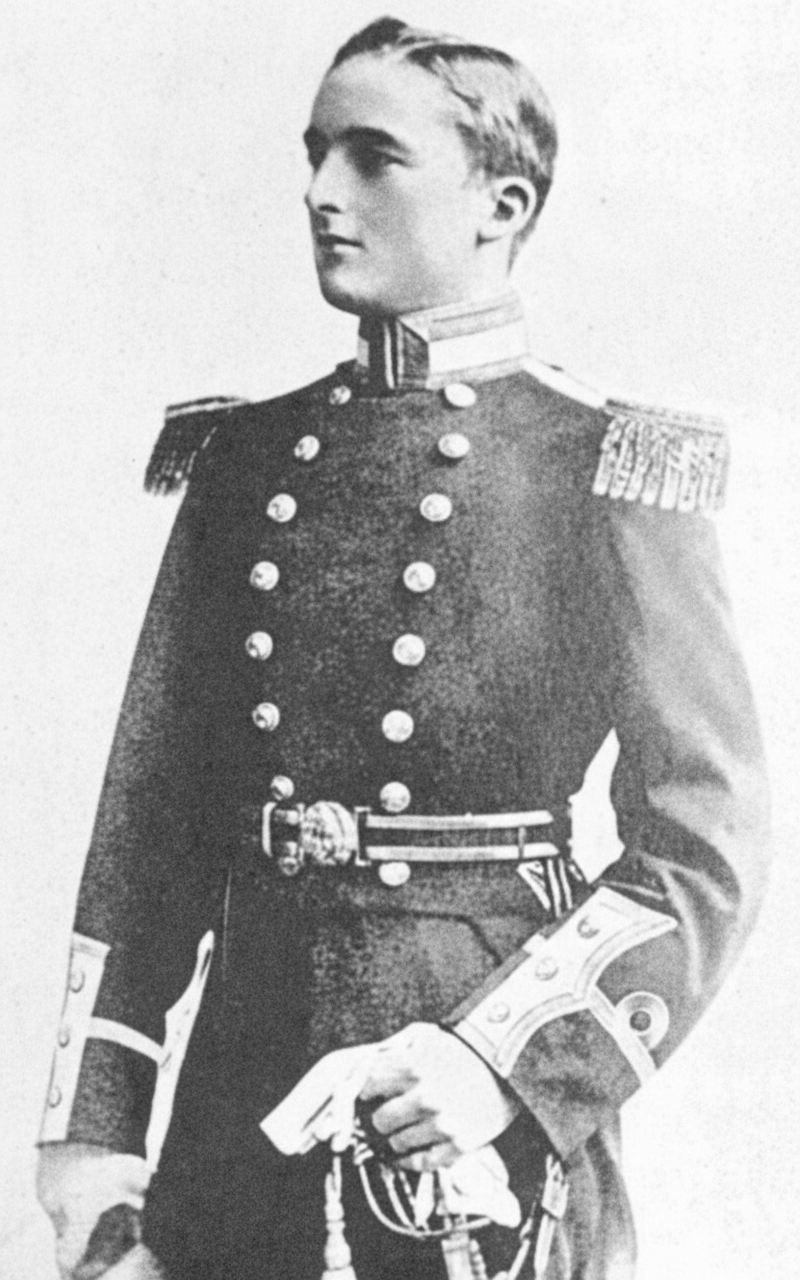
Lieutenant Humphrey Osbaldston Brooke Firman
Lieutenant, Royal Navy
Co-commanded the SS Julnar attempt with Cowley to reach Kut; the ship was disabled, attacked at close range
Victoria Cross recipient. Killed alongside Cowley in the Julnar mission.
Lieutenant Firman shared command with Cowley on the SS Julnar's doomed relief mission to Kut. A young officer from a naval family, Firman volunteered for what was known to be an almost suicidal mission. The Julnar faced relentless fire, obstacles, and searchlights as they attempted to navigate upriver through Turkish positions. When the ship became entangled in cables and was disabled, both officers fought on until killed or captured. Firman's Victoria Cross citation noted his 'most conspicuous bravery' in the face of certain death. His body was never found.

Private James Henry Fynn
Private, 4th Battalion, South Wales Borderers
At Sannaiyat, repeatedly carried wounded men to safety under heavy fire, refusing to stop despite being shot in the arm; later mortally wounded
Victoria Cross recipient for extraordinary bravery under fire.
Private Fynn earned the Victoria Cross during the Second Battle of Sannaiyat on 9 April 1916, one of the failed attempts to relieve Kut. Under intense fire, Fynn repeatedly left cover to rescue wounded comrades, carrying them to safety despite being wounded himself. Shot through the arm, he refused medical treatment and continued his rescue work until he collapsed from blood loss. He survived this action but was killed in battle almost a year later during the British advance following the recapture of Kut. His heroism at Sannaiyat saved multiple lives and exemplified the selfless courage of the ordinary soldier.
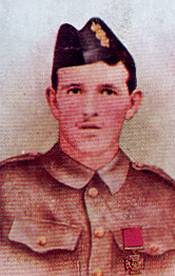
Private David Finlay
Private, 2nd Battalion, Black Watch (Royal Highlanders)
Though his VC was gained earlier (France), died in Mesopotamia with no known grave
Victoria Cross recipient. Died in Mesopotamia far from where he earned his medal.
Private Finlay earned his Victoria Cross at Richebourg l'Avoué in France during May 1915 for heroic action under fire. Transferred to Mesopotamia, he died during the early stages of the campaign in January 1916. His body was never recovered from the battlefield. Finlay represents the thousands of men who fought in multiple theatres of war, only to fall in obscure actions far from where they had distinguished themselves. The circumstances of his death remain unclear, but he was likely killed during operations around the Tigris or in one of the countless skirmishes that characterized the grinding nature of the Mesopotamian Campaign.
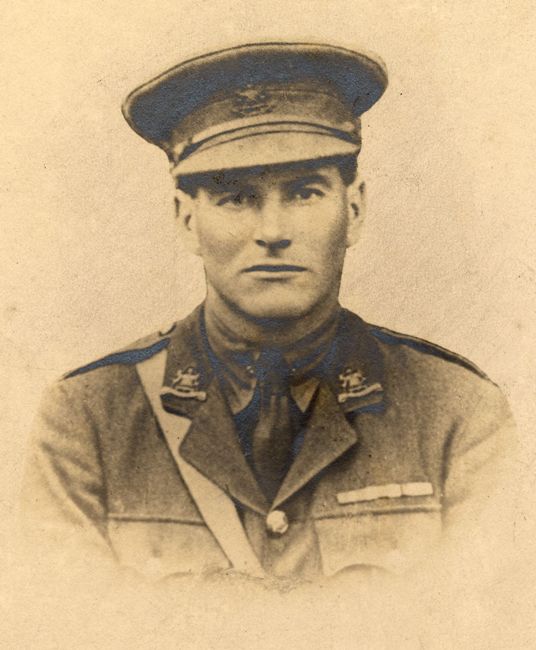
Captain George Stuart Henderson
Captain, 2nd Battalion, Manchester Regiment
At Hillah, though wounded three times, led repeated bayonet charges, encouraged his men, and continued until killed
Victoria Cross recipient. Killed during the Iraqi Revolt of 1920.
Captain Henderson earned his Victoria Cross during the Iraqi Revolt of 1920, a post-WWI insurgency that cost Britain thousands of casualties. At Hillah, Henderson's company came under fierce attack. Despite being wounded three times, he refused to leave his men, repeatedly leading bayonet charges to drive back the insurgents. He moved among his soldiers, encouraging them and directing the defense even as his wounds worsened. Finally, leading one more charge, he was killed. His Victoria Cross was one of only a few awarded for actions during the revolt—a conflict that has been largely forgotten despite its brutality and significance. Henderson died trying to hold a crumbling empire together in the face of local resistance.
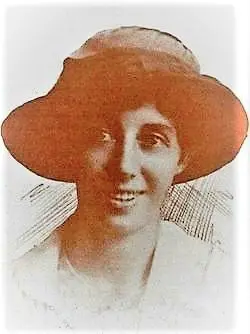
Sister Florence Narrelle Jessie Hobbes
Sister, Queen Alexandra's Imperial Military Nursing Service
Served at 32nd British General Hospital in Amara; evacuated due to illness; died at sea aboard hospital ship SS Kanowna
The only nurse—and the only woman—commemorated on the Basra Memorial.
Sister Florence Narrelle Jessie Hobbes served with the Queen Alexandra's Imperial Military Nursing Service during the First World War. Posted in May 1915 to Malta, she nursed casualties from the Gallipoli campaign at Valletta Military Hospital, before taking charge of St David's Tent Hospital later that year and serving in Sicily, returning to Malta in March 1916. In May 1916 she was posted to Mesopotamia, travelling via India, spending time in Bombay before proceeding in September to Basra and then to Amara, where she served at the 32nd British General Hospital. In June 1917 she became ill and was evacuated to India; her condition was not diagnosed until March 1918, when she was found to be suffering from advanced liver cancer. Evacuated to Australia aboard the hospital ship SS Kanowna in April 1918, she died on 10 May 1918, four days out from Fremantle and was buried at sea leaving her with no known grave. She is therefore commemorated on the Basra Memorial to the Missing, where she is the only nurse—and the only woman—named on the memorial.
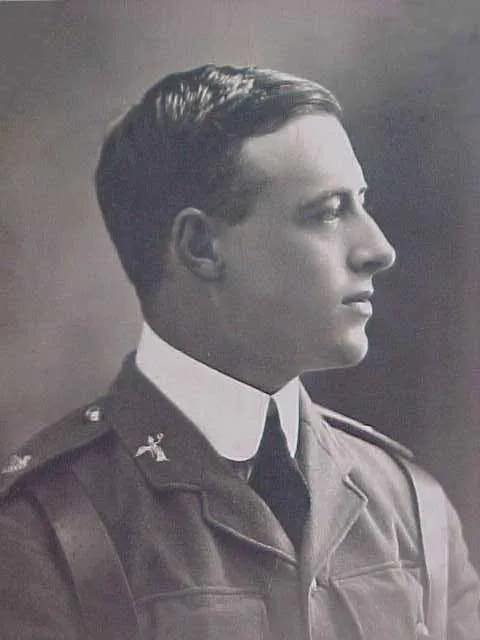
Lieutenant George Pinnock Merz
Lieutenant, Australian Flying Corps, Mesopotamian Half Flight
Forced to land after engine failure near Nasiriyah; killed by local tribesmen while attempting to return to British lines
One of Australia's first military aviators and the first Australian airman killed in action.
Lieutenant George Pinnock Merz (1891–30 July 1915) was one of Australia's first military aviators and the first Australian airman killed in action. Born in Melbourne, he studied medicine at the University of Melbourne before joining the Australian Flying Corps in 1914. In 1915 he was posted to Mesopotamia with the AFC's Mesopotamian Half Flight, a small and lightly equipped detachment providing reconnaissance support to British and Indian forces advancing from Basra. Operating primitive aircraft in extreme heat with minimal logistical support, Merz was at the forefront of Australia's first overseas air operations. On 30 July 1915, while returning from a mission near Nasiriyah, his aircraft suffered engine failure and was forced to land in hostile territory south of the Euphrates. Attempting to make his way back to British lines, he was killed by local tribesmen. His body was never recovered.
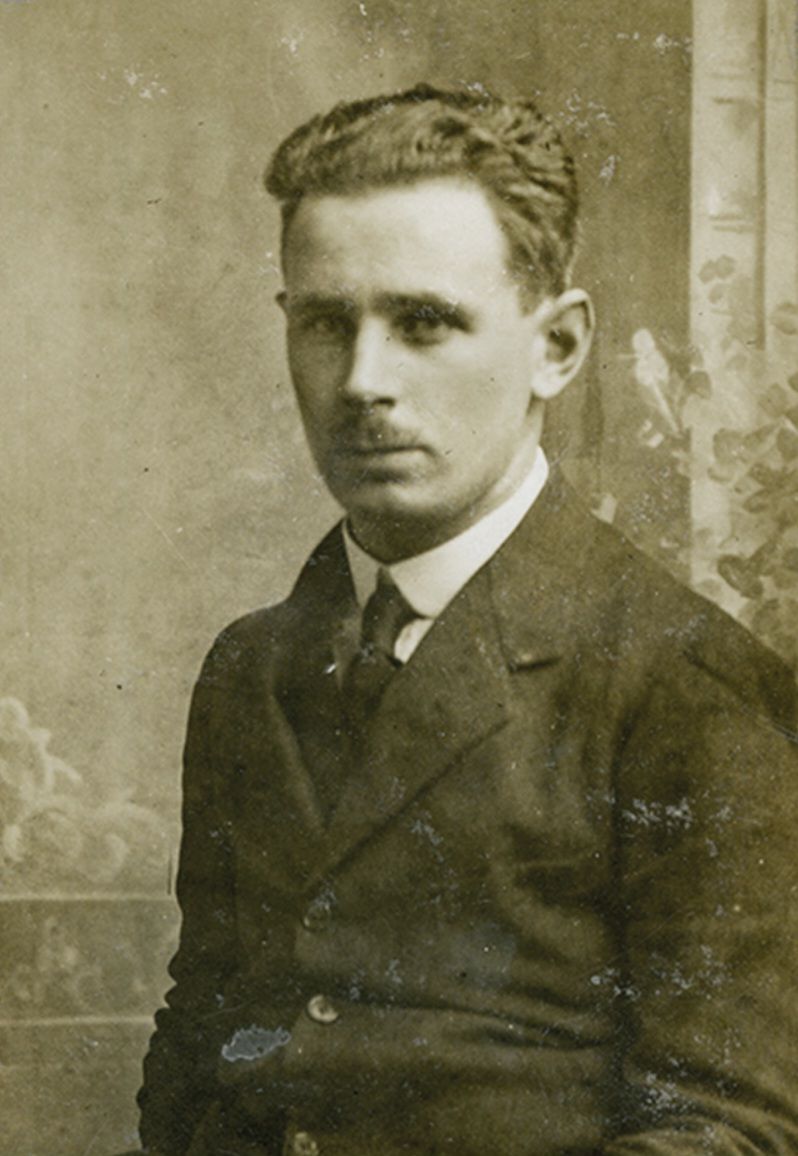
Lieutenant William Burns
Lieutenant, New Zealand Staff Corps
Served as Lieutenant Merz's observer; killed alongside him after forced landing near Nasiriyah
The first New Zealand aviator to be killed on operations (although born in Australia). Observer who died alongside Lieutenant Merz, marking an early chapter in New Zealand military aviation history.
Lieutenant William Burns, the first New Zealand aviator killed on operations, served as Merz's observer with the Mesopotamian Half Flight. Although born in Australia, Burns served with the New Zealand Staff Corps. On 30 July 1915, while returning from a mission near Nasiriyah, their aircraft suffered engine failure and was forced to land in hostile territory south of the Euphrates. Attempting to make their way back to British lines, both men were killed by local tribesmen. Their bodies were never recovered, and both are commemorated on the Basra Memorial to the Missing, marking an early and stark chapter in the history of military aviation.
Visual Documentation
Admin upload portal for panoramas, videos and photos.
Video Photography
Video Documentation Coming Soon
Comprehensive video documentation of the memorial is being prepared and will be added shortly.
360° Panoramic Views
360° Panoramas Coming Soon
We’re preparing immersive 360° views. Once your panoramic files are ready, we’ll publish them here.
360° Panorama Health Check
Memorial Layout
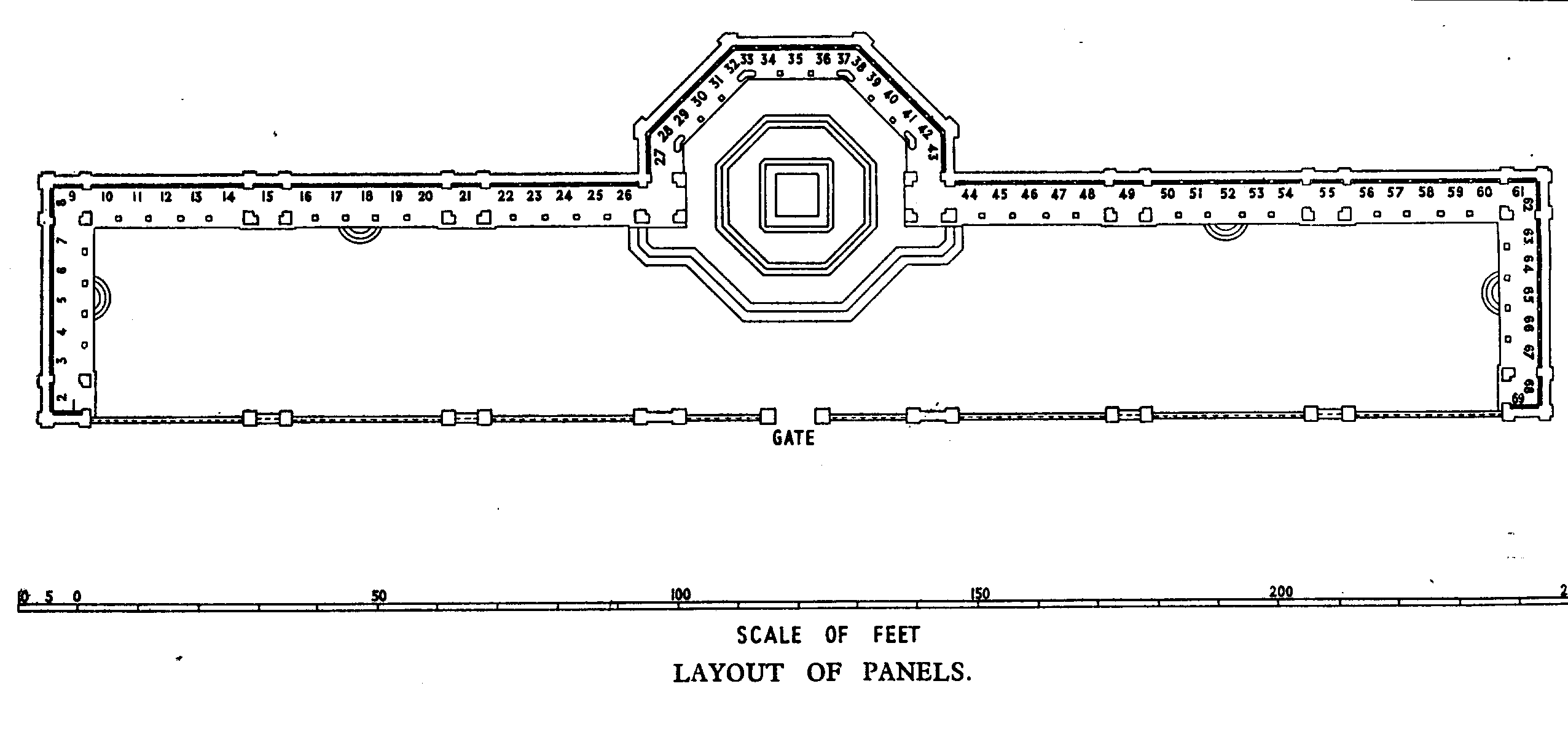
Layout plan showing the arrangement of the 69 memorial panels around the central obelisk. The panels are numbered sequentially and contain the names of over 40,000 Commonwealth servicemen who died in Mesopotamia from 1914-1921 and have no known grave. The memorial's design features colonnades extending from the octagonal central structure.
Watch the films from this site
Each film recorded at this location has its own page with the full footage, background notes and links to the surrounding cemeteries.


Related Articles & Content
The Pirate of Basra
VisitThis article recounts the dramatic story of Lieutenant-Commander Charles Henry Cowley, a British river pilot and intelligence agent in Mesopotamia during WWI, who became known (by Turkish authorities) as the "Pirate of Basra." It details his daring service, including commanding the steamer Mejidieh in evacuations and supply missions, and his later leadership of the ill-fated Julnar expedition to relieve besieged forces at Kut. After the Julnar was disabled and attacked, Cowley was captured, and his fate remains uncertain—some claimed he was executed, others that he died in captivity or during escape. Though no grave was ever confirmed, Cowley is commemorated on the Basra Memorial alongside Lt. Humphrey Firman, another Julnar officer who received the Victoria Cross. The article places this gripping personal story within the larger Mesopotamian campaign, showing how river operations played a critical yet perilous role in the siege warfare of WWI Iraq.
Source: Western Front Association
The Campaign in Mesopotamia
VisitThe article outlines the British-Indian campaign in Mesopotamia during World War I: its origins in protecting oil interests, early advances toward Baghdad, and the disastrous Siege of Kut. It describes how British commanders adapted tactics under new leadership in 1917, leading to the capture of Baghdad. The harsh climate, disease, poor logistics, and stiff Ottoman resistance made the campaign extraordinarily costly in lives.
Source: The Long, Long Trail
110 Years On: Remembering the Kut Siege and the Armenian Genocide
VisitThe article explores the links between the 1916 Siege of Kut and the Armenian Genocide, showing how British and Indian POWs replaced Armenian deportees as forced labor on the Berlin-Baghdad railway. Drawing on prisoners' memoirs, it reveals how they witnessed the aftermath of the genocide during their marches through Anatolia. It contrasts shared suffering with the genocidal intent unique to the Armenian experience, highlighting overlapping yet distinct wartime atrocities.
Source: LSE International History Blog
Planning a visit: quick answers
- Can you visit Commonwealth war cemeteries in Iraq?
- Yes. Basra War Cemetery, the Basra Memorial to the Missing, Amara War Cemetery and Baghdad North Gate War Cemetery can all be visited, but access varies by site and usually needs advance arrangement, a local guide and, in some cases, permission from the authorities.
- Do I need a visa or permits to visit?
- Most visitors now travel on a visa on arrival or an e-visa, and some sites sit inside restricted or military-controlled areas where a separate permit or escort is required.
- Are the cemeteries maintained?
- Condition varies considerably. Some sites are cared for by local gardeners, while others remain damaged or overgrown, as documented in our field reporting.