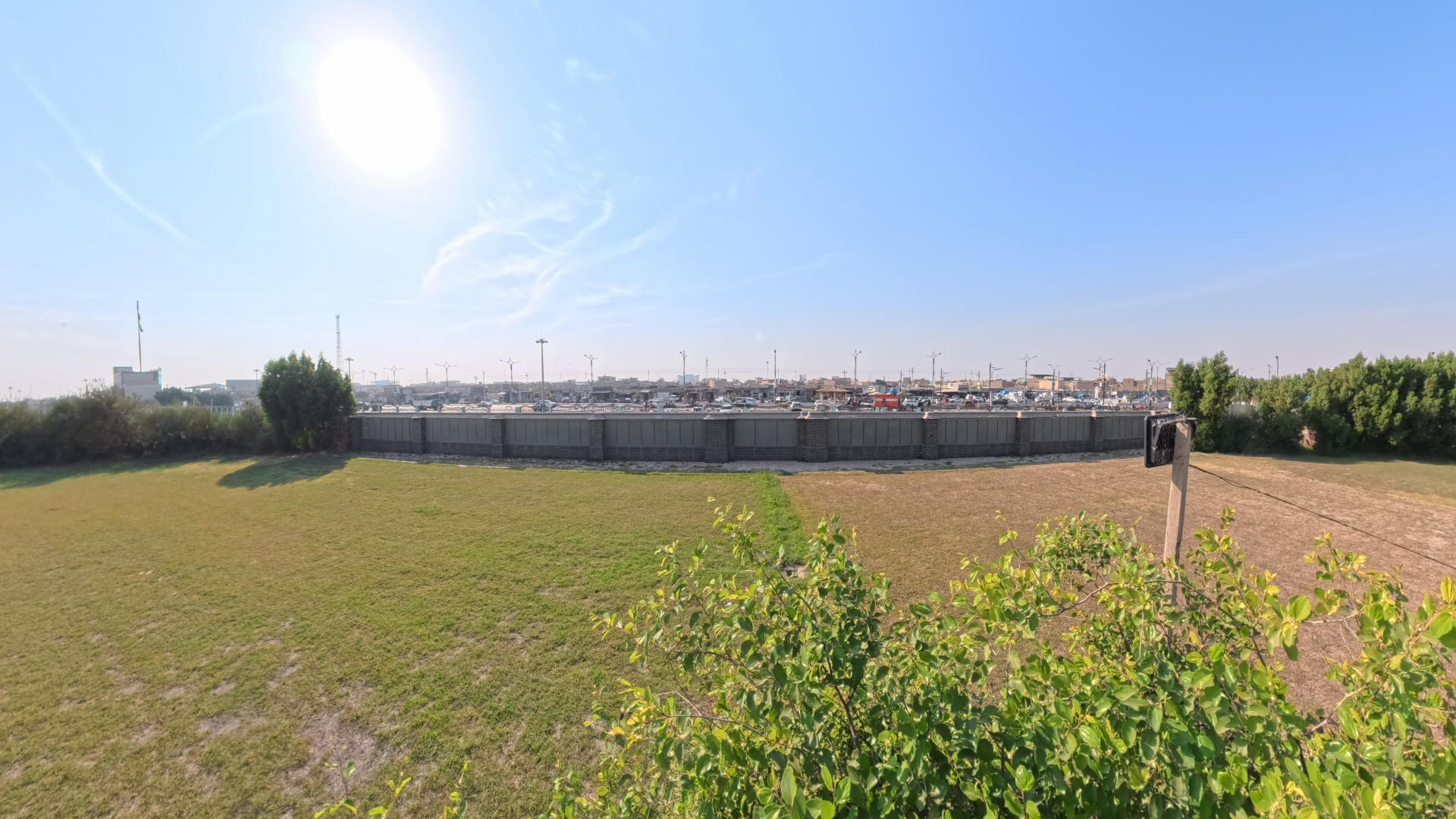
Amara War Cemetery (British)
Take a Virtual Reality Tour
Best viewed in the YouTube app on a mobile device with a VR headset (e.g. Google Cardboard). Drag to look around in your browser.
Amara (Al-ʿAmārah) on the Tigris became a principal medical and burial centre for the Mesopotamian Expeditionary Force during WWI. From 1915, hospitals and depots clustered here, and the cemetery grew into the largest Commonwealth burial ground in southern Mesopotamia.
Quick Information
Amarah, ~305-344 km southeast of Baghdad
Commemorated
4,621 commemorated
WWI: 4,621 • WWII: 0
Status
Last Updated
1 April 2025
Key Takeaways
- • Despite limited funding, training or support the local guardian shows what can be achieved in Iraq
- • The guardians' family have looked after this site for over 65 years - a remarkable achievement
- • Best kept Commonwealth Cemetery in Iraq by a very long way
- • Original bronze sword from Cross of Sacrifice preserved - believed to be the only original one left in Iraq
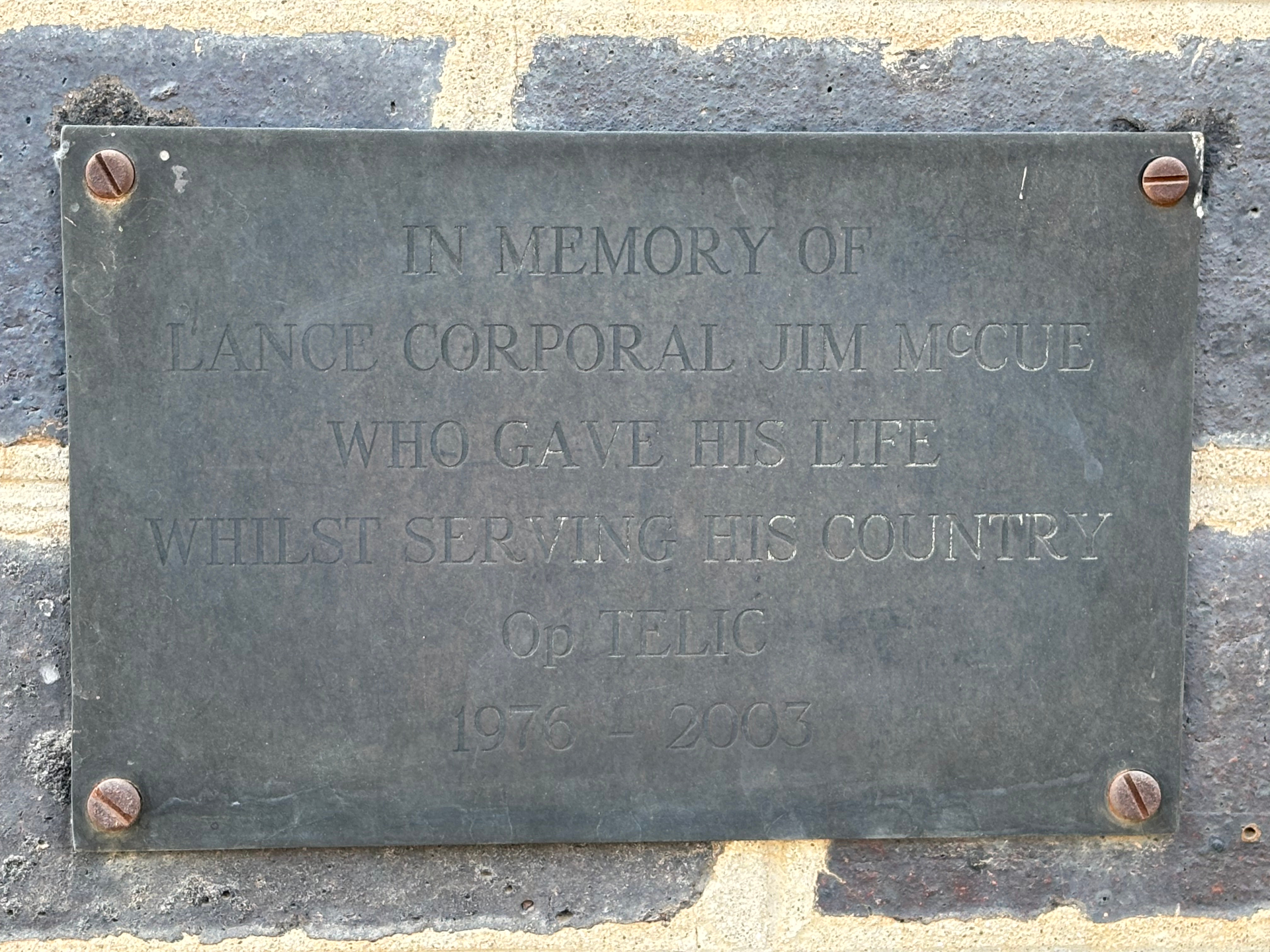
- • Contains the only known memorial to a casualty of Operation Telic (Lance Corporal James McCue)
Amara War Cemetery has two parts which have fared very differently over the past few decades, the British Cemetery and the Indian Cemetery (often referred to as the Indian Left Bank Cemetery but is actually only 50 feet from the British one and on the same side of the river).
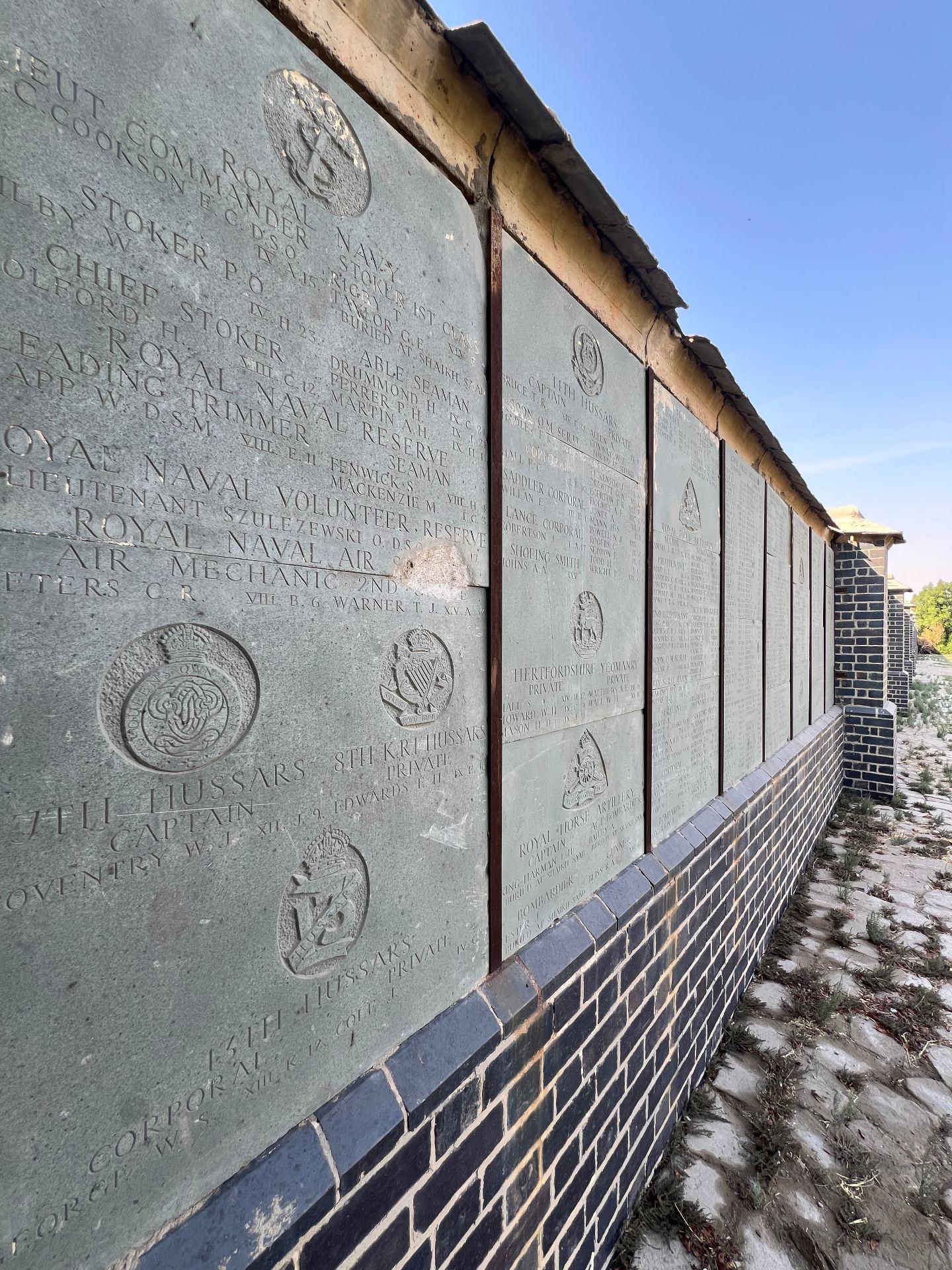
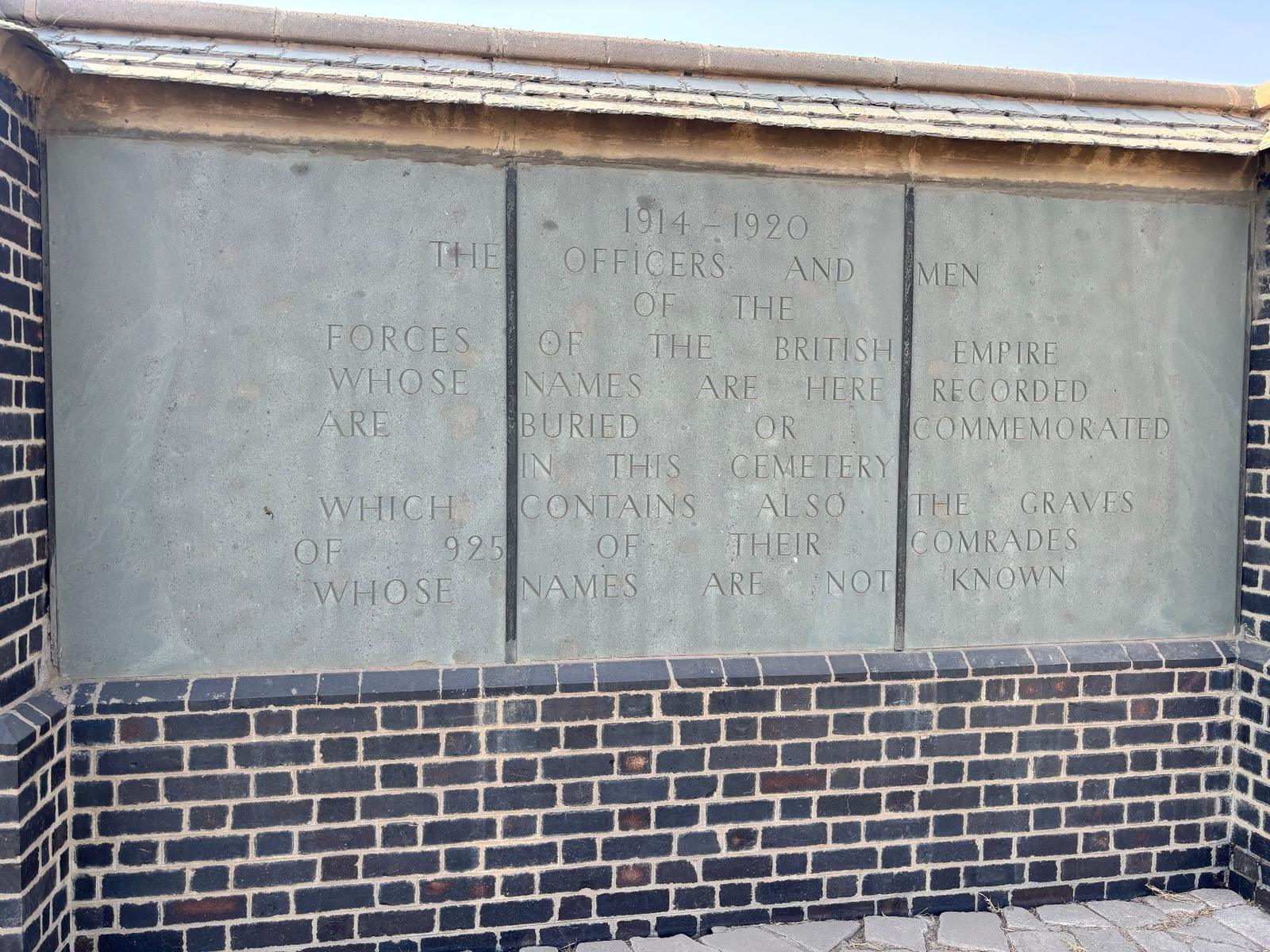
The British Cemetery covers a large area and has 4,621 graves, the majority known (925 are unidentified) and buried individually. The headstones were removed in the 1930s and replaced with a Memorial Wall.
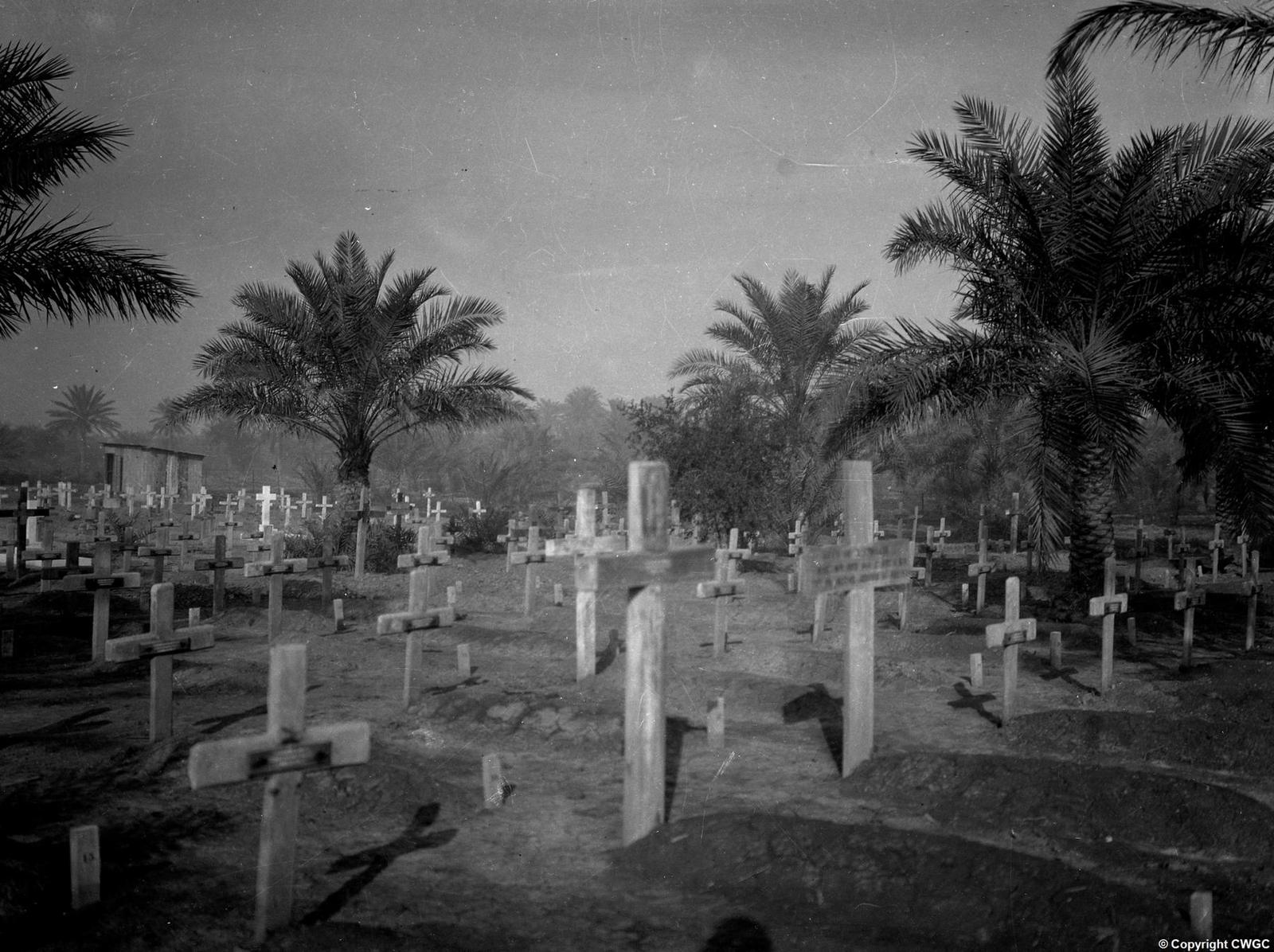
Amara War Cemetery, historical photographs
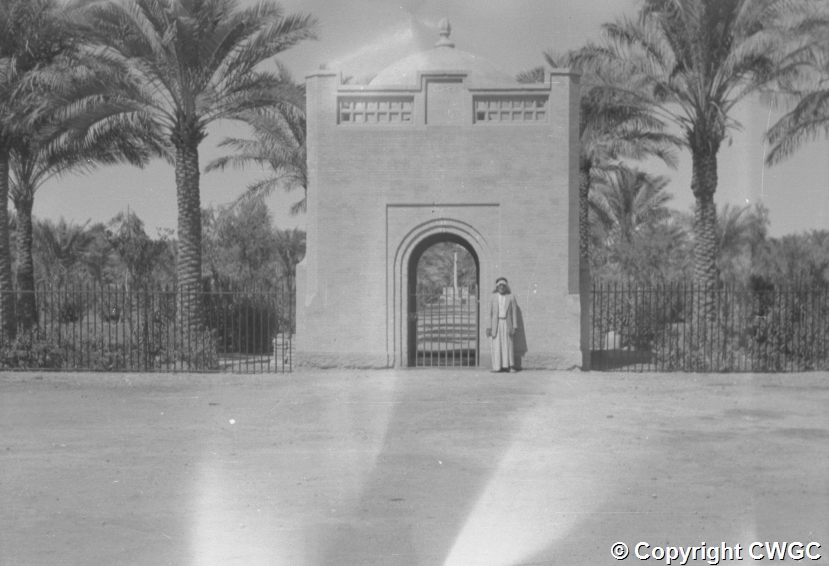
Historical photographs from the cemetery's earlier decades, when the original gatehouse, Cross of Sacrifice and War Stone still stood and the grounds were tended as a true garden of palms, lawns and hedges. Images © CWGC.
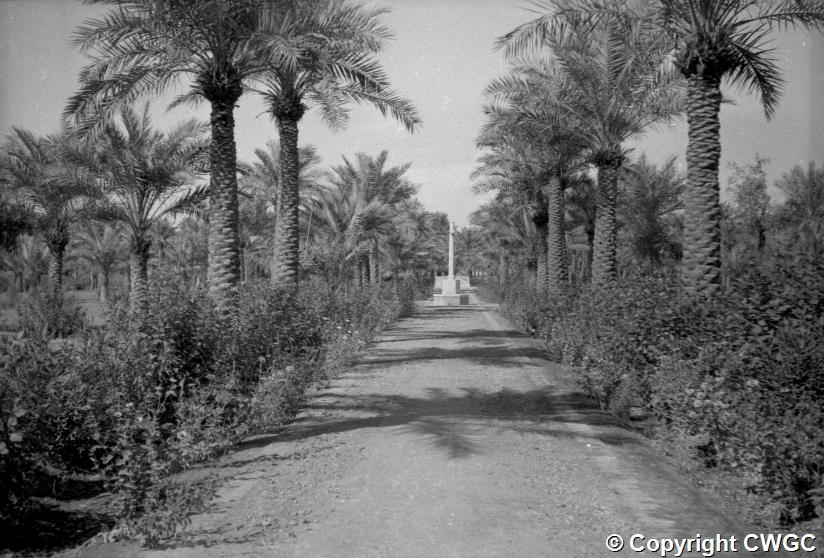
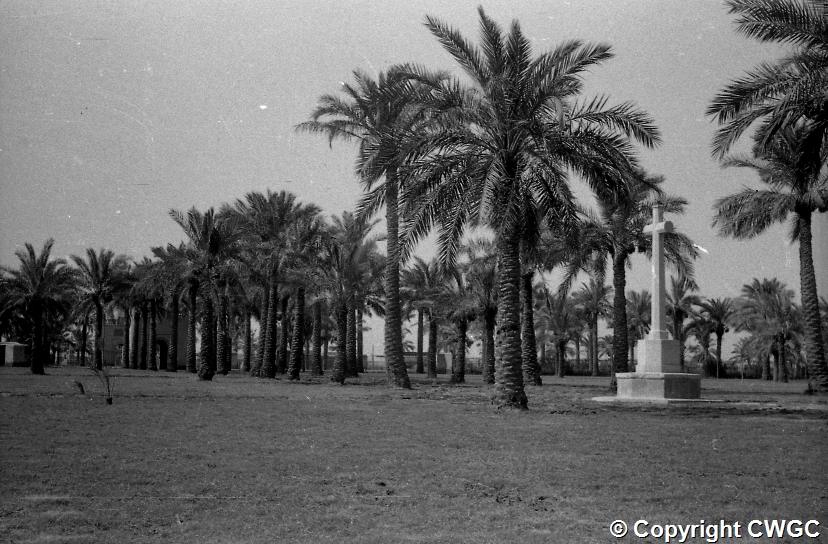
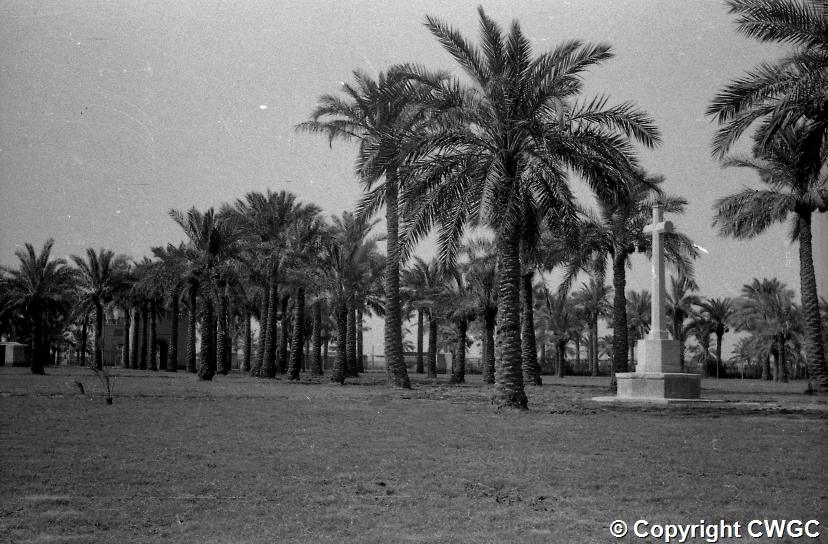
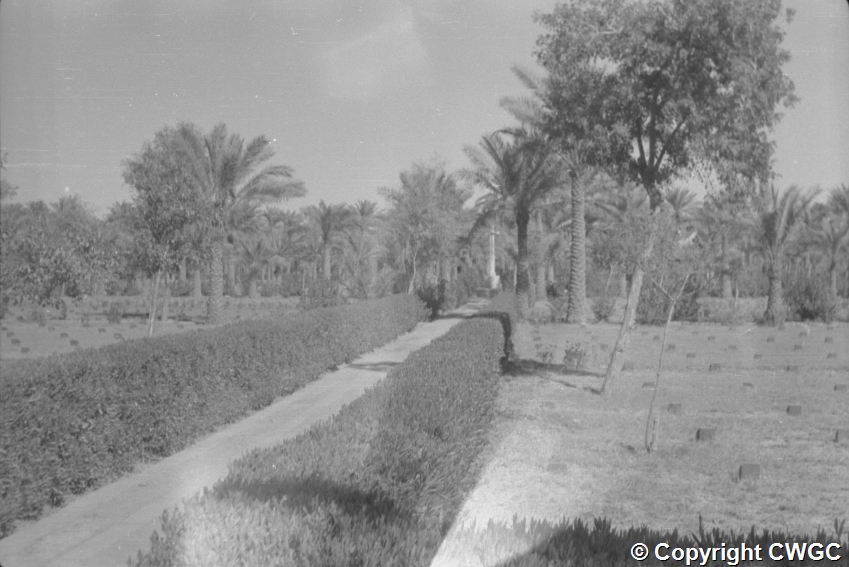
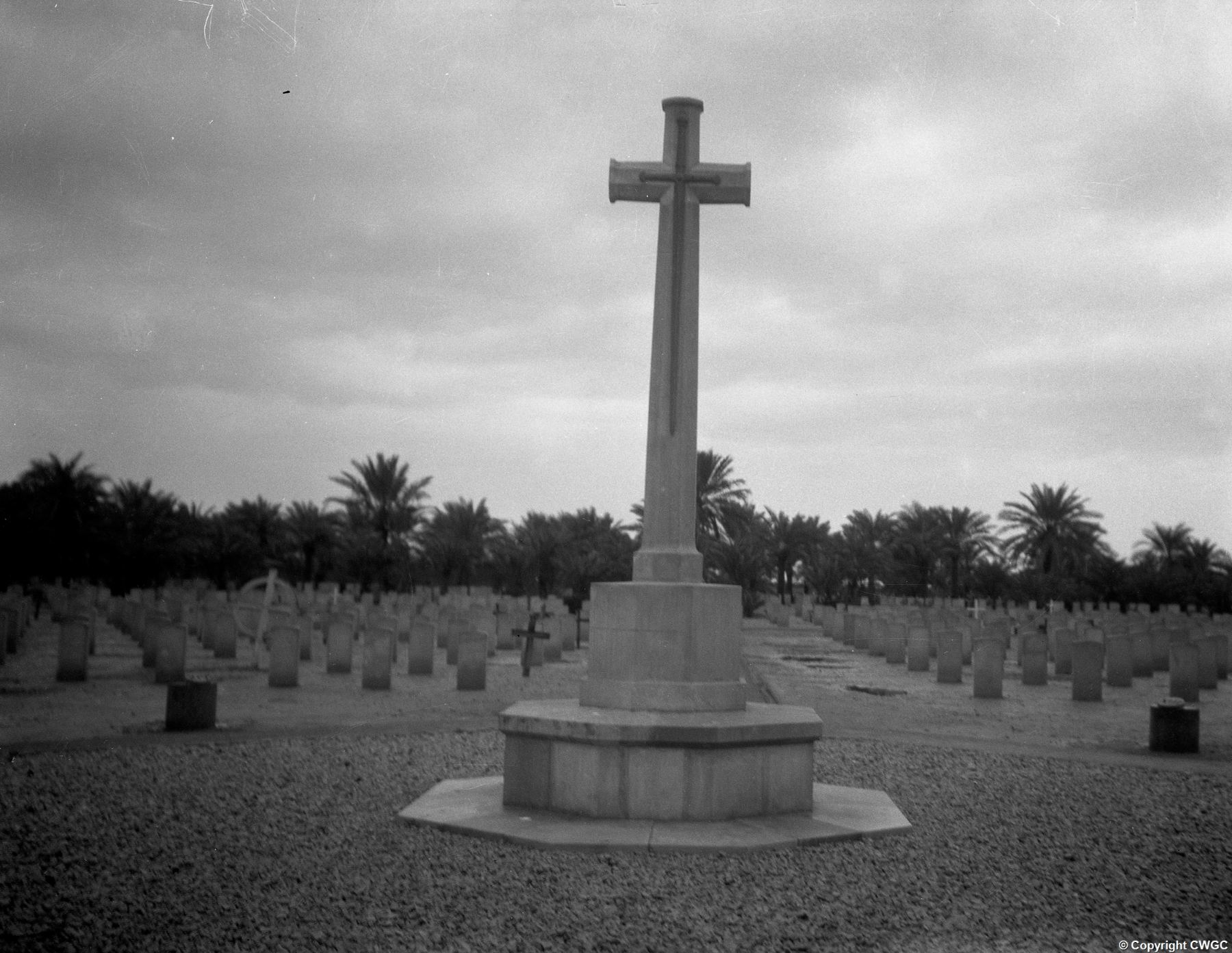
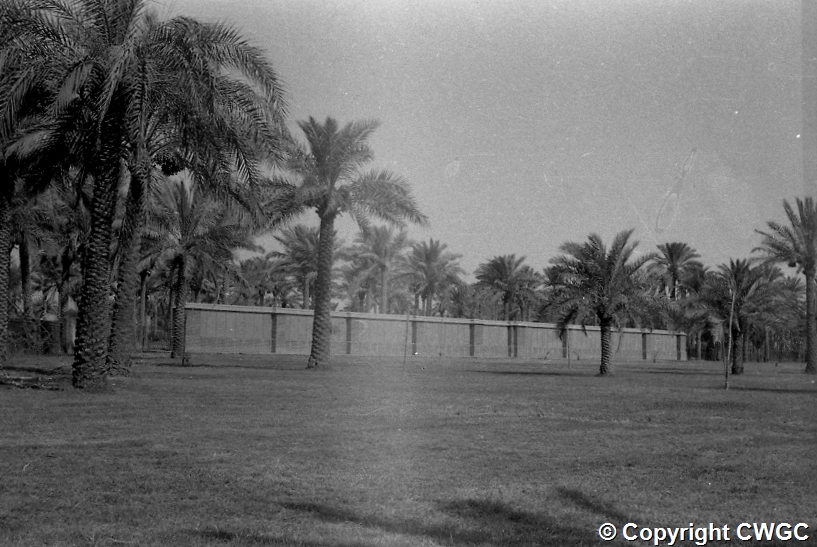
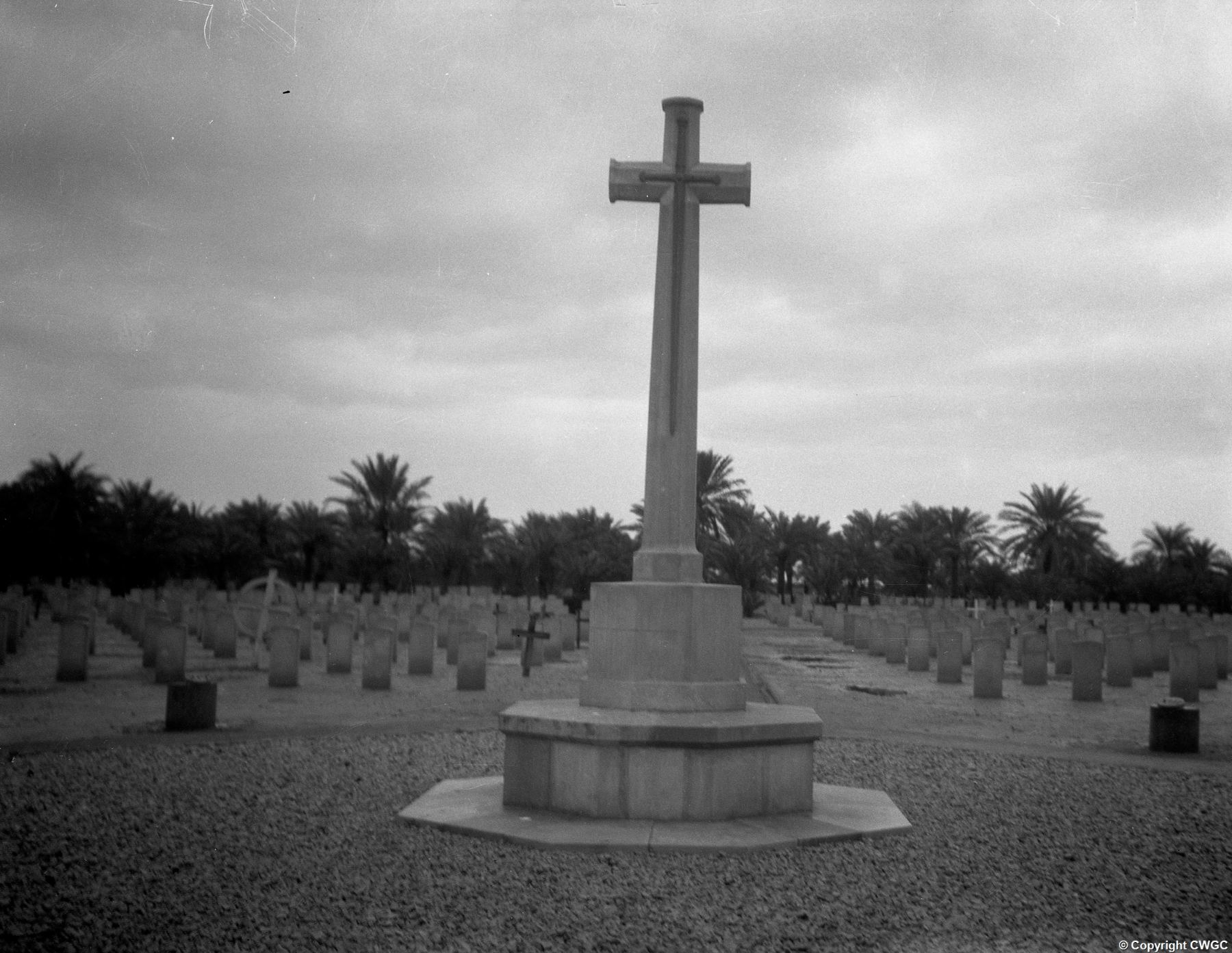
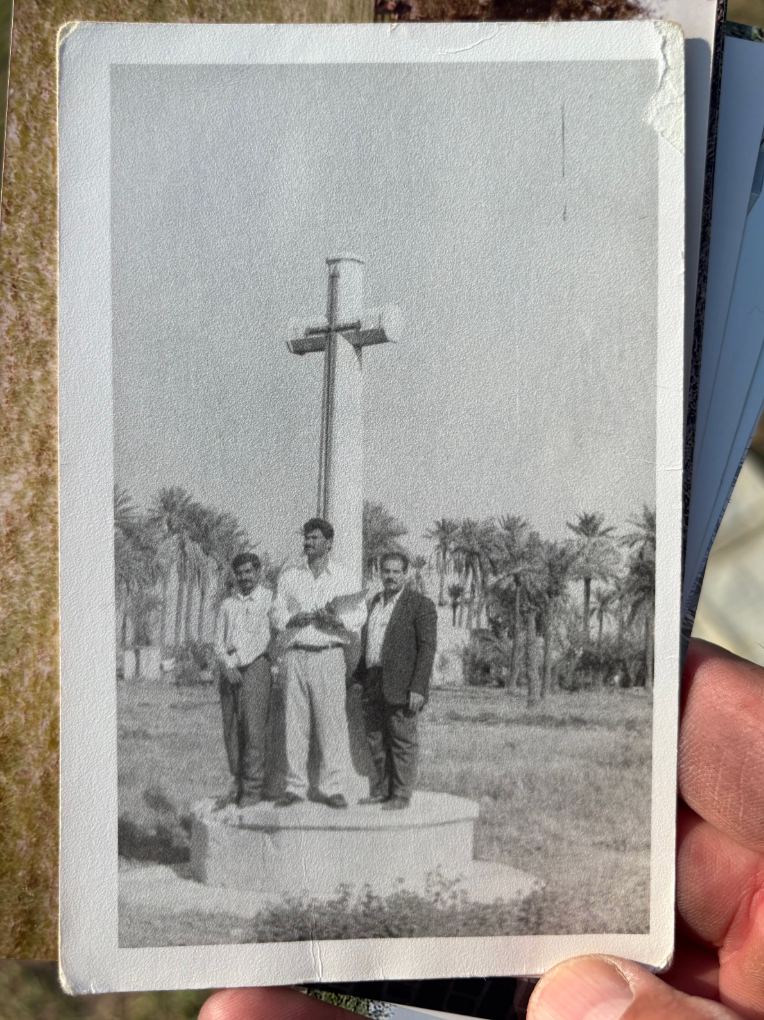
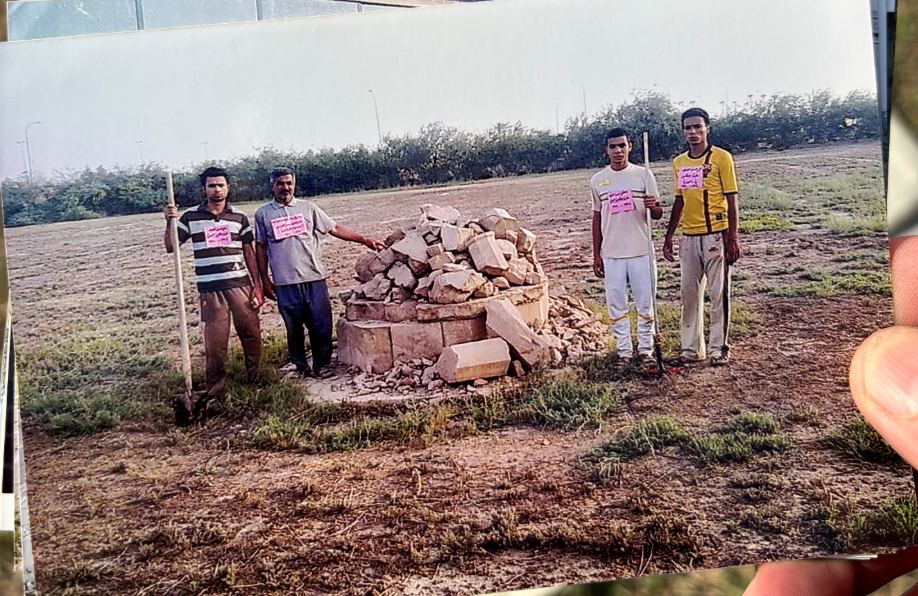
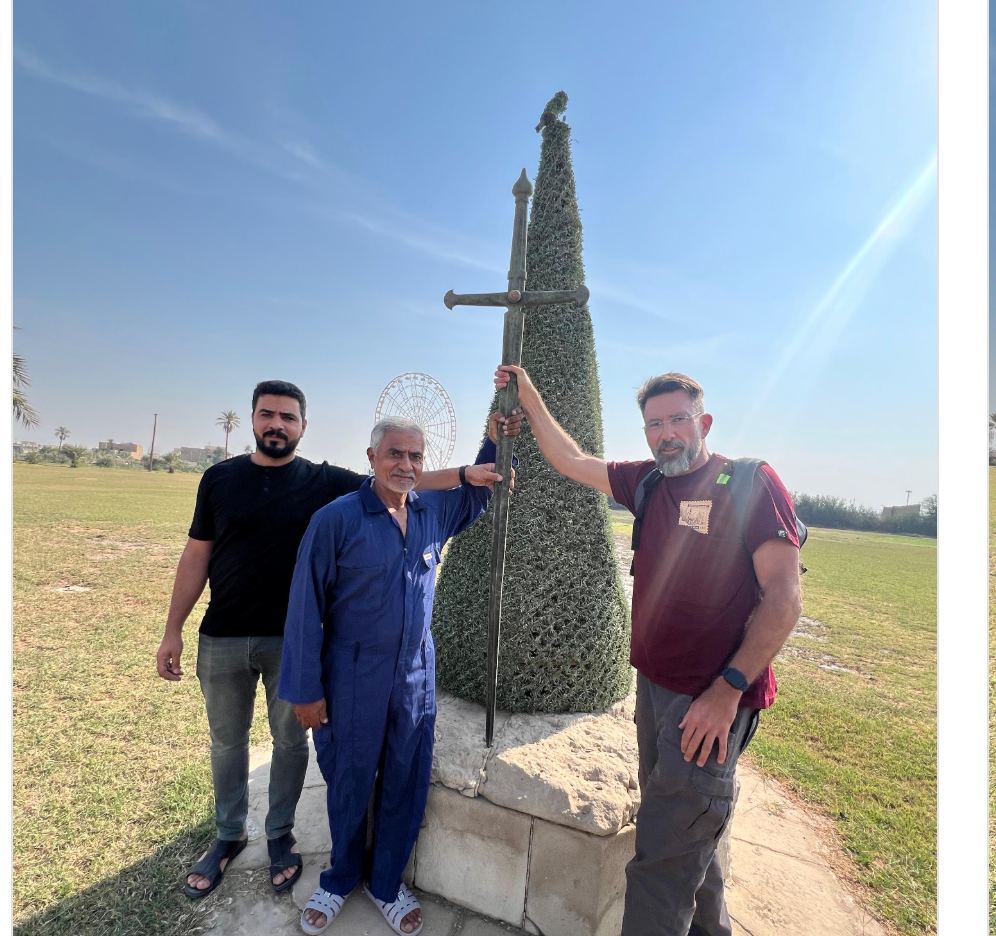
The Cross of Sacrifice, then and now
The Cross of Sacrifice at Amara War Cemetery across a century, from its original construction in the 1920s, when it stood at the head of the original gravestones later replaced by the Memorial Wall, through its destruction by militants in 2004, to the surviving pedestal and bronze sword today.
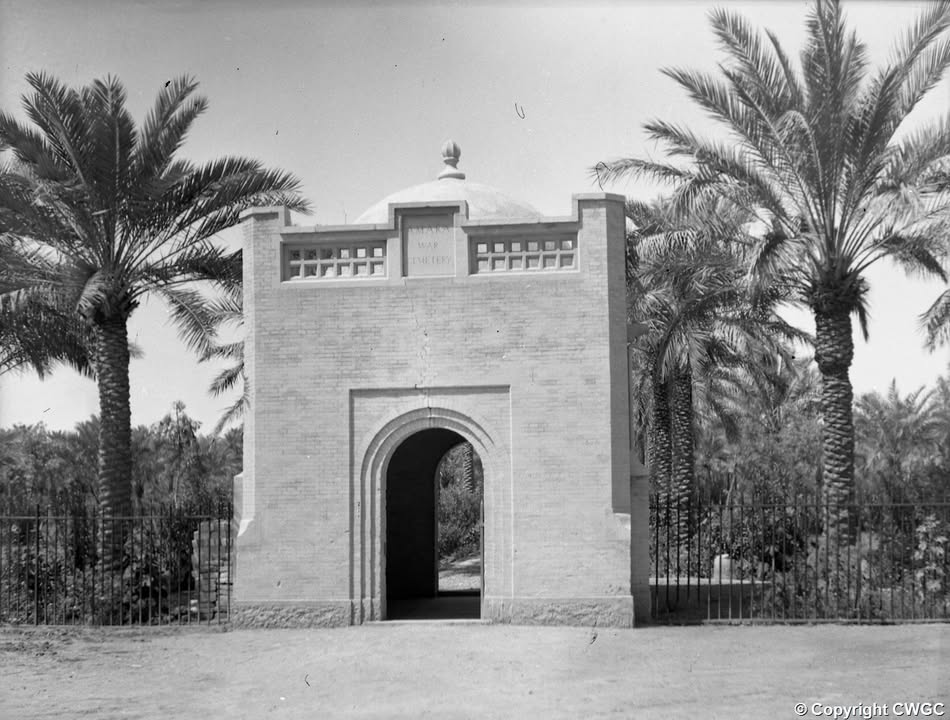
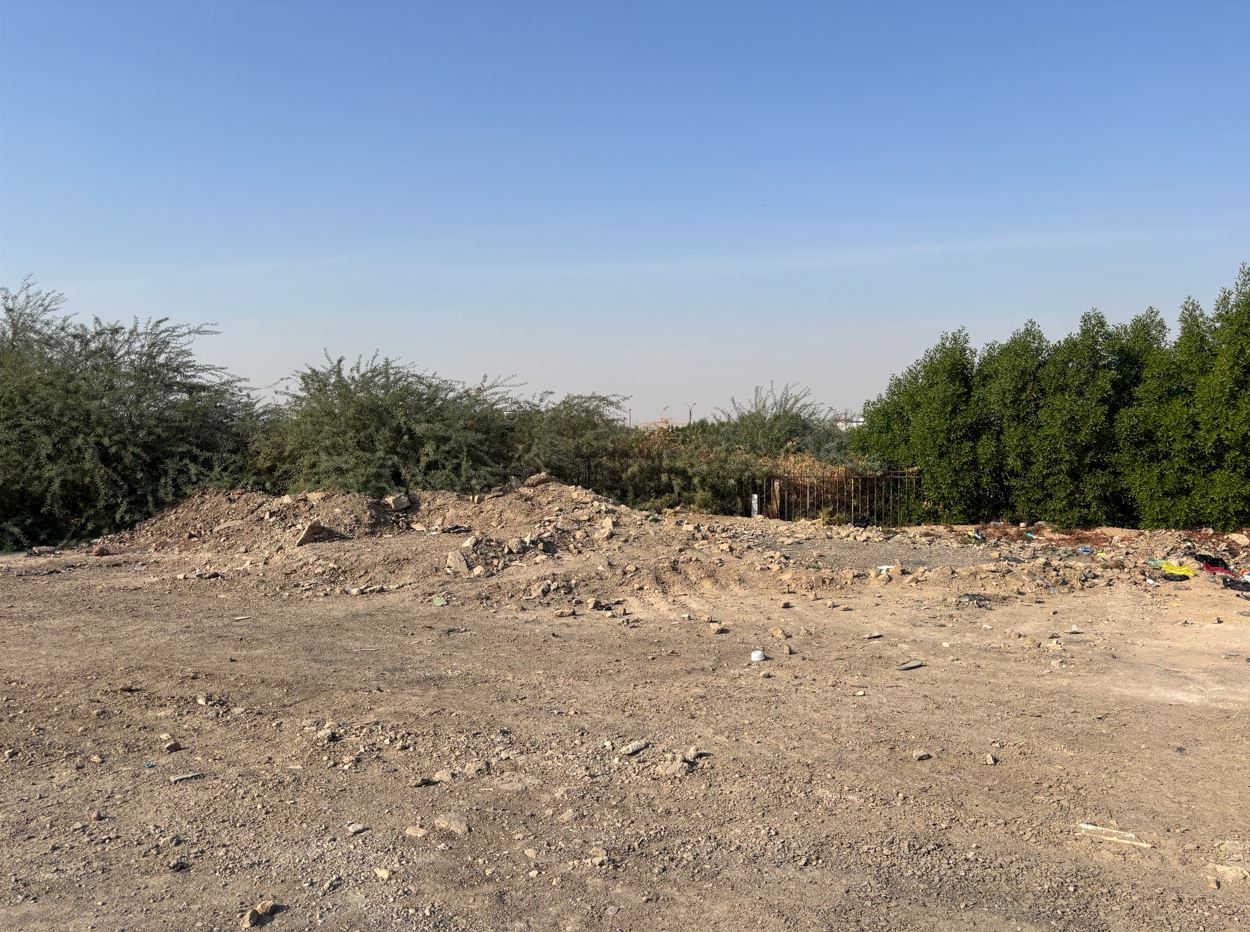
The Gatehouse, then and now
The original Amara War Cemetery gatehouse, with its inscribed lintel, domed cupola and arched entrance, photographed in its early years and at the site today. It was demolished, reportedly on the orders of the CWGC Country Manager, in 1998.
The Stone of Remembrance, then and now
The Stone of Remembrance at Amara War Cemetery, photographed across a century: as it stood in its original condition in the 1920s, and the broken inscription fragments that survive today after its destruction by militants in 2004.
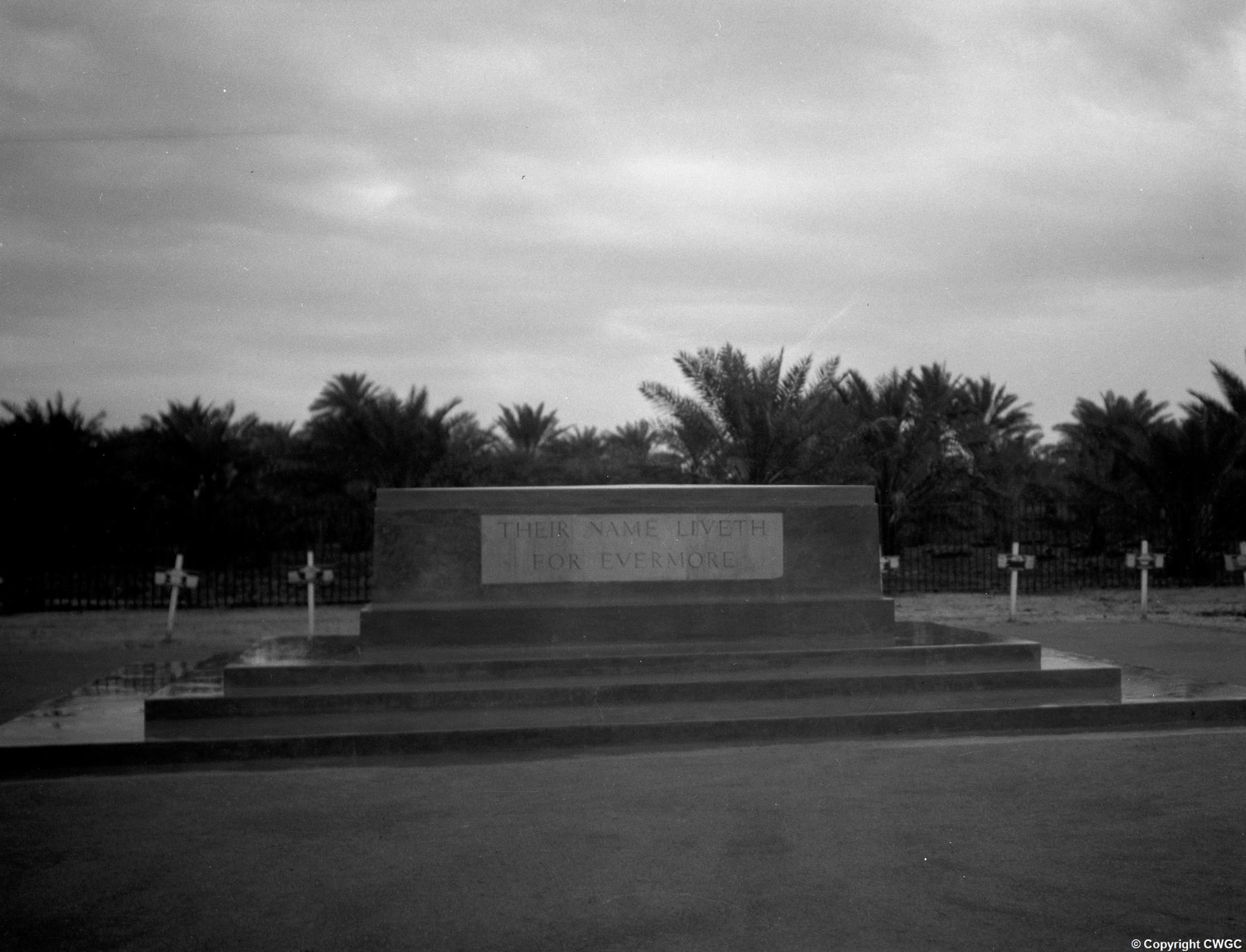
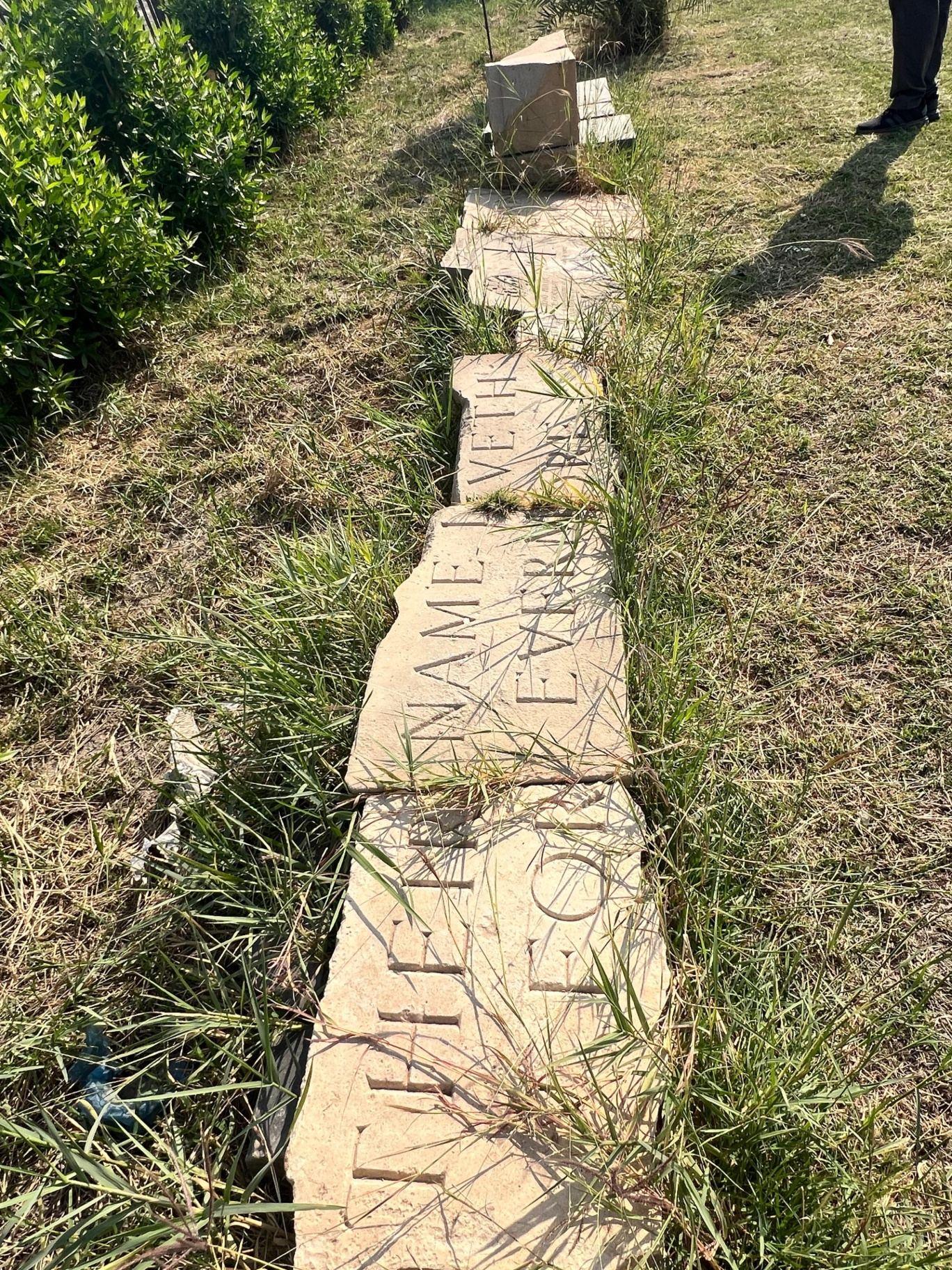
Amara War Cemetery today
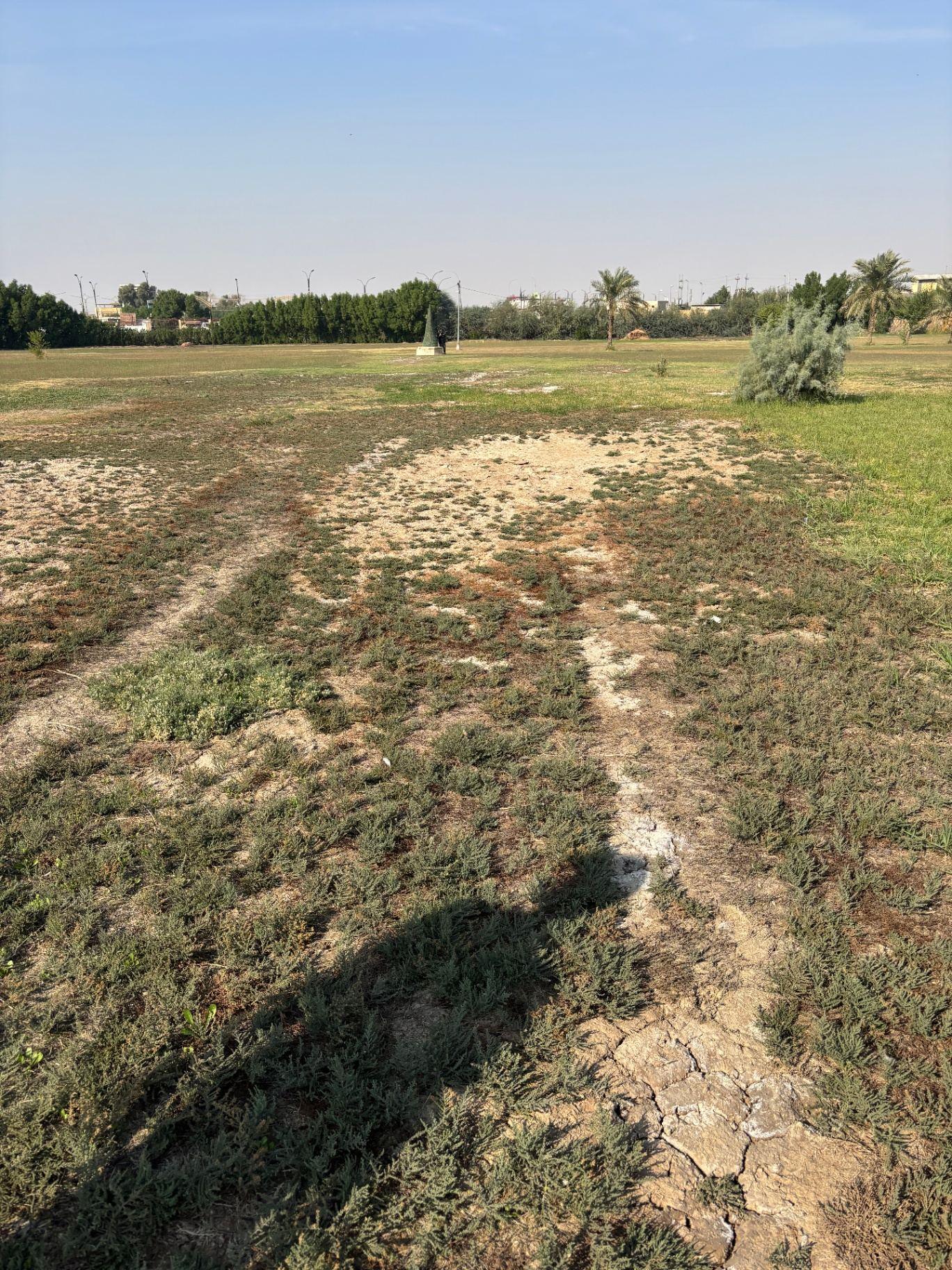
Photographs from recent visits to the cemetery, showing the grounds as they appear today.
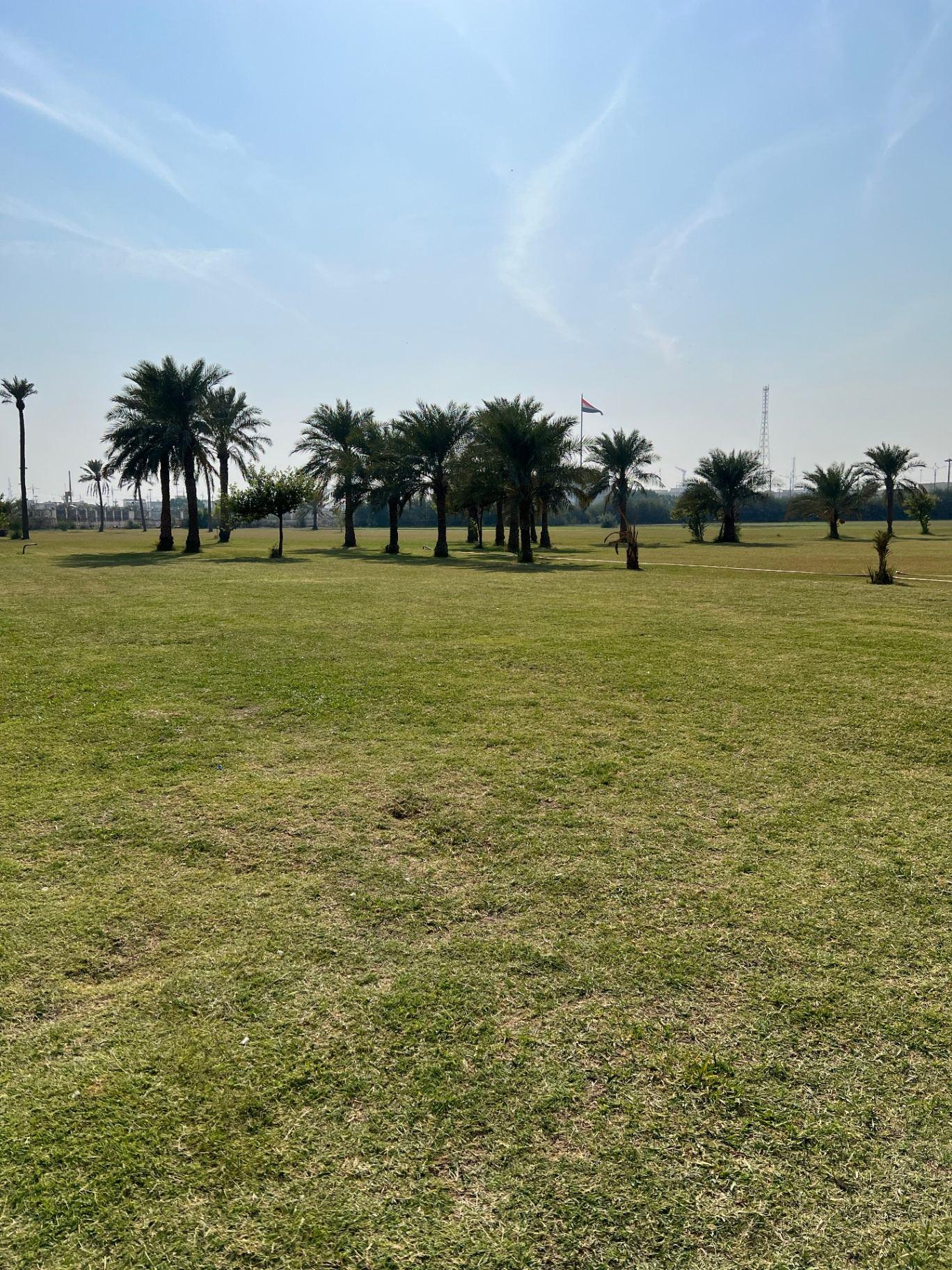
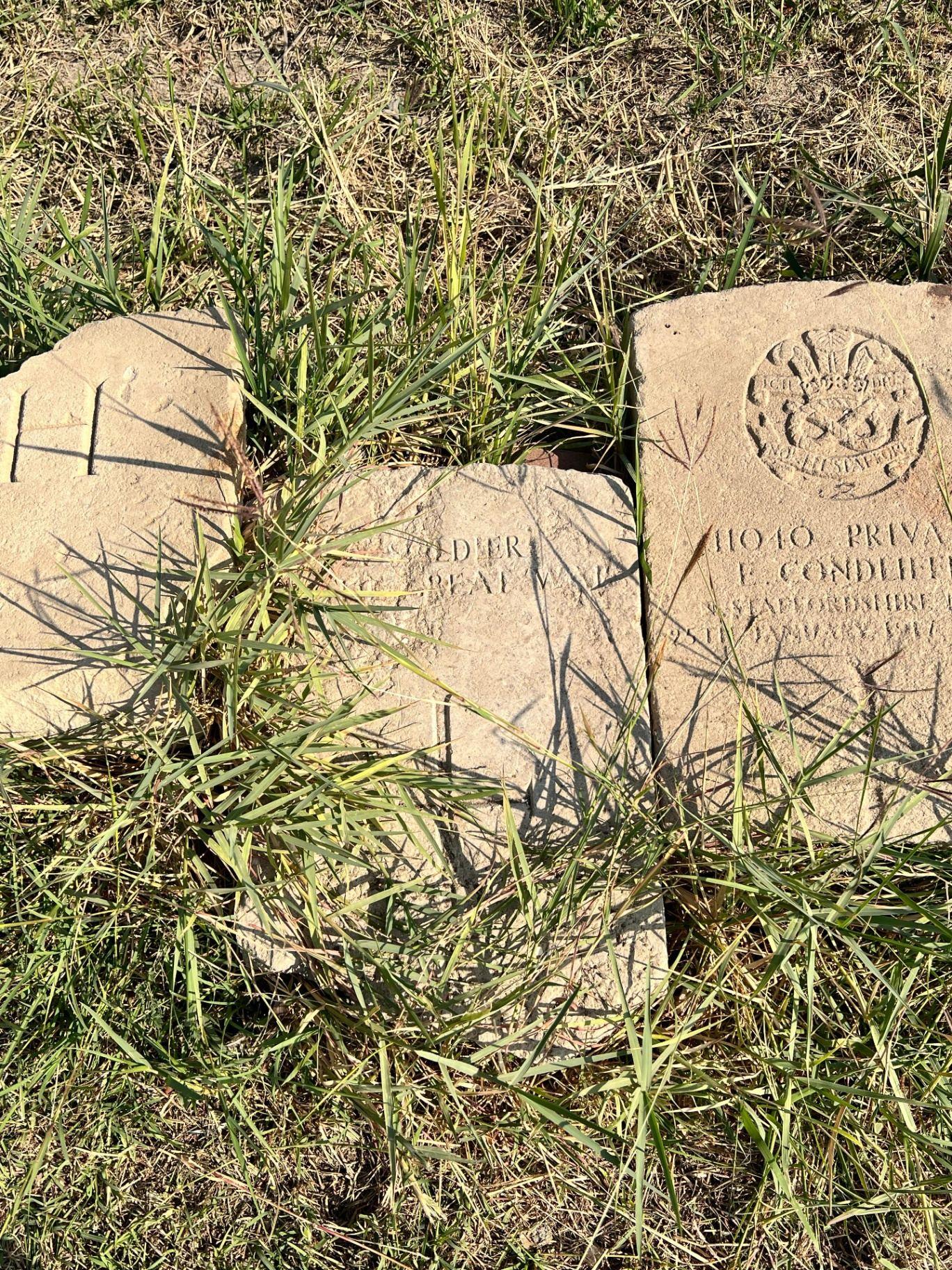
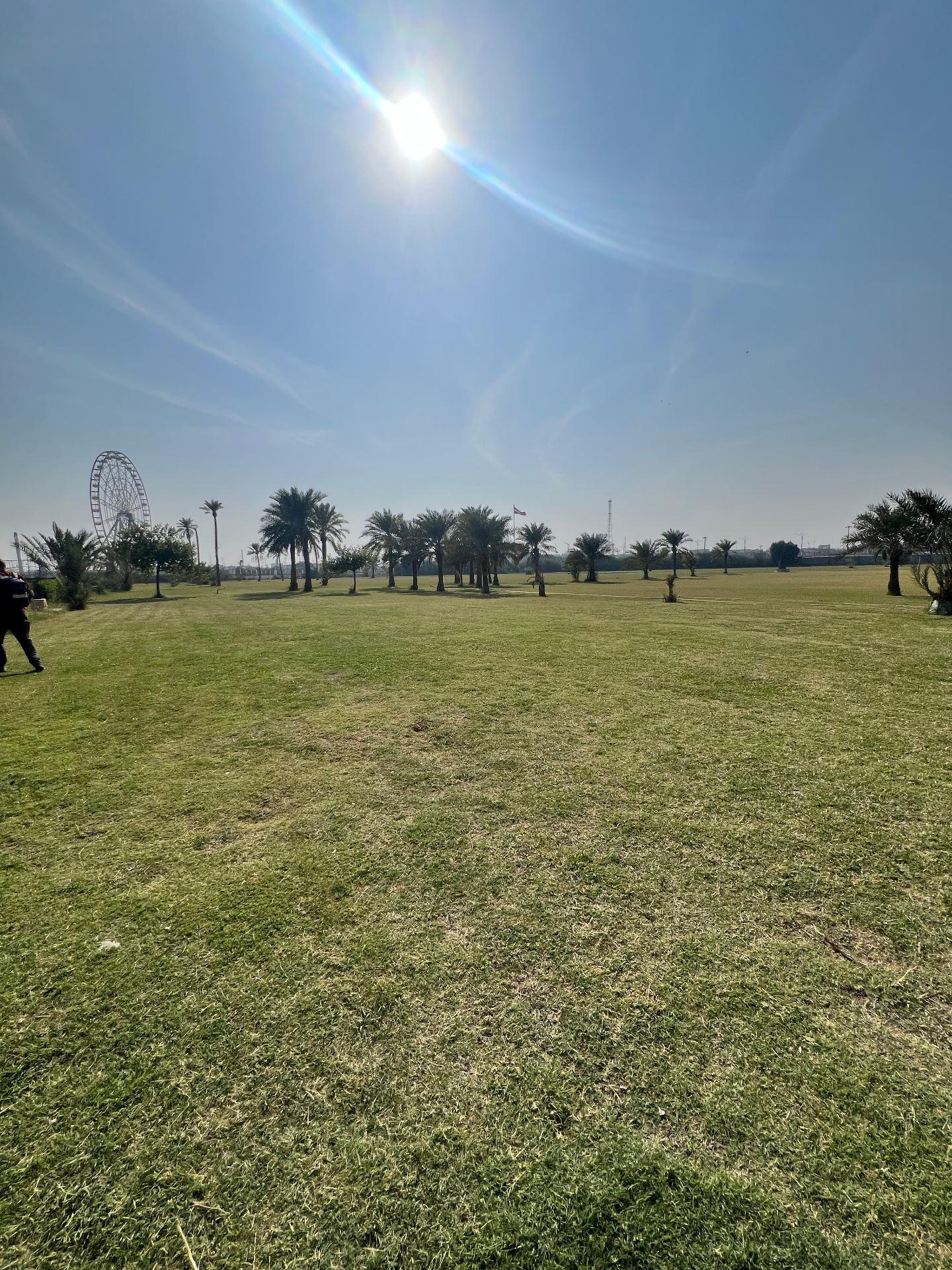
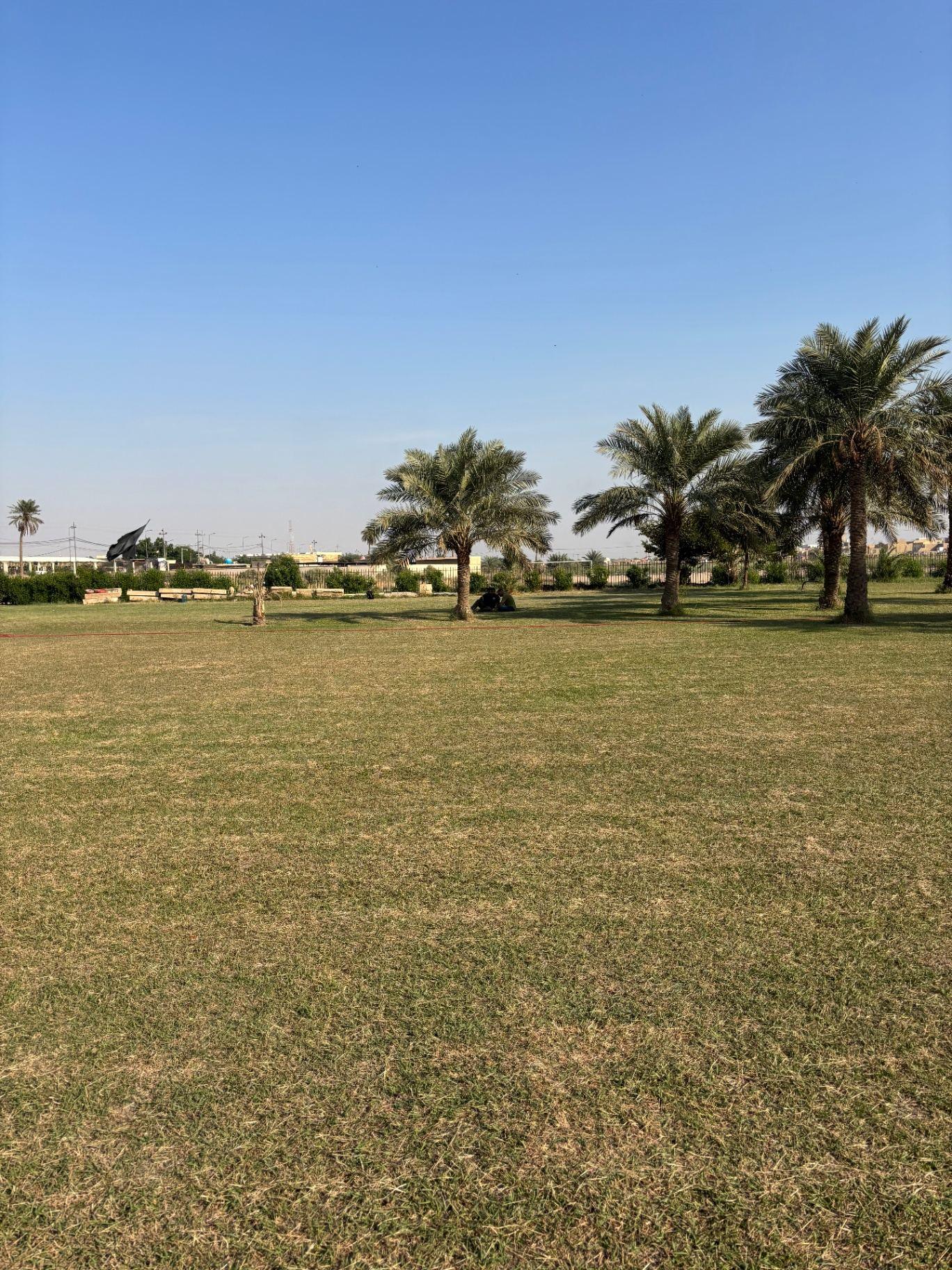
The original gatehouse for the British cemetery was demolished by the CWGC country manager in 1998.
The Cross of Sacrifice that featured in a photo in the 2003 report was destroyed by Militants in 2004, along with the Stone of Remembrance. The remnants of these features remain on the site in the hope of eventual renovation. Only the pedestal of the Cross remains and, amazingly the Bronze sword, which was retained by the caretaker, the last remaining one.
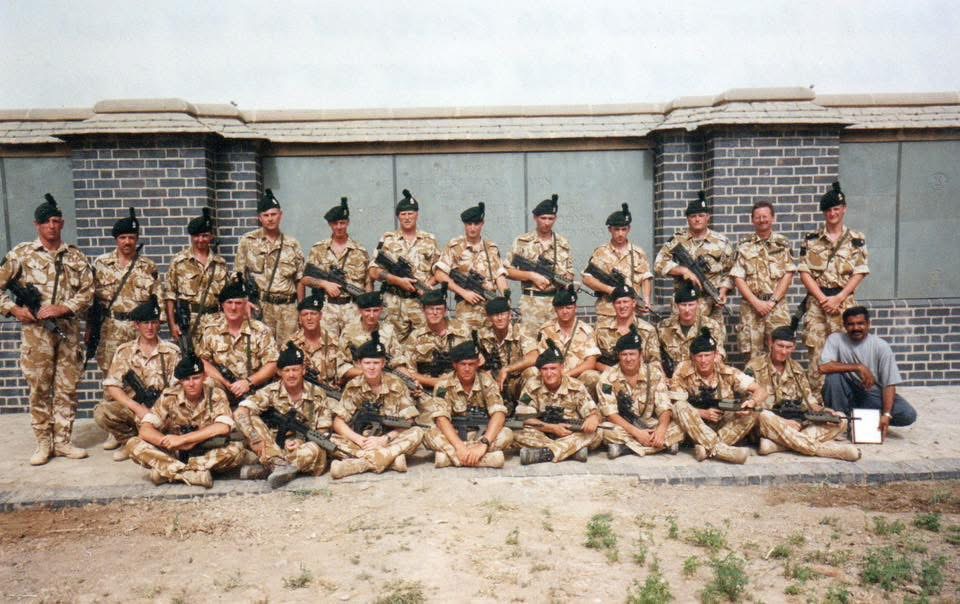
The same family has maintained the site since the 1960s, with Mr Hasan Ahtif Mousa and his son, Mustafa, still there despite being unpaid for many years and at personal risk with little by way of support or resources expected of such a large site. Mr. Hasan is the gentleman mentioned in the original 2003 report.
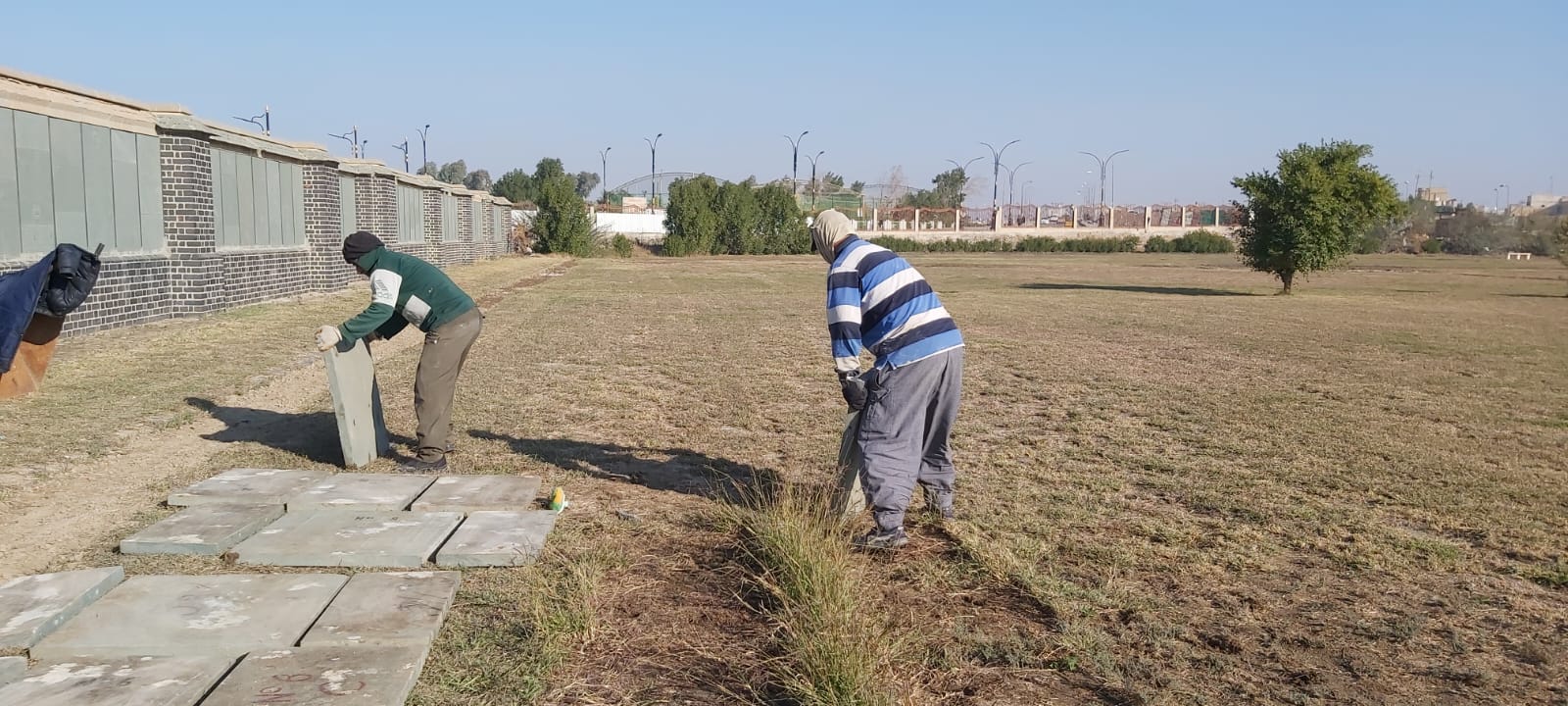
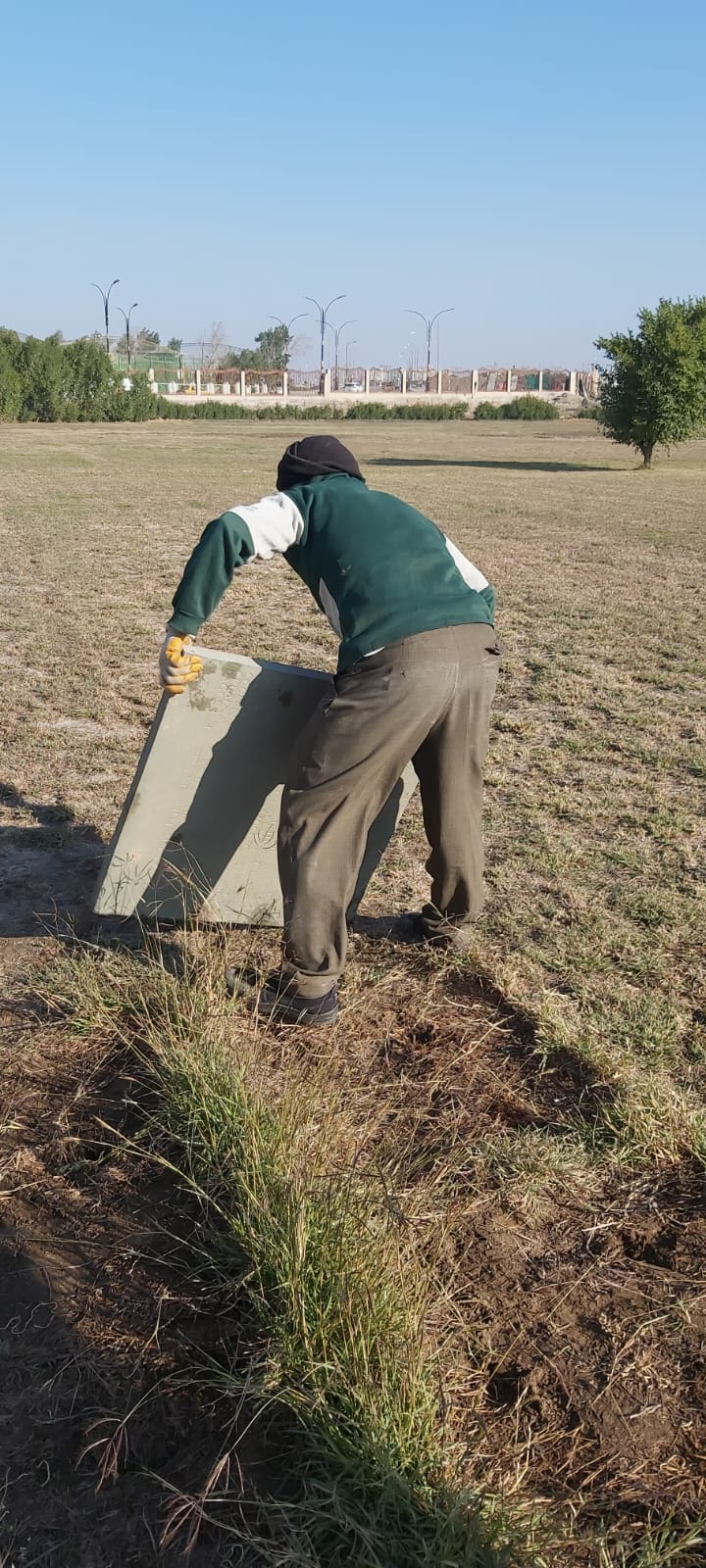
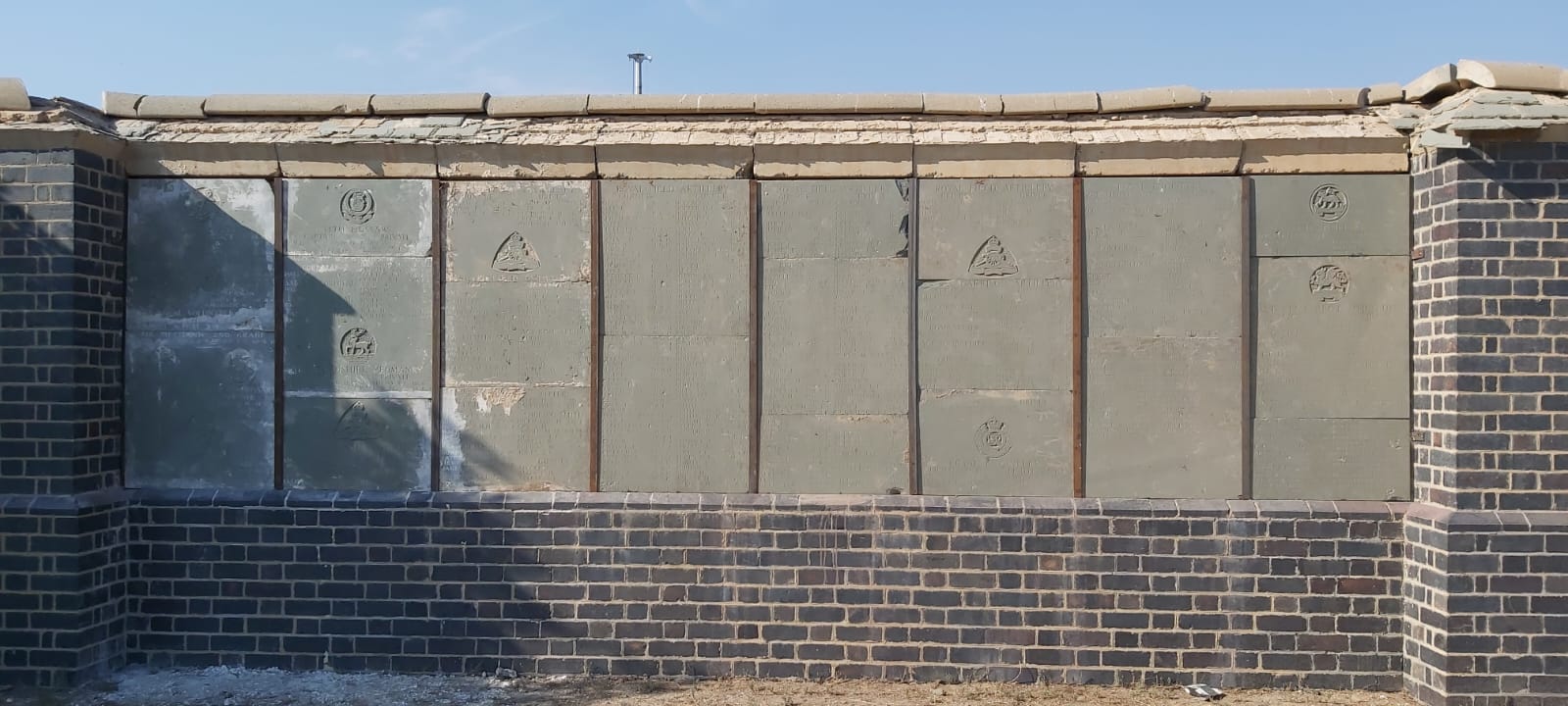
Mr. Hasan completed a renovation of the memorial wall in 2022 and all the panels are intact and well displayed. A bronze plaque was added in 2004 for a casualty of Op Telic, the only such memorial left in Iraq with the others removed by the British Army in 2009 and re-installed at the National Memorial Arboretum in Staffordshire.
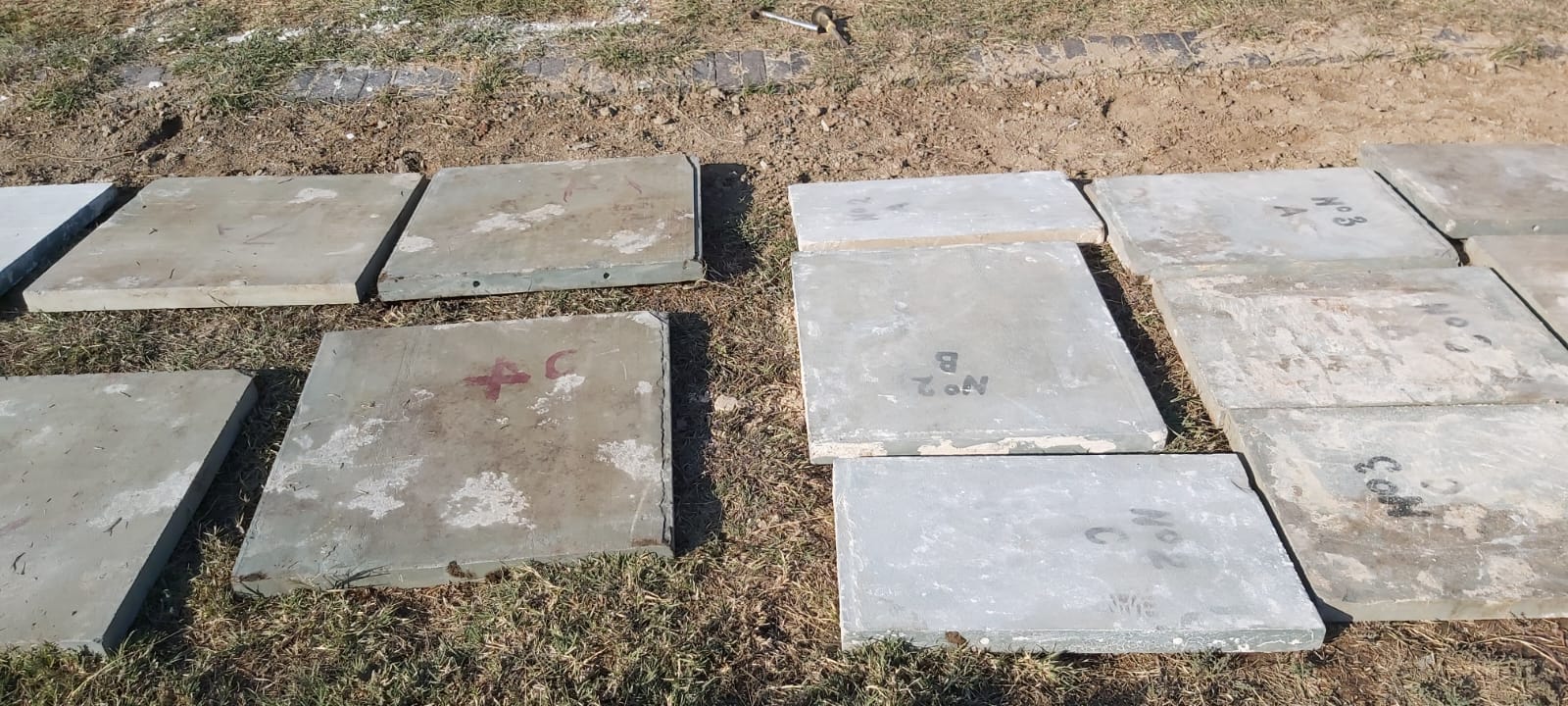
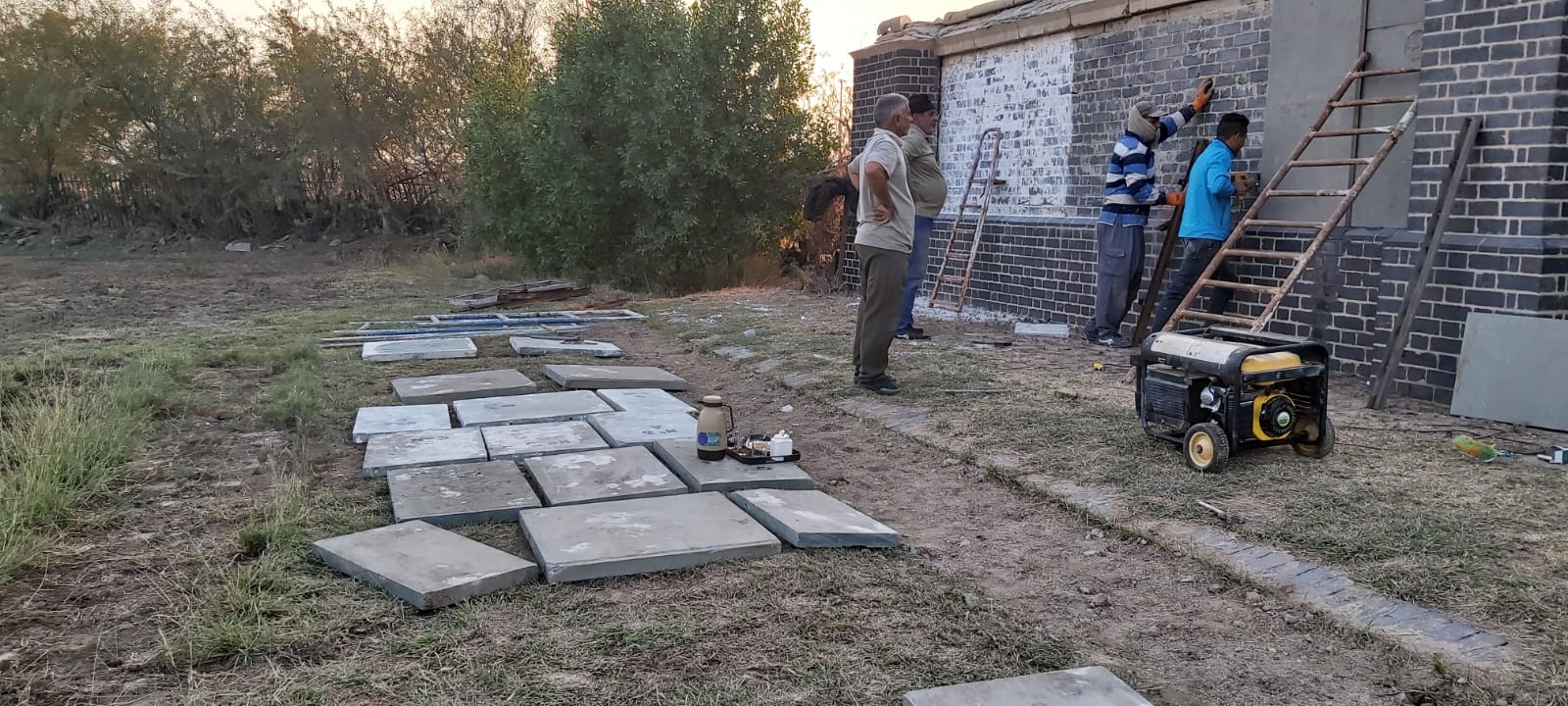
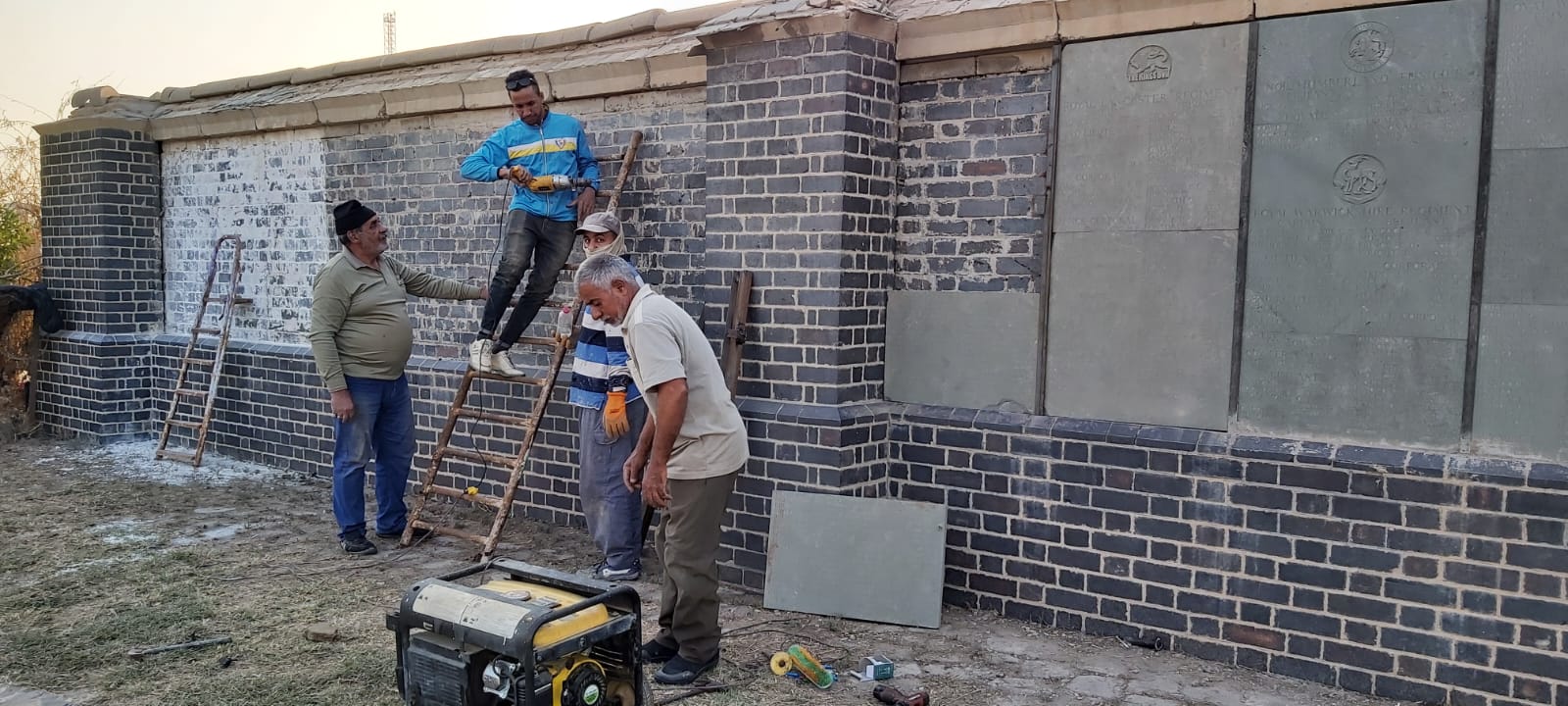
Mr Hasan and team renovating the Memorial Wall, 2022
Photographs documenting the 2022 renovation of the Amara Memorial Wall, undertaken by Mr Hasan Ahtif Mousa and his team. Panels were carefully removed, cleaned and re-installed onto the rebuilt brick wall, ensuring the names of all casualties remain visible and intact.
Memorial Panels of Amara War Cemetery (British)
View photographs of every individual memorial panel, with a full-size lightbox and arrow-key navigation between adjacent panels.
Despite lacking the typical Commonwealth architecture and features, such as the Cross of Sacrifice, Stone of Remembrance, and standardized headstones or the gatehouse, Amara British Cemetery is a beautiful park with grass and mature palm trees and is, by far, the best maintained of all Commonwealth Cemeteries in Iraq.
Amara (Al-Amarah) on the Tigris became a principal medical and burial center for the Mesopotamian Expeditionary Force during WWI. From 1915, hospitals and depots clustered here, and the cemetery grew into the largest Commonwealth burial ground in southern Mesopotamia. The harsh soil conditions eventually destroyed the headstones, and in 1933 the names were inscribed on permanent screen walls.
Current Condition
The memorial wall was repaired by Mr Hasan the guardian in 2022. The Cemetery is the best maintained CWGC site in the country.
Notable Casualties
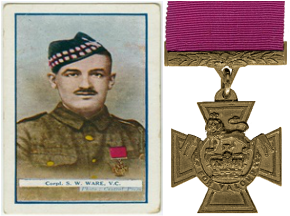
920 Corporal Sidney William Ware
Corporal, 1st Bn. Seaforth Highlanders
Victoria Cross
Son of William and Maud Ware, of 1, Pine Cottage, Sutton Veny, Warminster, Wilts. Born at Winterbourne, Whitechurch, Dorset. Aged 24.
An extract from "The London Gazette," No. 29765, dated 26th Sept., 1916, records the following: "For most conspicuous bravery. An order was given to withdraw to the cover of a communication trench. Corporal Ware, whose cool gallantry had been very marked during the advance, was one of the few men remaining unwounded. He picked up a wounded man and carried him some 200 yards to cover, and then returned for others, moving to and fro under very heavy fire for more than two hours until he had brought in all the wounded and was completely exhausted."
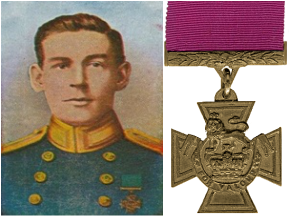
Lieutenant-Commander Edgar Christopher Cookson
Lieutenant-Commander, H. M. S. Clio, Royal Navy
Victoria Cross, D. S. O., Mentioned in Despatches
Son of Capt. W. E. Cookson, R.N. Aged 31.
An extract from "The London Gazette," dated 21st May, 1915, records the following: "On the 28th September, 1915, the river gunboat 'Comet' had been ordered with other gunboats to examine and, if possible, destroy an obstruction placed across the river by the Turks. When the gunboats were approaching the obstruction a very heavy rifle and machine gun fire was opened on them from both banks. An attempt to sink the centre dhow of the obstruction by gunfire having failed, Lieutenant-Commander Cookson ordered the 'Comet' to be placed alongside, and himself jumped on to the dhow with an axe and tried to cut the wire hawsers connecting it with the two other craft forming the obstruction. He was immediately shot in several places and died within a very few minutes."
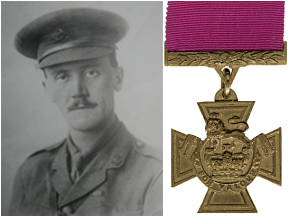
Lieutenant Colonel Edward Elers Delavel Henderson
Lieutenant Colonel, Commanding 9th Bn. Royal Warwickshire Regiment
Victoria Cross, Mentioned in Despatches
Husband of Mrs. M. Henderson, of "Tall Trees," Park Rd., Camberley, Surrey. Aged 38.
An extract from "The London Gazette," dated 8th June, 1917, records the following: "For most conspicuous bravery, leadership and personal example when in command of his battalion. Lt. Col. Henderson brought his battalion up to our two front-line trenches, which were under intense fire, and his battalion had suffered heavy casualties when the enemy made a heavy counter-attack, and succeeded in penetrating our line in several places, the situation becoming critical. Although shot through the arm, Lt. Col. Henderson jumped on to the parapet and advanced alone some distance in front of his battalion, cheering them on under the most intense fire over 500 yards of open ground. Again wounded, he nevertheless continued to lead his men on in the most gallant manner, finally capturing the position by a bayonet charge. He was again twice wounded, and died when he was eventually brought in."
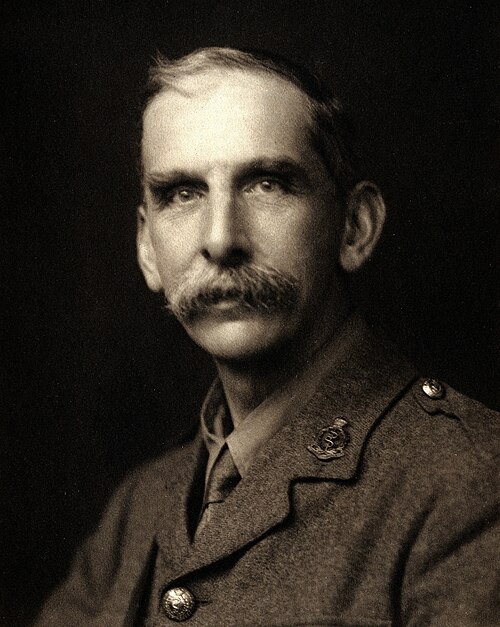
Major Sir Victor Alexander Haden Horsley
Major, Royal Army Medical Corps, Consulting Surgeon to the Mediterranean Expeditionary Force
Knight Bachelor, FRS, FRCS, Consulting Surgeon
Husband of Eldred Bramwell Horsley, of 25, Cavendish Square, London. Son of John Callcott Horsley, RA. Aged 59. A pioneering British neurosurgeon, knighted in 1902, who volunteered for military service at the outbreak of war despite his age and eminence.
Sir Victor Horsley was the founding father of modern neurosurgery, having performed the first operations to remove a spinal tumour and a cerebral tumour, and pioneered the surgical treatment of epilepsy. At the outbreak of the First World War he insisted on active service and was posted first to Egypt and then to Mesopotamia as Consulting Surgeon. Working in the appalling heat of the Tigris hospitals at Amara, where temperatures regularly exceeded 120°F, he refused to spare himself, operating on the wounded evacuated from the failed attempts to relieve Kut. He died of heatstroke at Amara on 16th July 1916, a loss described by The Lancet as "a national calamity".
Visual Documentation
Admin upload portal for panoramas, videos and photos.
360° Panoramic Views
360° Panoramas Coming Soon
We’re preparing immersive 360° views. Once your panoramic files are ready, we’ll publish them here.
Cemetery Plan
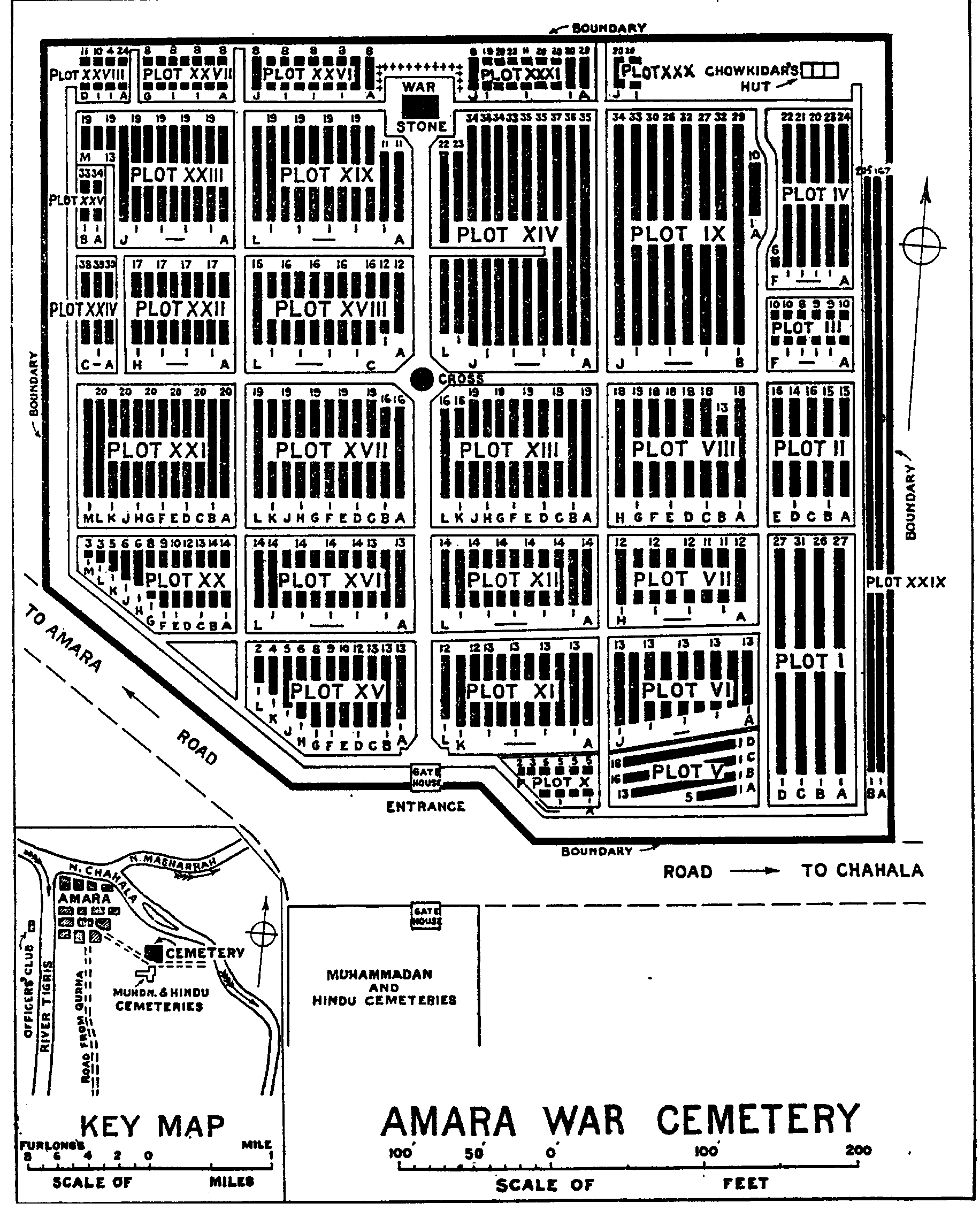
Historical cemetery plan showing the layout of Amara War Cemetery on the Tigris River.
Watch the films from this site
Each film recorded at this location has its own page with the full footage, background notes and links to the surrounding cemeteries.



Related Articles & Content
Amara - The Hospital Center of Mesopotamia
VisitDetails the role of Amara as the principal medical evacuation center during the Mesopotamian Campaign. Thousands of wounded were evacuated by river from battle sites throughout central Mesopotamia to Amara's base hospitals, making it the largest Commonwealth burial ground in southern Iraq.
Source: The Long, Long Trail
Planning a visit: quick answers
- Can you visit Commonwealth war cemeteries in Iraq?
- Yes. Basra War Cemetery, the Basra Memorial to the Missing, Amara War Cemetery and Baghdad North Gate War Cemetery can all be visited, but access varies by site and usually needs advance arrangement, a local guide and, in some cases, permission from the authorities.
- Do I need a visa or permits to visit?
- Most visitors now travel on a visa on arrival or an e-visa, and some sites sit inside restricted or military-controlled areas where a separate permit or escort is required.
- Are the cemeteries maintained?
- Condition varies considerably. Some sites are cared for by local gardeners, while others remain damaged or overgrown, as documented in our field reporting.