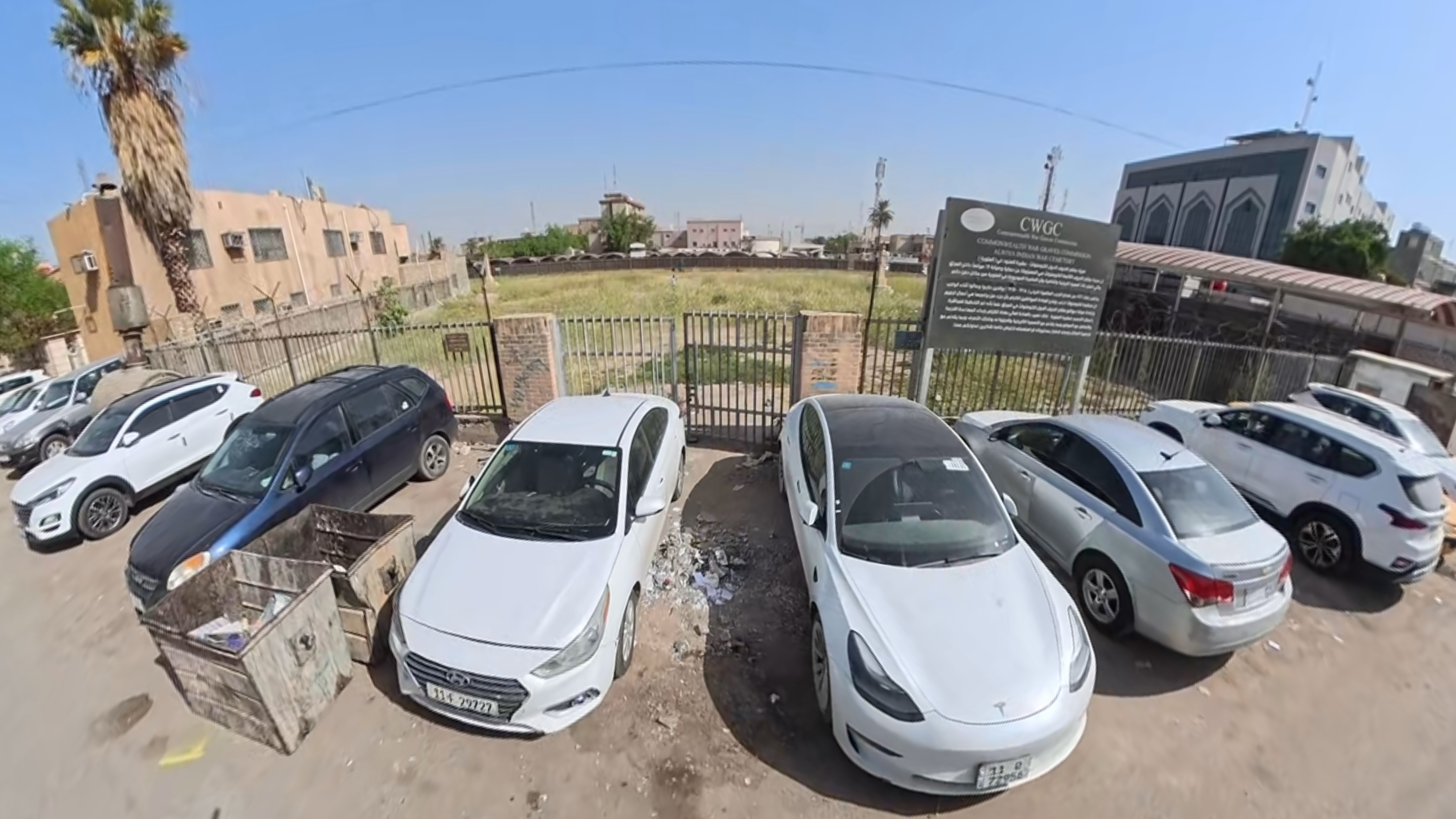
Alwiya Indian War Cemetery (Baghdad)
Alwiya (Alwiyah) Indian War Cemetery served as the principal Indian Forces burial ground in Baghdad during the First World War and the immediate aftermath. It reflects the scale of Indian Army participation and the distinct religious commemoration practices (cremation panels for Hindu and Sikh soldiers).
Quick Information
Alwiya district, Baghdad
Commemorated
208 commemorated
WWI: 208 • WWII: 0
Dedicated to Indian forces in Baghdad
Status
Last Updated
25 October 2025
Located in the Alwiya district within Baghdad's eastern quarter, this cemetery was established after the capture of Baghdad in March 1917 to serve hospitals and depots on the east bank. It incorporated concentrations from small temporary plots in city hospitals and along the Diyala–Rusafa corridors.
Current Condition
The site is easily accessible with an unlocked gate. Two memorials are all that remain and the site overgrown, with rubble and trash scattered around. There is evidence of heavy machinery having been present with tracks in the dried mud, possible used as a parking spot for bulldozers from nearby building sites.
Visual Documentation
Admin upload portal for panoramas, videos and photos.
Video Photography
Video Documentation Coming Soon
Comprehensive video documentation of the memorial is being prepared and will be added shortly.
360° Panoramic Views
360° Panoramas Coming Soon
We’re preparing immersive 360° views. Once your panoramic files are ready, we’ll publish them here.
Planning a visit: quick answers
- Can you visit Commonwealth war cemeteries in Iraq?
- Yes. Basra War Cemetery, the Basra Memorial to the Missing, Amara War Cemetery and Baghdad North Gate War Cemetery can all be visited, but access varies by site and usually needs advance arrangement, a local guide and, in some cases, permission from the authorities.
- Do I need a visa or permits to visit?
- Most visitors now travel on a visa on arrival or an e-visa, and some sites sit inside restricted or military-controlled areas where a separate permit or escort is required.
- Are the cemeteries maintained?
- Condition varies considerably. Some sites are cared for by local gardeners, while others remain damaged or overgrown, as documented in our field reporting.