Stories, Research & Field Reports
Bringing names on memorials to life through personal histories, photographs, and in-depth research. Every name has a story.
Podcast: Britain's Forgotten War Dead, The Basra Cemetery Scandal
The Security Podcast with Sean Rayment, 47 minutes
Almost 800 gravestones marking the final resting places of British and Commonwealth servicemen were removed from Basra War Cemetery during the Iraq War. They were never returned. The headstones, together with dozens of large slate memorial panels bearing the names of the fallen, were subsequently destroyed.
In this episode of The Security Podcast, Sean Rayment speaks to Ben Soppitt, whose grandfather is buried at Basra, about his campaign to discover exactly what happened, why the decision was taken, and who is accountable.
Read the full story of the destruction of Basra War Cemetery →
Listen to the episode
The Security Podcast with Sean Rayment, 47 minutes. Ben Soppitt, whose grandfather is buried at Basra, discusses the removal and destruction of almost 800 gravestones and dozens of memorial panels from Basra War Cemetery, and the campaign to find out what happened.
Fill Your Boots Update: The MOD Admits the Basra Panels Were Crushed
An appeal for witnesses, first published on the Fill Your Boots military banter page
I have an update to the post about the destruction of Basra War Cemetery in Iraq in 2003 from January and it's a rather shocking and sad one.
The original post is here: Fill Your Boots, January 2026
Following a 5 month Freedom of Information request and an application to the High Court for a Judicial Review on the matter, the MOD finally admitted what they have been hiding for over 20 years. The 50 pallets of material, including the names of over 3,000 WW1 and WW2 war dead, were crushed less than 18 months after their removal for "safekeeping" and used as infill for a drainage ditch at Shaiba Base. For those in disbelief about this, the MOD evidence is available at commonwealthwargravesiraq.org/missing-panels.
I have a journalist interested in speaking to anyone who was involved or who has information on the matter, especially the crushing of the material, which included over 80 memorial panels and 280 brand new WW2 gravestones.
What we know
The soakaway was adjacent to 7 LSR (7 Logistic Support Regiment, Royal Logistic Corps) SLB.
CIVSEC, MPF (likely Military Works Force, a Royal Engineers command overseeing specialist works units), 64 Wks Gp RE (64 Works Group, Royal Engineers), PROM (Property Management office) and Padre 7 LSR (7 Logistic Support Regiment) were all involved.
Anyone with pictures of this or information would be most appreciated.
Many thanks,
Ben (Commonwealth War Graves Iraq)
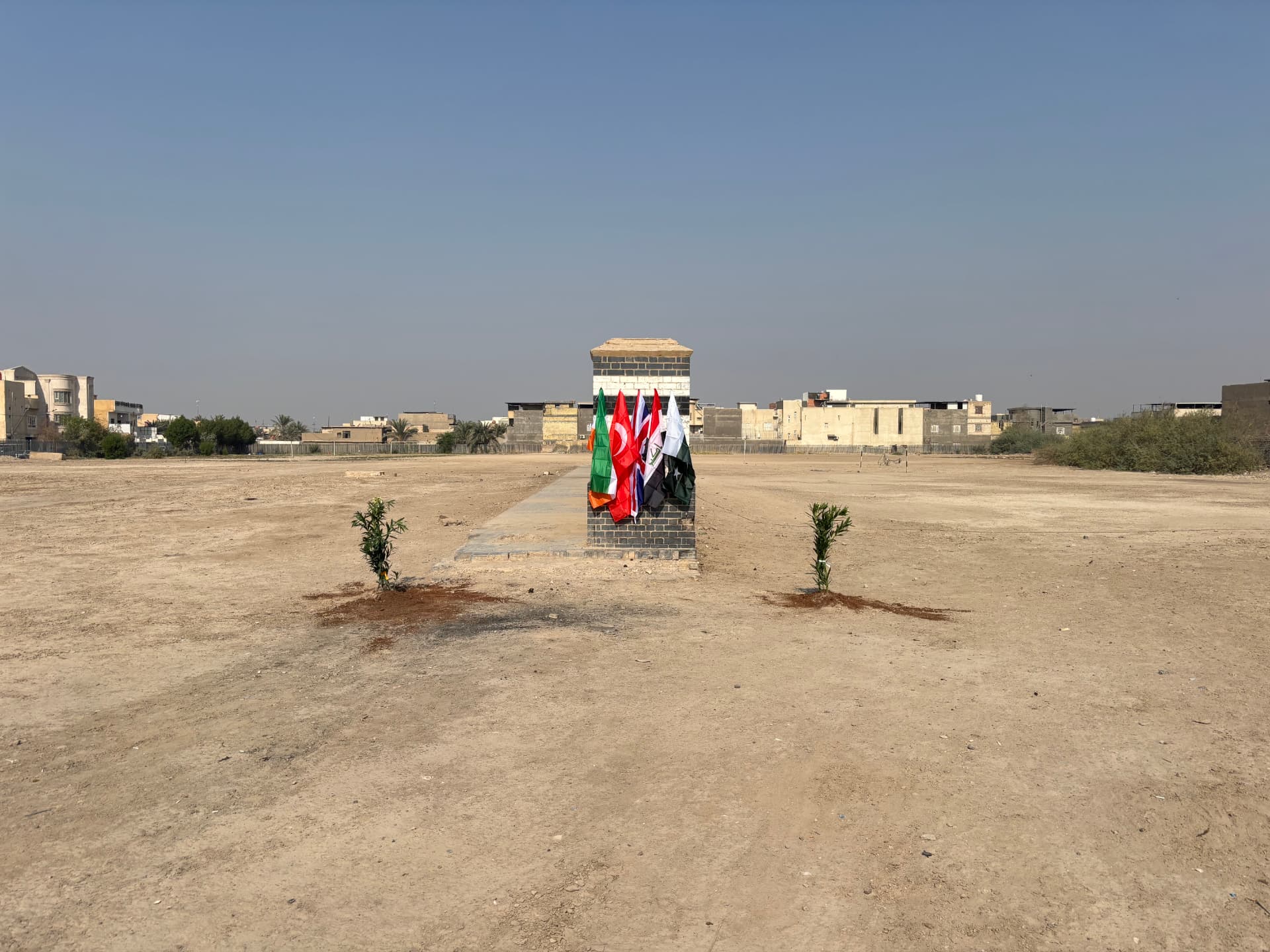
How You Can Help Restore Basra War Cemetery
A practical call to action from Gareth Davies
Thanks to Gareth Davies for the suggestions below. If you would like to help get the men and women buried at Basra properly commemorated with the honour they deserve, here are some practical steps you can take.
Four ways you can help
- Help increase awareness through whatever means you can.
- Write to the Commonwealth War Graves Commission.
- Write to your Member of Parliament.
- If you have connections in the military, please consider the regimental approach below. Bear in mind the CWGC is largely funded via the MOD budget and relies on the Ministry of Defence for a huge amount of support.
A regimental bottom-up approach
May I please try and harness the concerns of people following this story to try and get this situation rectified, so that the men and women buried in Basra have their names physically recorded in the cemetery. This approach, while slightly different to Ben's, is very much trying to achieve the same result. But whereas Ben is going for the top-down approach, it's also useful to push from the bottom up at the same time.
I have looked at the list of burials and have traced the lineage of the Regiments and Corps of the men and women buried there to the successor Corps and Regiments.
Please note this does not include the Indian Army side. There are an estimated up to 5,000 bodies buried there, mainly from the First World War and 280 from the Second World War, but the names and numbers were not recorded at the time and they were buried in mass graves. There is also the Second World War cremation memorial there commemorating over 1,000 Indian Army dead, primarily Gurkhas. The Indian Embassy in Baghdad is aware and planning a visit to Basra this year.
Breakdown of British and Commonwealth burials by successor unit
- Royal Navy — 75
- Rifles — 340
- Royal Artillery — 250
- Royal Engineers — 225
- PWRR — 225
- RLC — 215
- Royal Anglian — 130
- Duke of Lancaster's Regiment — 100
- Royal Regiment of Scotland — 90
- RRF — 85
- Royal Army Medical Services — 75
- RAF — 75 (including RFC)
- Mercian — 70
- Royal Welsh — 55
- R Sigs — 25
- AGC — 20
- LD — 12
- REME — 10
- Royal Yorks — 4
- KRH — 8
- QRH — 5
- RTR — 3
- Int Corps — 1
- RAChD — 1
What you can do now
I think it would help if people did two things:
- Write an email to their old Regiment or Corps Headquarters, Regimental Headquarters or Corps Secretary, asking them to get the Corps or Regimental Colonel, Colonel Commandant or equivalent to write to the CWGC. Ask the CWGC what the plan is to replace the First World War panels and Second World War headstones, and to renovate the cemetery.
- In parallel, write to the CWGC at enquiries@cwgc.org to ask them what the plan is to restore the panels.
I know that this overlooks the decisions and actions of 2003 and 2004, but I think in this case it is best to look forward rather than back.
I also know that it's the MOD who should probably be funding the restoration of the panels. But start with the CWGC, and once Corps and Regimental Colonels and Colonels Commandant are engaged and have a response from the CWGC, they can put pressure on the MOD, if indeed the MOD are the ones who need pressure applying.
Stay involved
Follow the project on Facebook for updates on the campaign, FOI disclosures and the Judicial Review.
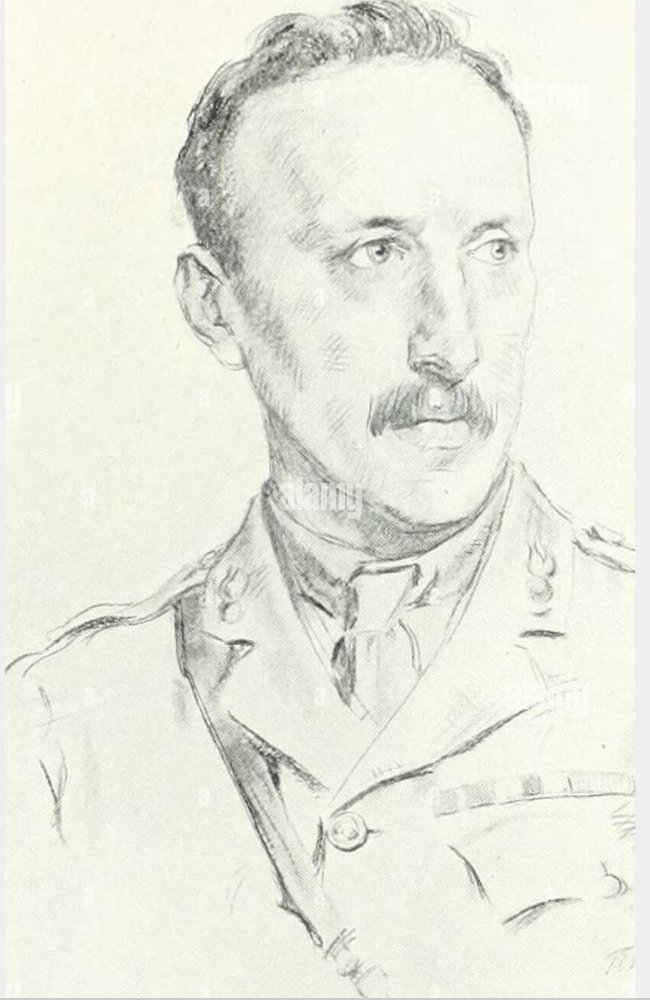
Colonel Frank Rogers Durham, O.B.E., M.C.
1872–1947 | Director of Works, Imperial War Graves Commission
Frank Rogers Durham was a British engineer, horticulturalist, and administrator who played a defining role in both the Imperial War Graves Commission (IWGC) and the Royal Horticultural Society (RHS) during the early 20th century.
After distinguished military service in the First World War — for which he was awarded the Military Cross and the Order of the British Empire — Durham became Director of Works for the IWGC by late 1922. Between 1923 and 1924, he conducted an extraordinary inspection tour across Egypt, India, Mesopotamia (Iraq), Palestine, Syria, Gallipoli, and East Africa.
Read Full Lecture: "A Tour of Mesopotamian War Graves" (1924)
Lecture delivered by Lieutenant Colonel F. R. Durham to the Commission's staff in London, May 5th 1924.
General Sir Fabian Ware, Ladies and Gentlemen,
In the first place, I must thank you for giving me this opportunity of meeting so many members of the Staff of the Commission together, and to be able to tell them a short story of a journey lasting about five and a half months and which covered 26,000 miles.
Before going into detail, I am not aware whether it is right to say at the beginning or at the end of a lecture what one's general impressions are. On the whole I feel that perhaps the greatest impression that I had on this journey might make the best excuse for the description of the journey itself...
Basra
I arrived at Basra … met by Colonel C. B. O. Symons C.B., Chief Engineer of the British Forces in Iraq, and Mr. Peek of the Commission's staff. Basra in war-time must have been a place of great activity...
*[Full lecture transcription continues with detailed accounts of cemetery inspections at Amara, Kut-al-Amara, Baghdad, and Mosul...]*
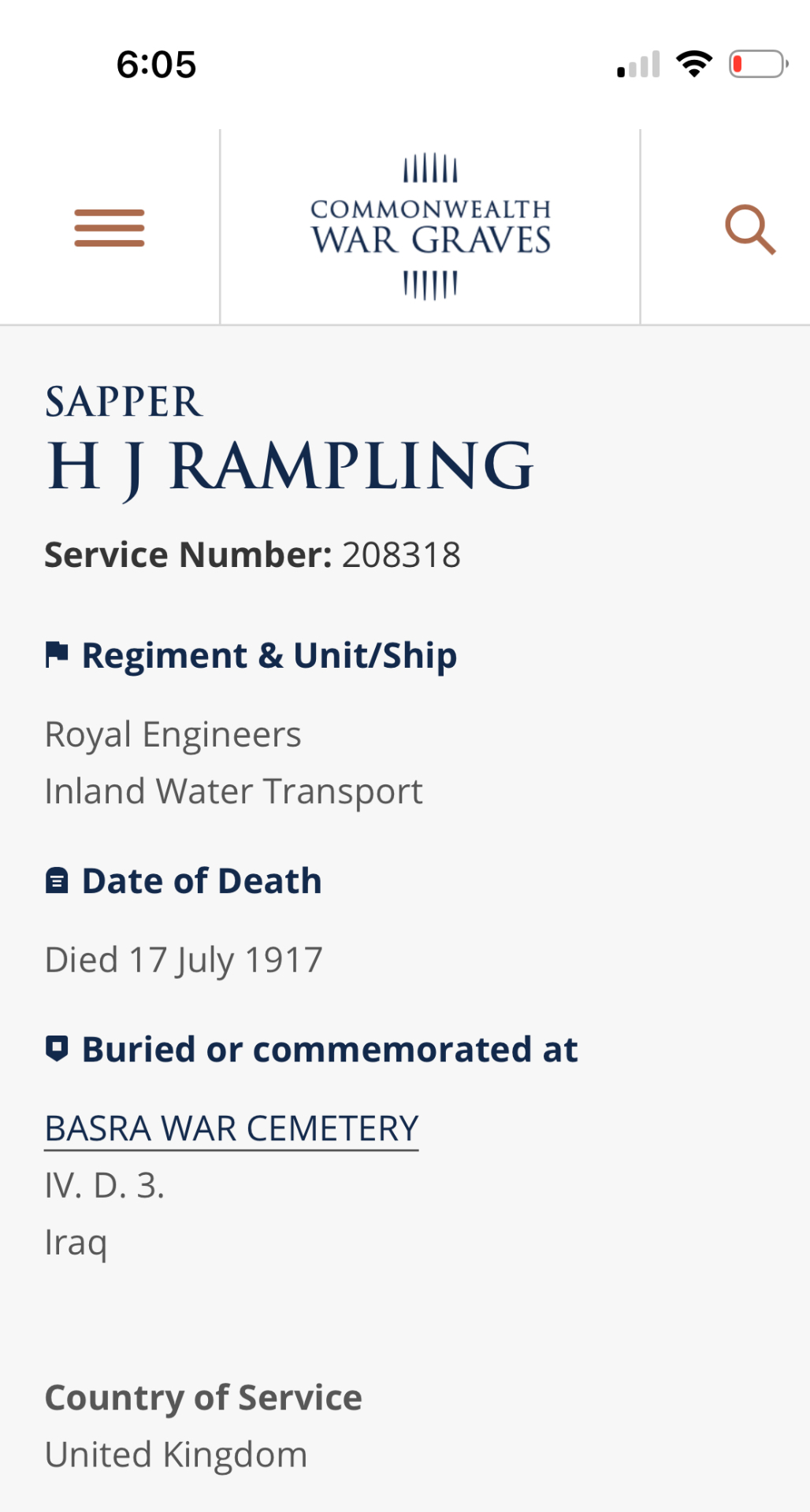
Sapper Horace Johnson Rampling (c. 1880–1917)
Grandfather of Actress Charlotte Rampling
Did you know the grandfather of British actress Charlotte Rampling is buried in Basra War Cemetery?
Horace Johnson Rampling was an English engineer and soldier who served in the Royal Engineers (Inland Water Transport) during the First World War. Born around 1880 in Bishop's Stortford, Hertfordshire, he worked as a costumer and tradesman before enlisting.
He was the father of Colonel Godfrey Rampling, Olympic gold medallist and British Army officer, and grandfather of the celebrated actress Charlotte Rampling.
Sapper Rampling, service number 208318, died of heatstroke on active service in Mesopotamia on 17 July 1917. He is buried in the Basra War Cemetery, Plot IV, Row D, Grave 3.
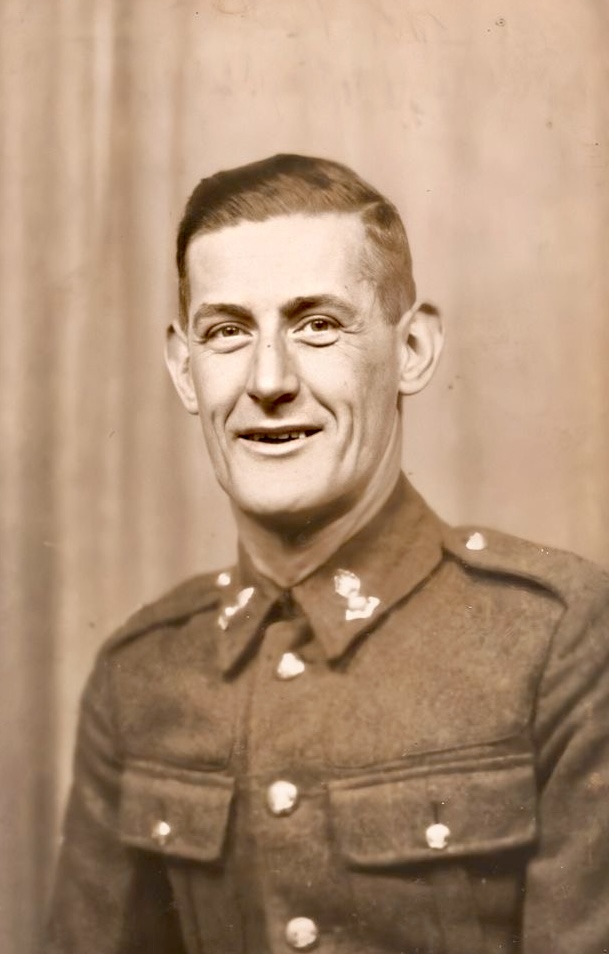
Gunner Joseph Soppitt (1909–1941)
Why My Grandfather is buried in Iraq
Joseph Soppitt was born on 27 May 1909 in County Durham, England. By 1941, he was serving as a Gunner in an Anti-Aircraft unit of the Royal Artillery, deployed to Basra, Iraq.
After only a few months in the country, he contracted dysentery and died on 3 November 1941, aged 32. He was buried in the Basra War Cemetery.
Joseph's Grandson Ben Soppitt adopted his Father's unfulfilled wish and in 2024 travelled to Iraq to locate the grave and commissioned a new headstone — the first laid in Basra War Cemetery in nearly 80 years.
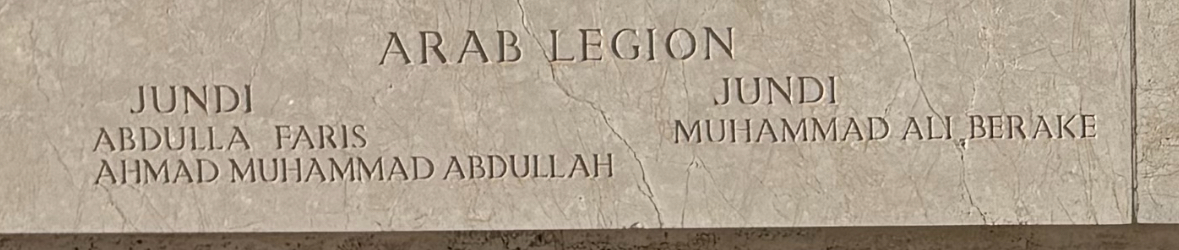
The Arab Legion in Iraq — Three Men Who Never Came Home
Jundi Abdulla Faris, Jundi Ahmad Muhammad Abdullah, and Jundi Muhammad Ali Berake
The Arab Legion was a small but formidable army built in Transjordan under Glubb Pasha. What's less well known is that the Arab Legion also served in Iraq during the Second World War.
At Khanaqin War Cemetery, three Arab Legion soldiers were buried — their bodies now commemorated together on the Baghdad (North Gate) (Khanaqin) Memorial.
They represent the only three Arab Legion casualties officially commemorated by the CWGC in Iraq.
The Mail on Sunday: Charlotte Rampling condemns 'utterly shameful' destruction of Basra headstones
The actress Charlotte Rampling has joined the growing condemnation of the British Army's destruction of more than 800 gravestones belonging to soldiers who died in Iraq during the two world wars.
Her grandfather, Horace Johnson Rampling, died of heatstroke in 1917 during the First World War and was buried at Basra War Cemetery. His headstone was among those removed, ground into gravel and used to make a drain, and his grave is now one of around 3,000 at the cemetery that are unmarked.
Ms Rampling, 80, told The Mail on Sunday: "I think the desecration of these graves is utterly shameful and I support any effort to create a lasting memorial to include the names of the soldiers who gave their lives for our freedom."
She also revealed that her grandfather's "death penny", the bronze memorial plaque sent to the next of kin of the fallen, had recently been returned to the family after more than a century, having been traced to an antiques dealer in Austin, Texas.
The report notes that among the destroyed gravestones was that of Victoria Cross recipient Major George Godfrey Massy Wheeler of the 7th Hariana Lancers, who was honoured for his actions near Shaibah in April 1915, the same area where his gravestone was later crushed.
Tory MP Ben Obese-Jecty, a former Army officer who served in Iraq and Afghanistan, said he would table questions in the House of Commons, adding that the destruction "simply beggars belief" and that "the decision to crush the headstones and use them as rubble to fill a ditch should shame us". Field Marshal The Lord Richards of Herstmonceux said he was "deeply saddened", while Lord Dannatt, a former head of the Army, was also critical.
The destruction was exposed by Ben Soppitt, whose grandfather, Gunner Joseph Soppitt, is buried at Basra War Cemetery, through Freedom of Information requests released on the order of the Information Commissioner. He has since made a High Court application for Judicial Review. The Ministry of Defence has declined to comment because of the ongoing legal action.
You can read the underlying evidence on this site: the MOD FOI disclosures, the Judicial Review response and the full account of what happened to the missing panels.
Note: this article may be behind a regional paywall.
The Telegraph: Army turned war gravestones into gravel
The Daily Telegraph has reported that the British Army turned Commonwealth war gravestones into gravel in Iraq, under the headline "Army turned war gravestones into gravel", published on 2 August 2026.
The coverage follows the Ministry of Defence disclosures obtained through Freedom of Information requests and a High Court application for Judicial Review. Those documents confirm that around 50 pallet loads of material removed from Basra War Cemetery in 2003, including memorial panels bearing the names of the war dead and hundreds of Second World War headstones, were crushed and used as infill for a drainage ditch at Shaibah Logistics Base.
The Telegraph story sits alongside earlier reporting by the BBC in November 2025 and by The Mail on Sunday in August 2026, all of which have followed Ben Soppitt's campaign to have the men and women buried at Basra properly commemorated. His grandfather, Gunner Joseph Soppitt, is buried in the cemetery.
You can read the underlying evidence on this site: the MOD FOI disclosures, the Judicial Review response and the full account of what happened to the missing panels.
Note: this article may be behind a paywall.
The Mail on Sunday: Fury of heroes' families as Army crushes hundreds of war graves into gravel for drainage ditch
Sean Rayment and Defence Editor Mark Nicol report that defence chiefs have been accused of showing "shocking disregard" for Britain's war dead after almost 800 First and Second World War gravestones of Commonwealth soldiers were destroyed in Iraq.
The British Army removed gravestones and 80 large slate panels bearing regimental crests and the names of the fallen from Basra War Cemetery in 2003, amid fears they would be vandalised. Within 18 months almost all of them had been pulverised into gravel and used to fill a drainage ditch at Shaibah Logistics Base, south-west of Basra, in April 2005. The work was overseen by 64 Works Group, Royal Engineers.
The details emerged only after Freedom of Information disclosures were released on the order of the Information Commissioner, following requests made by Ben Soppitt, whose grandfather, Gunner Joseph Soppitt, is buried at Basra War Cemetery.
Field Marshal The Lord Richards of Herstmonceux, the former Chief of the Defence Staff, told the paper he was "deeply saddened by what happened to this cemetery" and that, with hindsight, there was "of course no excuse".
BBC News: One man's campaign for Commonwealth war graves restoration in Iraq
BBC Defence Correspondent Jonathan Beale profiles this project's mission to restore and document Commonwealth War Graves in Iraq.
The article follows Ben Soppitt's Remembrance Sunday visit to Basra War Cemetery, where his grandfather Gunner Joseph Soppitt is buried. It highlights the stark contrast between carefully maintained European war cemeteries and the abandoned state of Iraq's memorial sites.
Key points covered: - The current condition of Basra War Cemetery and other sites across Iraq - The Commonwealth War Graves Commission's withdrawal in the 1990s for security reasons - Historical inequality in commemoration between British and Indian casualties

Rudyard Kipling and the Words of Remembrance
The Basra Memorial Inscription
The inscription on the Basra Memorial was written by Rudyard Kipling, who served as the Literary Adviser to the Imperial War Graves Commission after the First World War.
The Basra Memorial commemorates more than 40,000 Commonwealth soldiers who died in the Mesopotamian Campaign (1914–1918) and have no known grave.
Kipling's choice of words reflects both his literary mastery and personal loss — his only son, John Kipling, was killed in 1915 at the Battle of Loos.
He also introduced the now-famous phrase "Known unto God", inscribed on the gravestones of unidentified soldiers worldwide.
A Tour of Mesopotamian War Cemeteries in 2003
In the early summer of 2003, a British Army Battalion Commander stationed near Al-Amarah had the unique opportunity to visit and document several Commonwealth War Graves Commission cemeteries across Iraq—just weeks after the fall of Saddam Hussein's regime.
This firsthand account provides a valuable snapshot of the condition of Iraq's war cemeteries at a critical moment in history.
Read the full article: A Tour of Mesopotamian War Cemeteries in 2003 by the Western Front Association.
The Forgotten Front: The Mesopotamia Campaign, 1914–1918
When most people think of the First World War, their minds turn to the trenches of France or the battlefields of Gallipoli. Yet thousands of miles away, in the sweltering plains and rivers of modern-day Iraq, another brutal and decisive campaign was fought.
The Mesopotamia Campaign began in November 1914 when British and Indian troops landed at Fao, near the head of the Persian Gulf.
Early victories at Qurna and Shaiba gave Britain control of southern Mesopotamia. But overconfidence and poor logistics led to catastrophe at Kut-al-Amara, where General Charles Townshend's forces were besieged and ultimately forced to surrender in April 1916.
Share a Personal Story
Help preserve the memory of those who served in Iraq
If you have a personal connection to someone buried or commemorated in Iraq's Commonwealth war cemeteries and memorials, we'd love to hear from you. Your contribution will help ensure these individuals are remembered not just as names, but as people with lives, families, and stories.
What We're Looking For
- • Family histories and personal accounts
- • Photographs of soldiers and their families
- • Letters & documents from the front
- • Unit histories and regimental stories
- • Indian Army stories (majority of forces)
Stories We're Seeking
- • The Four Nursing Sisters — died 15 Jan 1918 on the Tigris
- • Private David Finlay VC — died in Mesopotamia with no known grave
- • Chinese Labour Corps personnel
- • Any family connections to Iraq casualties